



Writer: Helena Bergström
Updated: August 2026 | What is there to see and do in Lübeck? The old Hanseatic city in northern Germany offers brick Gothic architecture, impressive churches, cozy alleys, history and of course lots of marzipan. Lübeck's historic city center is listed as a UNESCO World Heritage Site and is perfect for exploring on foot.
 Tweet
 Share
 Share
 Pin
 Share
 Share
We arrived in Lübeck late one afternoon and only had time to take a first stroll through the city. Despite that, we managed to be fascinated by the historical surroundings and stock up on Lübeck's perhaps most famous specialty – marzipan.
Table of contents
Lübeck – Queen of the Hanseatic League
Lübeck is located in Schleswig-Holstein in northern Germany, on the river Trave and about twenty kilometers from the Baltic Sea coast. The old town is located on an island surrounded by water and is still characterized by the time when Lübeck was one of northern Europe's richest and most powerful trading cities.
The city was founded in 1143 and during the Middle Ages became a leading city within the Hanseatic League, the large network of trading cities around the Baltic and North Seas. During its heyday, Lübeck had extensive trade relations with, among others, the Nordic countries.
Even today, that history is felt present. Here you can find old merchant houses, warehouses, churches and narrow alleys, while Lübeck's famous seven church towers rise above the rooftops.
Parts of the historic city center have been on the UNESCO World Heritage List since 1987. Lübeck was then the first city in Northern Europe where an entire urban area was given World Heritage status.

1. See the Holstentor – Lübeck’s main landmark
It is hard to imagine Lübeck without Holstentor. The mighty city gate with its two round towers is the city's great symbol and one of the most well-known buildings in northern Germany.

The gate was built in the 15th century and was part of the city's fortifications. It was not only to protect Lübeck but also to show visitors what a rich and important city they were entering.
Today, there is a museum inside the Holstentor where you can learn more about Lübeck, the Hanseatic League and international trade. But even if you don’t go inside, the building itself is well worth seeing – not least together with the historic salt warehouses right next door.


2. Stroll through Lübeck's old town
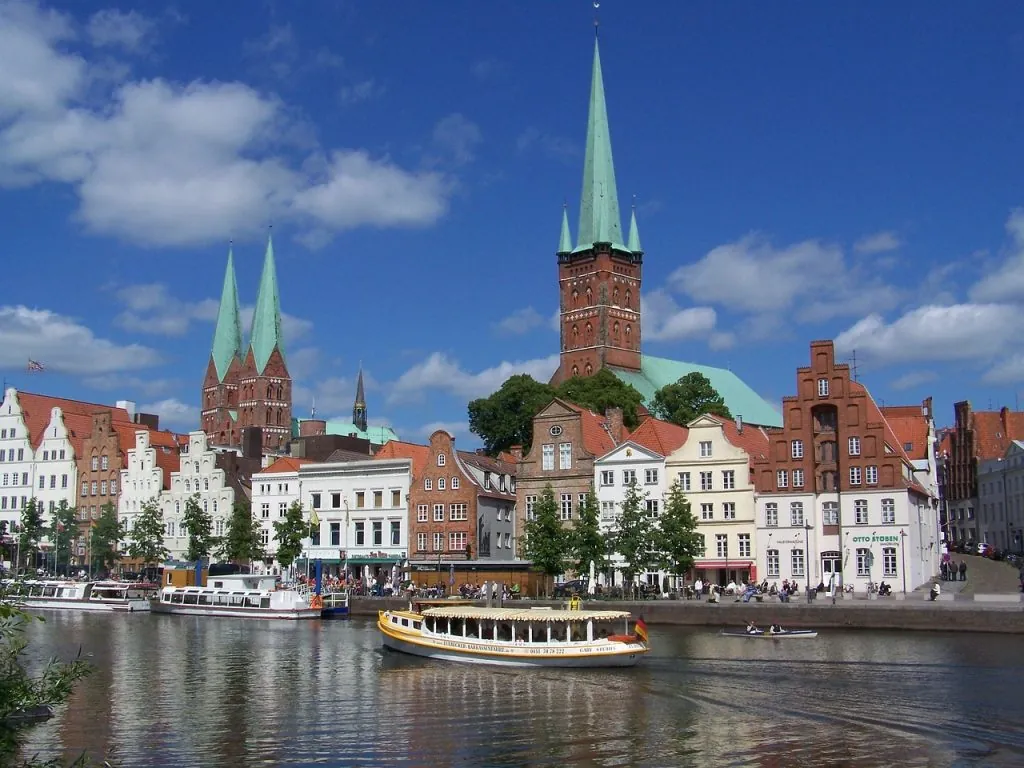
One of the best things to do in Lübeck costs nothing at all: take a walk. The old town is compact and perfect for exploring on foot. Here you can walk between grand brick buildings, old merchant houses and churches, and at the same time find your way down to the water.
It is precisely the whole that makes Lübeck special. The city was badly damaged during World War II, but the medieval city plan and much of the historic buildings remain. We had far too little time when we were here, but Lübeck is the kind of city where it is nice to just walk around without any particular goal.
3. Discover Lübeck's alleys and courtyards
Don't just look at the big sights. One of Lübeck's most charming quirks is hidden behind the facades.
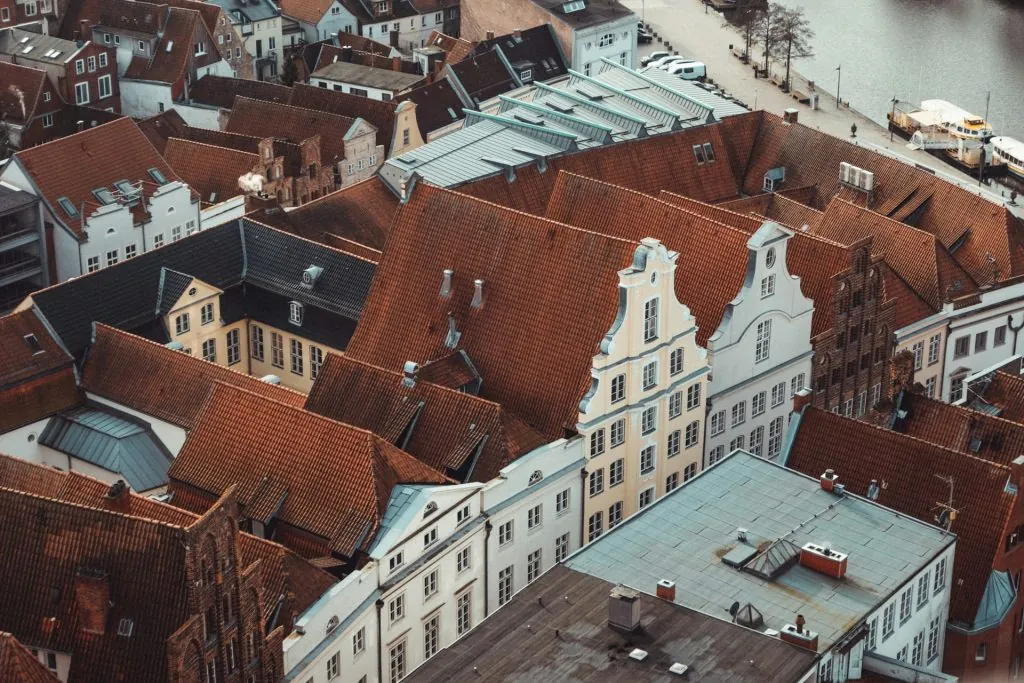
All around the old town are narrow alleyways that lead into small courtyards and historic residential environments. They arose when the growing commercial city needed space for more people and smaller homes were built in the backyards behind the large houses.
Around 90 historic alleys and courtyards are still preserved. Here you can be a little curious and take a peek – of course with respect for the fact that many of the houses are still private residences.
4. See the town hall and square
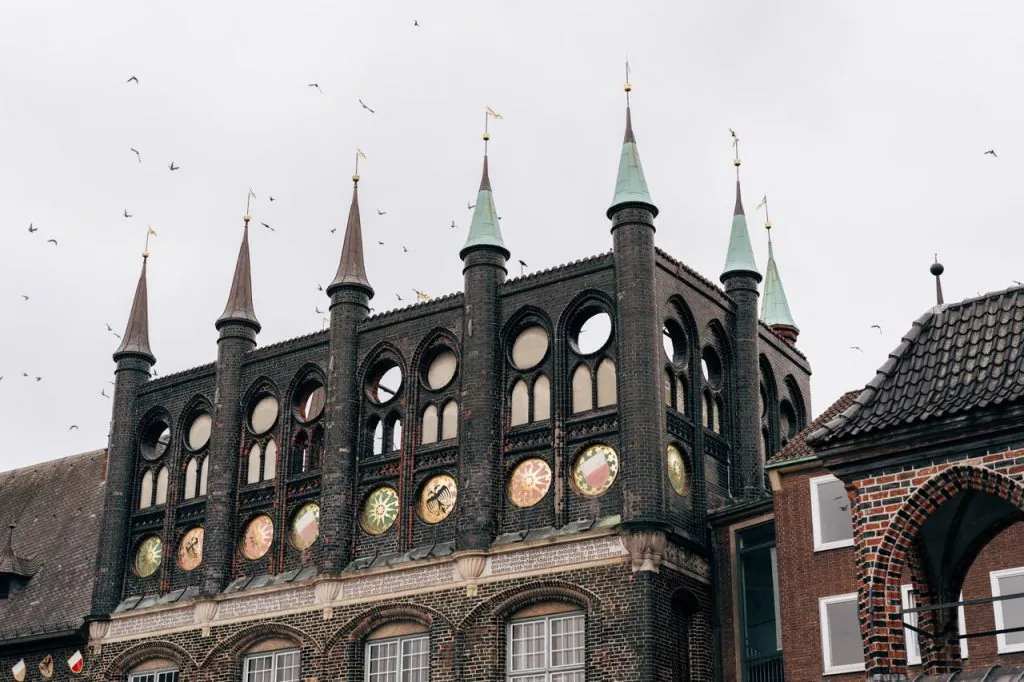
In the middle of the old town is Lübeck Town Hall, Rathaus, which began construction as early as the 13th century and was expanded over the centuries that followed.
The result is a fascinating mix of different building styles, with dark brick, decorative gables and towers. Once the seat of one of Europe's most powerful trading cities, it is also close to the Markt, the historic market square, and the large St. Mary's Church.
5. Visit St. Mary's Church
St. Mary's, or Marienkirche, is one of the buildings that most clearly tells of how wealthy Lübeck once was. The huge brick church was built mainly in the 13th and 14th centuries and became a model for many other brick Gothic churches around the Baltic Sea. The church's two towers are part of the famous skyline that characterizes Lübeck.
The church was partially destroyed by bombing in 1942 but was rebuilt after the war. UNESCO highlights both St. Mary's Church and Lübeck's other monumental brick buildings as important parts of the world heritage.

6. Eat marzipan in Lübeck
Then we get to the really important thing: the marzipan! Lübeck is so associated with marzipan that you can hardly visit the city without at least tasting it. And for us, it didn't end there. and small taste.
The most famous manufacturer is Niederegger, which was founded by confectioner Johann Georg Niederegger in 1806. The company already supplied its sweets to the Russian Tsar's court in the 19th century and is today run by the eighth generation of the family.

7. Visit Café Niederegger and the Marzipan Museum
Niederegger's classic Stammhaus is located on Breite Straße opposite the town hall. On the ground floor is the shop, upstairs is the café and further up is a small marzipan museum, the Marzipan Museum.
There you can learn more about how marzipan is made and about Niederegger's more than 200-year history – and see impressive creations made from marzipan.
We were particularly caught up in the shelves in the shop. There is marzipan in every conceivable shape and packaging, and it is surprisingly difficult to leave the place empty-handed. When we were here, Christmas was also approaching, so we had the perfect excuse: Christmas presents!

8. See the old salt warehouses
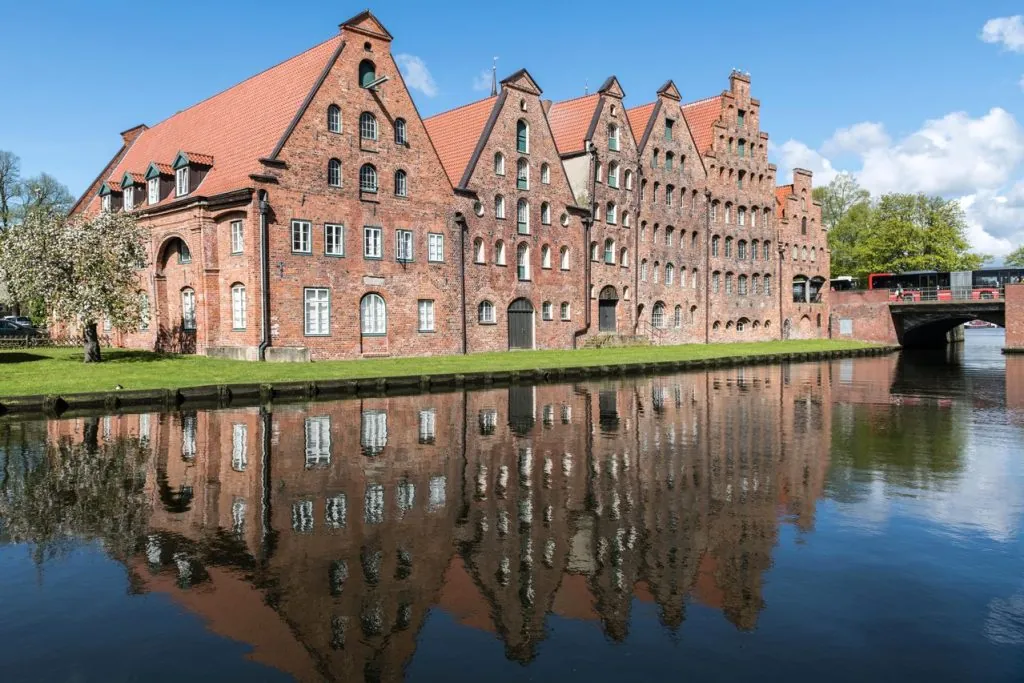
Next to Holstentor is a row of characteristic brick houses called Salt storage, The salt store. Salt was a very valuable trade item during the Middle Ages. It was transported from Lüneburg to Lübeck, among other places, and then shipped out into the Baltic Sea area, where it was needed to preserve fish in particular.
The warehouse, together with the Holstentor and the Trave River, today forms one of Lübeck's most classic views. The salt warehouse is also part of the historic environment that UNESCO particularly highlights.
9. Learn about the Hanseatic League at the Europäisches Hansemuseum
If you want to understand why Lübeck became so important, European Hanseatic Museum, the European Hanseatic Museum, one of the city's most interesting attractions.
The museum tells the story of the origins, trade and people of the Hanseatic League, and the network of trading cities that influenced the economy and politics around the Baltic and North Seas for centuries. The museum is also located next to the historic Burgkloster, a former Dominican monastery and an important part of Lübeck's medieval environment.
10. Discover Lübeck from the water
Lübeck's old town is surrounded by water, and this gives you a completely different perspective of the city from a boat. During parts of the year, sightseeing boats go around the old town and along the Trave. From the water, you can see the church towers, the old house facades and the quays from a different angle.
Even a walk along the water is pleasant. At Museum Harbor A number of historic sailing ships and other traditional boats are moored.

11. See Heiligen-Geist-Hospital
Holy Spirit Hospital, the Helgeandshospitalet, is another of Lübeck's special historical buildings. It was founded by wealthy merchants in the 13th century for the elderly and sick and is considered one of the oldest surviving examples of social institutions from the Middle Ages in Europe. The building is located at Koberg in the northern part of the old town and is worth seeing even from the outside.
12. Experience Lübeck at Christmas time
We visited Lübeck in November and arrived a little too early for the Christmas markets. However, preparations were already in full swing, with market stalls all around the city center and Christmas just around the corner.
And Lübeck undeniably feels like a city that is well suited to Christmas time. The combination of medieval alleys, brick houses, church towers and marzipan does its job. If you want to travel here specifically for the Christmas markets, however, it is wise to check the current dates and programs before your trip, as they vary from year to year.

Lübeck and Sweden – a long shared history
During the Hanseatic period, Lübeck had strong connections with Swedish trading cities, not least Visby and Stockholm. And in the 16th century, the city also played an important role in Gustav Vasa's struggle against Christian II.
After his captivity in Denmark, Gustav Eriksson, the future Gustav Vasa, fled to Lübeck in 1519. Later, Lübeck provided financial and military support for the rebellion against Christian II. But of course, it was not quite as simple as ”the Lübeckers saved Sweden” – Lübeck also had strong economic interests in countering the power of the Danish king and protecting its trade in the Baltic Sea.
The support was important for Gustav Vasa's victory, but also costly for Sweden. When Gustav became king in 1523, Sweden was heavily indebted to Lübeck, which affected relations between the countries in the years that followed.
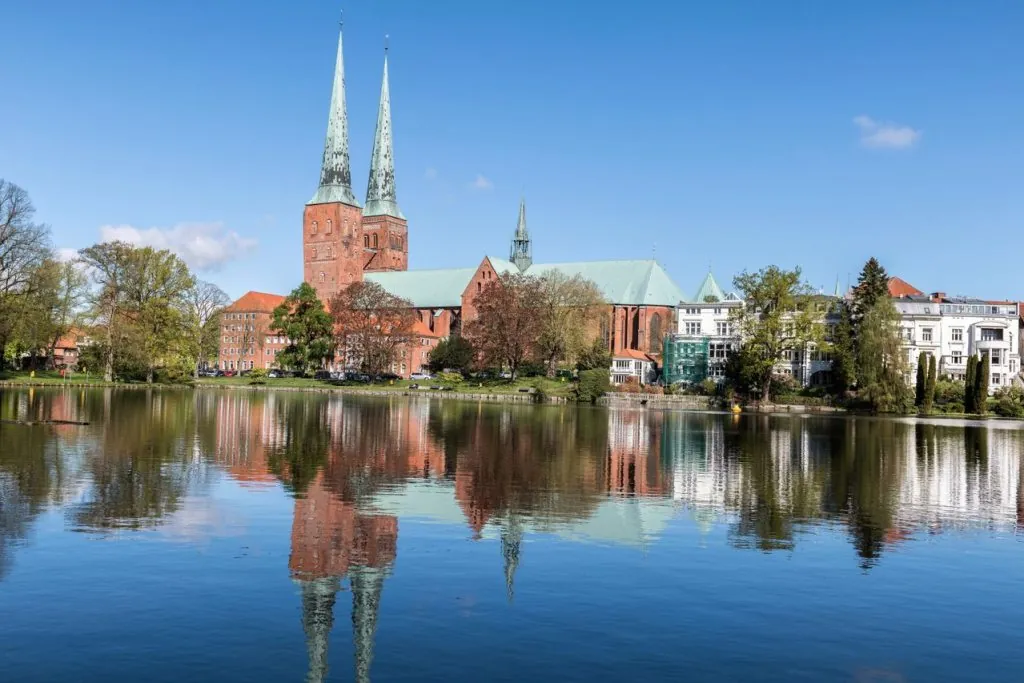
Practical information about Lübeck
- Country: Germany
- State: Schleswig-Holstein
- Region: Northern Germany
- Old Town: UNESCO World Heritage Site since 1987
- Known for: Hanseatic League, Holstentor, brick Gothic and marzipan
- Good to know: The old town is compact and much can be experienced on foot.
How much time do you need in Lübeck?
We speak from personal experience when we say: more than a late afternoon! We managed to get a nice first impression of Lübeck, see some of the most important sights and of course buy some marzipan. But the city deserves much more time than that.
For a first visit, we would like to have at least a full day, and with two days there is time to walk around properly, visit some museums and churches, eat well and maybe take a boat trip.
More to see near Lubeck
If you have more time, you can continue your journey to beautiful and interesting places nearby. Here you will find tips and reports:
FAQ - frequently asked questions about Lübeck
What is Lübeck known for?
Lübeck is known above all as one of the most important cities of the Hanseatic League, for its UNESCO-listed old town, the Holstentor and the city's marzipan. The historic skyline with its seven church towers is also strongly associated with Lübeck.
Is Lubeck worth a visit?
Yes. Lübeck is one of northern Germany's most interesting historic cities and is particularly well suited for those who enjoy old town centers, history, architecture and culinary experiences. In addition, the old town is relatively compact and easy to explore on foot.
How much time do you need in Lübeck?
A full day is enough to see several of the most important sights, but two days provides a much calmer experience and the opportunity to visit museums and perhaps take a boat trip.
Why is Lübeck on the UNESCO World Heritage List?
Lübeck is an unusually well-preserved example of a medieval Hanseatic city. The historic town plan, merchant houses, churches, Holstentor and other buildings tell of the city's great importance for trade in northern Europe.
What to see in Lubeck?
Some of the main attractions are the Holstentor, the Marienkirche, the town hall, the historic alleys and courtyards, the salt warehouses, the Heiligen-Geist-Hospital and the European Hanseatic Museum.
Where to buy marzipan in Lübeck?
The most famous manufacturer is Niederegger, whose headquarters are located on Breite Straße in the middle of the old town. There is a shop, café and a marzipan museum here. The company was founded in Lübeck in 1806.
Can you go to Lübeck over Christmas?
Yes, Lübeck is famous for its Christmas markets and the historic city environment is particularly suitable during Advent. Dates and offerings vary from year to year, so check the latest information before your trip.
You might also like:
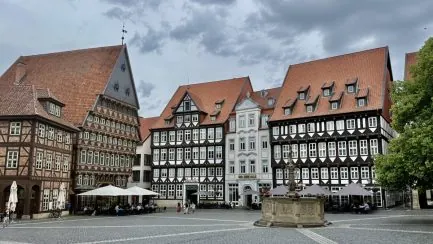 Things to do in Hildesheim – 15 tips for UNESCO World Heritage sites, half-timbered houses and roses
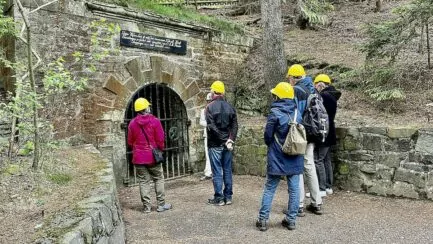 The Rammelsberg Mine – a UNESCO World Heritage Site in Goslar
 Things to do in Goslar - 11 tips for a historic town in Germany
 Things to do in Würzburg - 12 sights and experiences
 Things to do in Bamberg - 14 tips for a lovely German town
 Chemnitz, Germany - European Capital of Culture 2025



 English (UK)
 Svenska
Shefik veliu says:
Hi my friends I see that you are lubeck if you have the road Malmö come and visit pizzeria capone at Limhamn hyllie kyrko väg 51 or call me you have my phone.
20 November 2015 - 14:20
Annika says:
It's nice to go to a real Christmas market.
Love that marzipan, so GOOD! SO good.
I can't believe you'll be back home soon. How quickly your year went by. Guess you'd love to do it again?
Have a nice and pleasant weekend!
20 November 2015 - 14:43
Ruth i Virginia says:
Took the ferry from Lybeck once a long time ago. Unfortunately saw nothing of the city.
It looks incredibly beautiful. Apparently, it wasn't bombed to pieces during the
WWII. Must read up on it.
I love marzipan, but there is none as good here as the one from Europe.
What a nice street in the last picture. Are there pedestrianised streets throughout the city centre?
20 November 2015 - 14:44
Ruth i Virginia says:
Was totally wrong. Just read that Lybeck was the first German town,
which was bombed by the RAF! Thanks and love for Wikipedia! 🙂
(so much you don't know, despite having lived so many years)
20 November 2015 - 14:50
Steve says:
No Christmas market, but there was marzipan anyway. It's not long now before you're on the "right" side of the border.
You must be looking forward to returning to the boat and taking on the role of "homeowner".
20 November 2015 - 14:48
Monet says:
It's so sad that since you changed the format I can no longer read your texts, only see the pictures. Previously - and this is the case on most blogs - you could enlarge the text if your glasses were not enough. This is no longer possible with you, unfortunately. But follow Peter on Instagram and see that you are now soon heading home after a fantastic year! Absolutely wonderful!
20 November 2015 - 16:33
BP says:
Sounds almost like "look, but don't touch" - the Christmas market, that is;-) Soon you will be home again and the marzipan you have bought will certainly come in handy as gifts or on the Christmas table.
20 November 2015 - 16:03
admin says:
Shefik, how nice to hear from you! We would have loved to come by, but we are in more of a hurry up to Stockholm than we thought. We have water damage in our storage room and a boat has hit our boat, so we have to get up and take care of everything as quickly as possible. We are first going to the home of the friends who were supposed to visit us in Croatia (but were injured and had to cancel). All other visits along the way have been cancelled to get up to the boat, so unfortunately it doesn't fit this time. You are very welcome to visit us in Stockholm at any time! Just let us know beforehand so we know we are home!
Annika, time is flying by! We would love to do a similar trip again, but in that case we would choose the more eastern parts of Europe to see something new.
Steve, no Christmas market in Lubeck, but there will be a Christmas market in Riga instead 😉.
Ruth in Virginia, it was an occasional pedestrian street, mostly streets with cars actually. And yes, there are always things you don't know... 😉.
BP, yes, the marzipan will be great for Christmas!
Monet, thanks for your comment but sorry you have this problem! Nobody else seems to have it, but most people say the text is bigger now... I heard before about a command that can enlarge the text. Maybe I can check it out and get back to you!
20 November 2015 - 18:01
Deciree says:
But how nice it looked. Very nice pictures again. Just read that you have problems at home. I really hope that there was not too much damage to your boat...your home. Have a good time and take it easy in the traffic home. Hugs
20 November 2015 - 18:20
Ama de casa says:
Marzipan is just soooo good! Hope you did not buy too nice figures so you do not have to put your teeth in them 😉.
20 November 2015 - 18:41
Resfredag says:
Marzipan and Christmas markets, my two great passions in life - haha! Honestly, December in Germany is a dream.
20 November 2015 - 18:57
Matts Torebring says:
One dream I have is to return to the Christmas market in Lübeck. We touched it when we were there in 1989. But then we drove Alfa Romeo 75 3,0 and were mostly on the autobahn. Welcome back to Scandivavia.
20 November 2015 - 19:58
Åsa says:
Ugh how hard it sounds to come home to! Hope it sounds worse than it is!
20 November 2015 - 20:06
Åsa says:
Flooding and a collision with a boat.
20 November 2015 - 20:06
AktivaDagar-Camilla says:
Wow, you are getting closer to "home" but I can see that there are reasons for that! Maybe good before the snow moves in... Feels a bit unbelievable that you have already travelled for a year! Drive carefully now on the final sprint!
20 November 2015 - 22:01
BP says:
Read your reply to Shefik. Fy f***********************************n what a mess. Coming home to Freedom must feel bad. "Why now" as well as after a year away. I feel incredibly sorry for you actually. Your colleague who rents the boat will not be happy either. F***************n too.-(
20 November 2015 - 22:17
Henny says:
No, but it's a shame that your trip has to end sooner than you intended and with such sad news. But everything will work out, you'll see. Keep your fingers crossed for that.
And, of course, many of us will continue to follow your ongoing adventures, both in the "swamps" and in more distant parts of the world.
20 November 2015 - 23:22
JoY says:
Sad ending to your trip on the boat. Fingers crossed that it can be arranged in a smooth way.
Hugs
20 November 2015 - 23:28
Ditte says:
How nice with a stop in Lybeck, it is a very nice town. Have been here a few times and also at the Christmas market. Really nice, from one who is not so much for the more "Christmas".
And marzipan, I like that.
Also hope the boat Freedom is ok. Understood from other comments that it was more than a collision that was the concern. But I saw them yesterday when I was in the area.
21 November 2015 - 0:01
Marina says:
Lubeck is a lovely town! Don't forget to take it easy on the way to Stockholm even if you're in a hurry!
21 November 2015 - 6:15
Inga M says:
We have been to the Christmas market in Lübeck, otherwise we don't really travel more than within Sweden to the grandchildren. It is special and Niedereggers is an experience!
21 November 2015 - 6:57
admin says:
Deciree, they say there was only damage to the outer casing of the boat, but the bang was heard all over the marina and several neighbours took photographs. So how do we know that nothing is damaged underneath? Besides, it's a special two-component paint that protects against rust and is expensive to replace and tricky to get there... We'll see.
Ama de casa, haha, best not to buy cute pigs and stuff 😉.
Åsa, yes, we hope so too. We know there's water in the storage room, but we don't know how much or which things are wet... (But we have everything we own there, except what's in the car.)
Active Days-Camilla, maybe a week earlier than planned, but on 1 Dec we would be home as planned 😉.
BP, no not funny about the flooding or the boat crash. The boat crash may not be that serious, but hard to tell if there is damage underneath the...
Henny, yes it's sad to have to deal with water damaged storage the first thing you do. But we only come home a week earlier or so, we rent the boat until 1 Dec.
JoY, just grab the stuff and try to fix...
Ditte, it's water damage in the storage room (not in the boat) where we keep our stuff + a crash that damaged the surface layer in one area of the boat (and it's hard to tell if there's damage underneath).
Marina, thank you we will drive carefully! We only have summer tyres, so we will try to avoid mornings and evenings if it is too cold.
Inga M, glad you were in Lubeck! The marzipan is super good! 🙂
21 November 2015 - 8:17
Frankie & Co says:
-5C this morning hua - SMHI predicts snow coming in via Skåne up the country tonight - hope you miss that road condition!
We are emptying and cleaning out our motorhome this weekend - and tonight we spent the night in it at our home ? how cosy ?
21 November 2015 - 10:09
admin says:
Frankie & Co, huh we want to avoid those roads! We can hope that it gets a little warmer in the middle of the day and drive then. Always cosy to live in a motorhome! 🙂
21 November 2015 - 10:47
solan says:
Keep your fingers crossed and hope EVERYTHING works out with both boat and storage. Welcome home despite the sad start in the old country ...
21 November 2015 - 14:26
steel city anna says:
Ah, I so want to go to Germany for the Christmas market. Great pictures!
21 November 2015 - 15:49
admin says:
Solan, thank you very much!
Steel city Anna, it would have been nice to have been here a few days later when the market started!
21 November 2015 - 17:00