

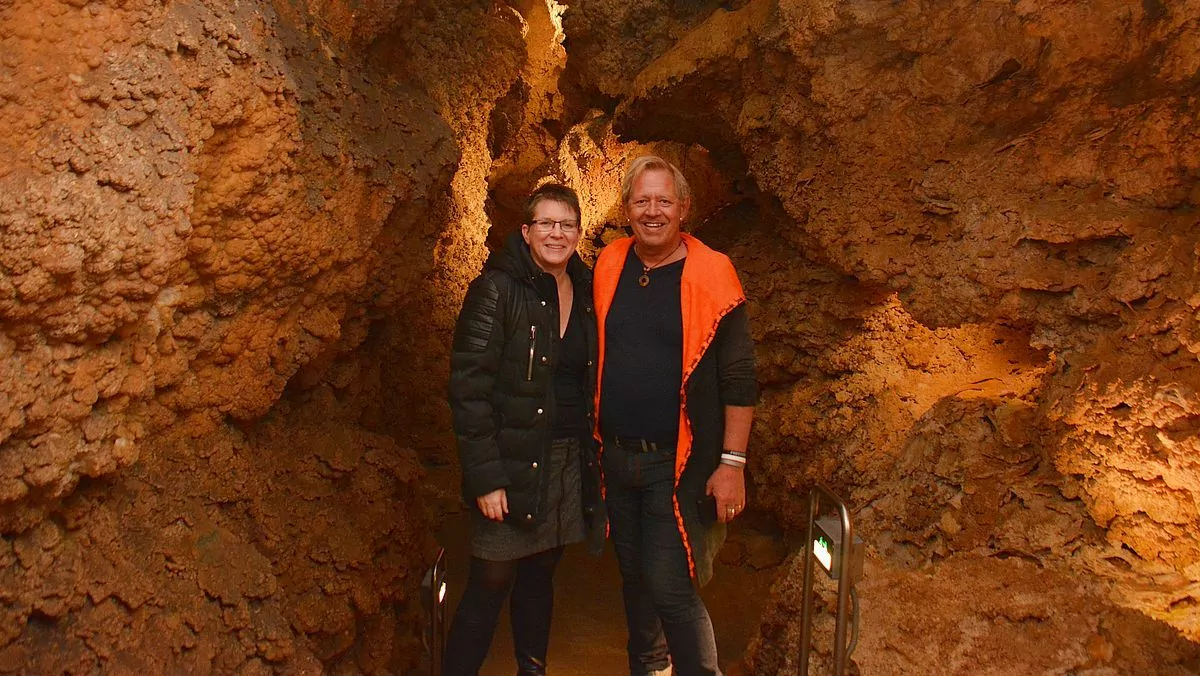
Writer: Helena Bergström
Updated: September 2026 | Did you know that there is a fascinating system of caves under parts of Budapest? The caves under the Buda side are also connected to the city's famous thermal waters. We have visited Szemlő-hegyi ourselves, but there are several different cave experiences to choose from – from a simple walk on landscaped passages to adventures with a helmet, headlamp and crawling on all fours.
 Tweet
 Share
 Share
 Pin
 Share
 Share
Table of contents
Caves in Budapest
Budapest may be more associated with grand buildings and thermal baths than caves, but beneath the Buda Mountains lies a completely different world.
The bedrock consists of limestone, and over a very long time, hot water has risen through cracks and dissolved the rock, creating large underground cavities and passages.
The caves and Budapest's thermal waters are thus geologically linked. The water that has made the city famous for its baths is part of the same fascinating underground world that has helped shape the caves. Several caves can be visited, and they are quite different from each other.
Which cave in Budapest should you choose?
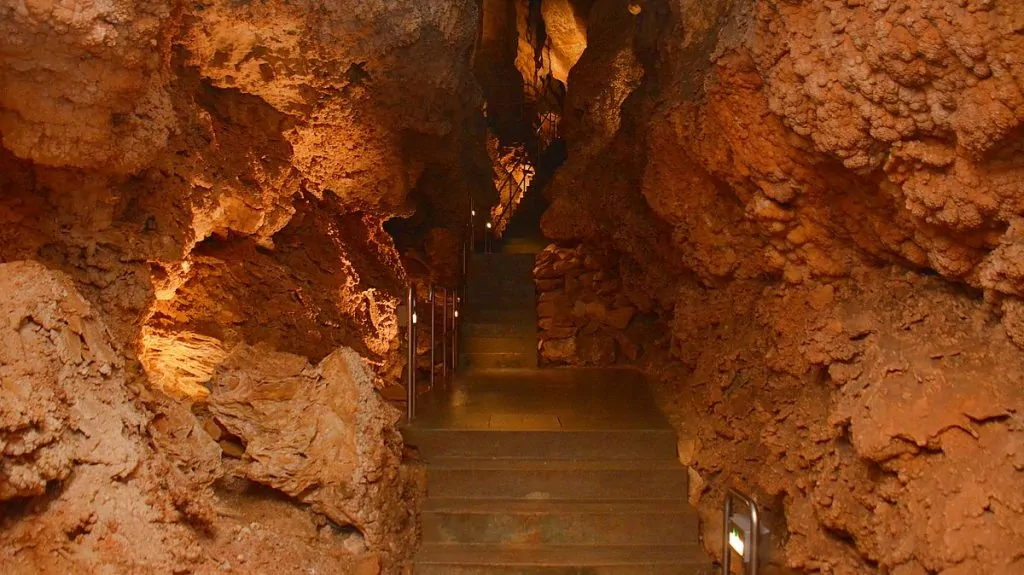
Do you want to make it easy for yourself? Szemlő-hegyi the obvious option. The landscaped part is easy to walk and also works with wheelchairs and strollers.
If you want a little more physical activity, you can choose Pál-völgyi, where the regular tour includes over 400 steps and a ladder.
For the adventurous, there are also tours in undeveloped cave passages where you are given overalls, a helmet and a headlamp and must be prepared to both crawl and climb.
Another option is Buda Castle Cave under the castle area, where nature and Budapest history meet underground. We started by heading towards Pál-völgyi and Szemlő-hegyi. It didn't quite turn out as we had planned...
1. Szemlő-hegyi – an easily accessible cave
Szemlő-hegyi Cave is a good choice for those who want to experience Budapest's underground world without having to crawl through narrow passages. The cave was discovered in 1930 and today has about 2.2 kilometers of known passages. About 300 meters are open to visitors.
The temperature is around 12 degrees all year round, so an extra sweater is a good idea even if it's warm outside. The landscaped visitor area is accessible for both wheelchairs and strollers.
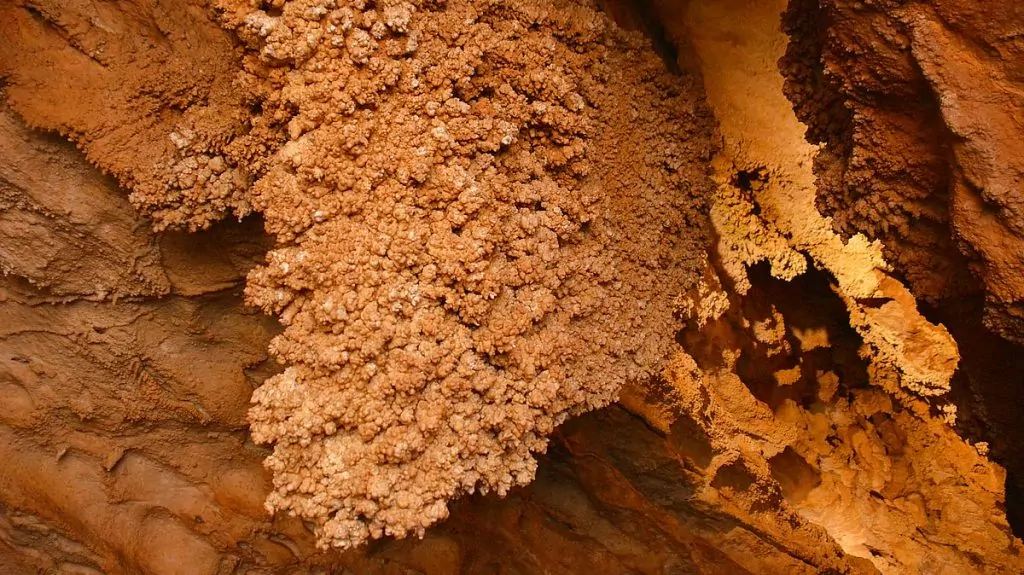
The special thing about Szemlő-hegyi is, among other things, the strange formations on the walls. Since the cave was formed by thermal water, it doesn't really look like the classic stalactite cave you might imagine. Here, among other things, there are mineral formations that resemble small peas and cauliflower.

Our visit to Szemlő-hegyi
When our blog tour in Budapest was over, we had a day to ourselves in the city. We had heard about the caves and learned that Pál-völgyi and Szemlő-hegyi are quite close to each other.
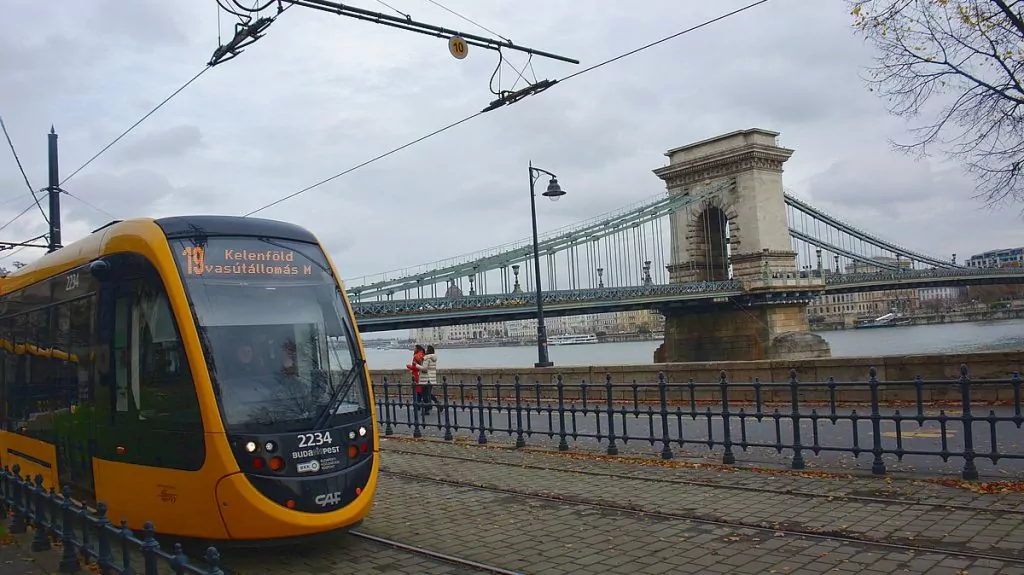
One would be easy. The other would be more adventurous. We headed towards the Buda side to investigate. We took the tram to Kolosy tér, where we first got hungry and ended up at a sushi restaurant with sushi on a conveyor belt. After all, cave adventures require energy…

We had planned to take the bus for the last part, but decided to walk instead. That decision felt a little less well-thought-out when we discovered that it was uphill almost the entire way. Considering how much we had eaten in the previous days, it was probably still healthy…
First we ended up at Pál-völgyi
Finally we arrived at Pál-völgyi. Outside the reception stood a group of excited cave visitors dressed in overalls and helmets. I, Helena, looked at them. ”Is this the more adventurous cave?” Yes, we were told.
Here you could, among other things, embark on much more advanced cave adventures. Peter would have certainly been happy to join in. I myself am not particularly fond of the combination of cramped spaces, crawling and mountains above my head. ”Eeeeh … where is the other cave?” We walked on to Szemlő-hegyi.
Alone with the guide under Budapest
When we arrived, we were lucky enough to join one of the last tours of the day. We were even luckier when it turned out that we were completely alone with the guide. The young guide spoke good English and took us through the landscaped part of the cave while she told us about the geology, the discoveries and the strange formations on the walls.
We saw, among other things, the typical shapes that resemble peas and cauliflower. She also told us about the special air in the cave. Szemlő-hegyi is classified as a medical cave and parts of it have been used in connection with the treatment of asthma, among other things. But one of the stories that stuck with us the most was about a woman named Mária.
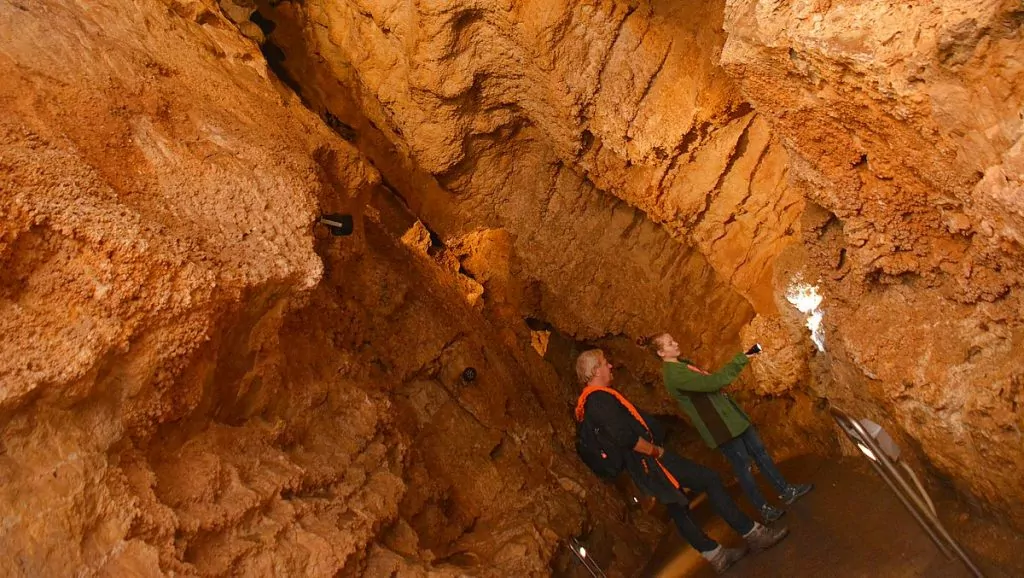
Speleologist Mária made it through the ”eye of the needle”
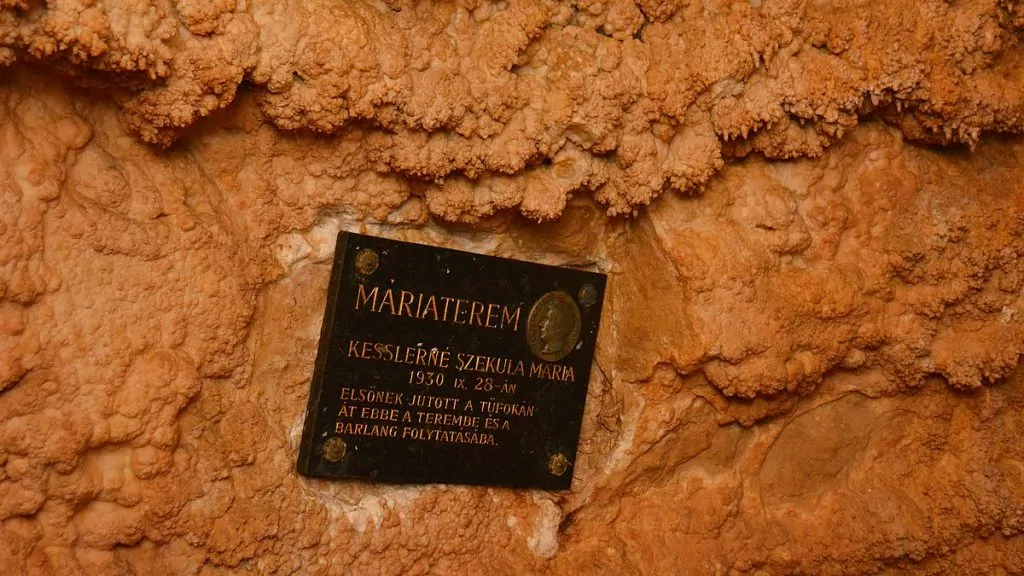
When we first heard the story, we thought of Mária as an adventurous girlfriend who refused to accept that the cave ended. The story is actually even better. Maria Szekula was a mountaineer and speleologist herself and participated in the exploration together with, among others, the well-known Hungarian speleologist Hubert Kessler, who later became her husband.
During the exploration, Mária managed to get through an extremely narrow passage that the others could not pass. The passage is called Tű foka, roughly ”the eye of a needle.” Thanks to her, the exploration could continue on the other side.
One of the halls in the cave is today called Maria's house, Mariasalen, after her. We saw the name on the wall during our visit. Suddenly, walking alone on a lit hallway feels quite modest…
2. Pál-völgyi – Budapest's longest cave system
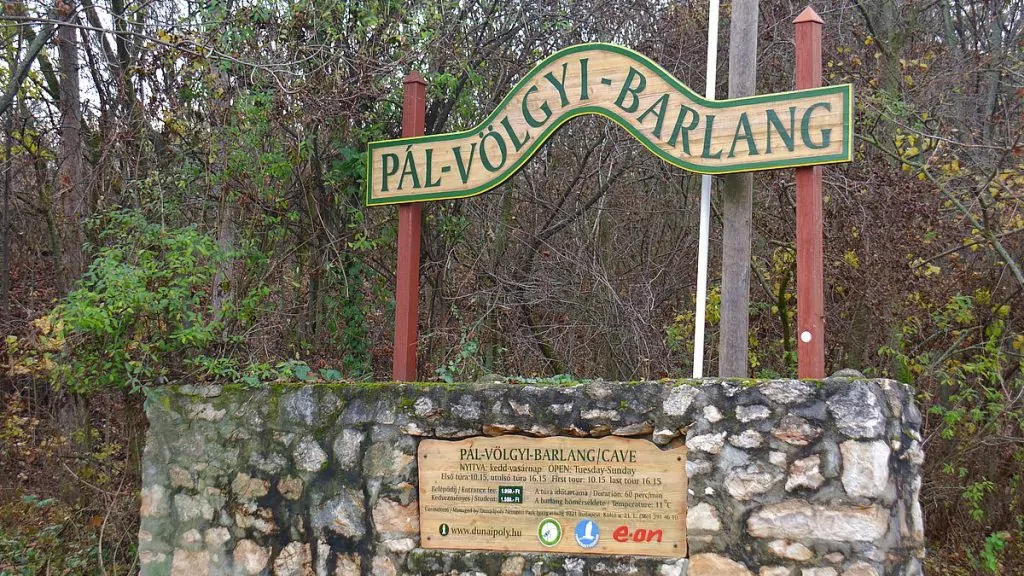
Pál-völgyi Cave is a much more physical alternative, but here we need to correct one thing from our first visit. We got the impression that Pál-völgyi was the cave where you have to dress in overalls and crawl and climb. It doesn't have to be that way at all.
There is a regular guided tour of about 500 meters that takes about an hour. However, the tour includes over 400 steps and a ladder, so it requires more mobility and stamina than Szemlő-hegyi.
Pál-völgyi is part of a cave system with about 32 kilometers of known passages and is the longest known cave system in Hungary. The cave was discovered in 1904 and has been open to visitors since the beginning of the 20th century. There are both forms created by thermal water and more classic stalactite formations. The temperature is about 11 degrees all year round.
3. Adventure Cave – crawl and climb under Budapest
And what were all the people in overalls and helmets doing that scared me away? For those who really want a cave adventure, there are tours in undeveloped parts of the cave system. Mátyás-hegyi is the part that is primarily used for that type of adventure.
This is no longer about walking along a lighted visitor path. On the adventure tours, participants are given overalls, a helmet and a headlamp and then set off into natural cave passages. This can involve several hours of crawling and climbing, sometimes on all fours.
So it's a completely different experience than the standard tours in Szemlő-hegyi and Pál-völgyi. Peter? Absolutely. Helena? I think the cauliflower formations in Szemlő-hegyi were very beautiful...
4. Buda Castle Cave – under Castle Hill
There is also a completely different kind of cave experience in the middle of one of Budapest's most visited areas.
Under Castle Hill in Buda There is a system of approximately 3.3 kilometers long where natural limestone caves have been connected with man-made cellars and other underground spaces. Here geology and history meet.
Over the centuries, the underground spaces have been used in various ways, and the stories range from medieval cellars to air raid shelters during World War II.
Today, guided walks are organized in the Buda Castle Cave. There is both a longer tour of about 1.5 kilometers and 1.5 hours and a shorter tour of about 45 minutes. Tickets need to be booked online in advance.
Why are there thermal caves in Budapest?
What makes the caves in Buda particularly interesting is how they were formed. In many classic limestone caves, the water comes primarily from above. Rainwater finds its way down through the bedrock and slowly dissolves the limestone.
In the Buda Mountains, hot water has also risen from deep within through cracks in the rock and dissolved the limestone from below. This is why many of the caves are often described as thermal or hypogean caves.
As the Danube cut deeper into the landscape over time and the Buda Mountains rose, old cave passages ended up above the groundwater level and became dry.
Later, water from the ground surface was also able to find its way into the systems. Therefore, you can find both formations created by thermal water and more traditional stalactite formations. It is a geological history that is still ongoing around Budapest.
And the next time you sit in a warm thermal bath in the city, you can think about the fact that Budapest's famous baths and the caves under Buda have a common underground history.
Good to know about caves in Budapest
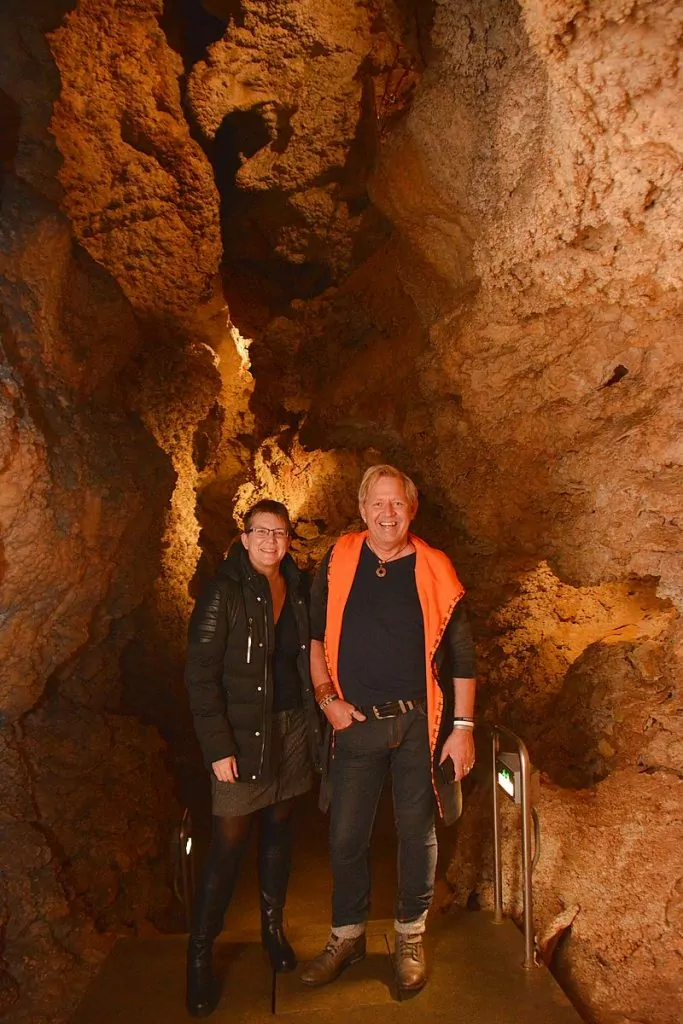
The caves are cool all year round. Expect temperatures of around 11–12 degrees in the landscaped caves and bring an extra sweater even during the summer.
Szemlő-hegyi is the easiest choice and also works with a wheelchair and stroller.
Pál-völgyi requires significantly more physical mobility due to all the steps and ladders. There are also age and height limits for children.
The two caves are relatively close to each other and there is a combination ticket for those who want to visit both.
For adventure cave Special requirements apply and tours must be booked. Always check current availability and terms and conditions before you go.
Also Buda Castle Cave must be booked in advance.
More underground experiences in Budapest
If you want to continue underground, there is also Hospital in the Rock Nuclear Bunker Museum under the Castle Heights.
It is not a cave in the same sense as Szemlő-hegyi or Pál-völgyi, but a historical underground facility. Here was a hospital that was used during World War II and later expanded to also serve as a nuclear bunker.
It is therefore better suited as a bonus tip for those who have become curious about underground Budapest than as another cave.
More to see and do in Budapest
When you emerge into the daylight again, there is of course much more to discover. For example, you can bathe in Budapest's thermal baths and experience another part of the city's fascinating relationship with underground water.
We have also written about shopping, restaurants, bars and cafes, Christmas markets and many other attractions and experiences in Budapest. Here you will find our big guide as well as many more reports and tips.
- Things to do in Budapest
- Restaurants in Budapest
- Cafes and bars in Budapest
- Thermal baths in Budapest
- Shopping in the Hungarian capital




 English (UK)
 Svenska
Emma, Sol som sol? says:
How caves attract and discourage at the same time! It is fascinating to see the formations formed by natural means. As for the fact that those with respiratory problems were prescribed to sit there for an hour a week, it would be interesting to know what makes them feel better afterwards. What is so special about these Hungarian caves that they provide relief?
27 November 2019 - 9:23
Helena says:
Good question! The air in the caves is a bit special (more humid?), but if there is really evidence that it has an effect ... I don't know?
27 November 2019 - 21:47
Ama de casa says:
How cool! I had no idea there were caves there. Yet another reason to return to Budapest - visit caves and document the food 😉.
27 November 2019 - 9:34
Helena says:
Yes, but isn't it? 🙂
27 November 2019 - 21:48
BP says:
I also had no idea that there were caves in Budapest. I have only visited caves in France and there the formations are completely different. No peas and cauliflower but only stalagmites and stalactites. Even the colour is more white/grey. Exciting.
27 November 2019 - 18:28
Helena says:
In France there are some cool caves with cave paintings and such, I understand! We have seen stalagtites and stalagmites in other places, such as Sardinia. Here there was nothing like that ... But still a bit cool with caves in the city 😉.
27 November 2019 - 21:50
Ruth i Virginia says:
Budapest apparently has everything. 🙂
I don't like caves with narrow holes.
Big caves, like Carlsbad Caverns, for example.
The big surprise was the caves on Gibraltar. Our
tour guide said, that Gibraltar is like Swiss cheese.
Interesting!
27 November 2019 - 22:09
Anonymous says:
Underground tunnels in Prague, Naples, London, Turkey, Edingburg, Paris etc.........mm.... kilometres and no one asks why and who dug them........Only a few know. Whoever seeks the answer will find it!
05 February 2022 - 21:55