




Writer: Helena Bergström
Updated: August 2026 | The Passion Play in Oberammergau, Germany, is a five-hour, powerful dramatization of Jesus' suffering, death, and resurrection. The play is performed every 10 years and has been done regularly since 1633. The more we read about it, the more fascinated we become.
 Tweet
 Share
 Share
 Pin
 Share
 Share
Table of contents
Passion play in Oberammergau
The story of the Passion Play in Oberammergau began almost 400 years ago. In 1633, the small village, like many other places around Europe, was hit by the terrible plague. In a short time, a large number of the village's inhabitants died, and in desperation they promised to stage a play every 10 years about the suffering, death and resurrection of Jesus Christ.

The first Passion Play was performed in 1634, and the villagers have kept their promise ever since. The play has been passed down from generation to generation and is performed regularly every 10 years, with a few exceptions due to world wars and bans due to secularization.
The 2020 Passion Play has been postponed due to the pandemic
The Passion Play was supposed to be held in 2020, but had to be postponed due to the coronavirus pandemic. Instead, it was held two years later, in 2022. There is a certain historical irony in this: the tradition of the Passion Play arose after the residents of Oberammergau made a promise during the plague epidemic of 1633.
Theatre for the Passion Play in Oberammergau
Initially, the Passion Play in Oberammergau was staged outdoors, in simple conditions and in the cemetery. The first real Passion Play theatre was opened in 1820. The theatre was then rebuilt in 1890 and 1930, and in 2000 it was given a facelift again.
The oldest surviving text of the drama used dates from 1662 and is based on 15th century texts. Originally written in verse, the text was revised in 1850 by Joseph Alois Daisenberger. The music was composed in 1811 by Rochus Dedler.

Did you know that ...?
The powerful performance lasts for five hours and involves more than 2,000 people. Almost half the population of Oberammergau, which has just over 5,000 inhabitants, attends to devoutly tell the story of Jesus of Nazareth. Did you know that ...?
- Only residents of Oberammergau are entitled to play in the passion games. To be considered a resident in this case, you must have grown up there, or have lived there for at least 20 years.
- According to a hair and beard decree actors are not allowed to cut their hair 1.5 years before the game, starting from Ash Wednesday (Carnival). The only exceptions are those playing Roman soldiers.
- Married women over 35 years old were excluded from participating in the Games until 1984.
- Only Christian actors were allowed to play until 1990. From 2000, Muslims are also allowed in the games.
- Queen Victoria of Sweden (then Victoria of Baden) visited the Passion Play in 1880.

Good to know about the Passion Play in Oberammergau
- What? Passion play depicting the suffering, death and resurrection of Jesus.
- Tradition: The Passion Play originated from a promise made by the residents of Oberammergau during the plague epidemic of 1633. The first performance was held in 1634.
- How often? The games are normally held every ten years.
- Next passion game: 2030.
- Location: Passion Theater in Oberammergau in Bavaria.
- Participating: A large part of the actors and other participants come from Oberammergau. At the 2022 Games, almost 1,800 people from the town participated.
- Language: The performance is performed in German.
- The theater: The stage is open to the outdoor environment while the audience sits under cover.
- Tickets: Information about tickets, game dates and any packages for the next Passion Play is published by the organizer.
- More information: Oberammergau Passion Play
More to see in the area
If you're travelling to see the Passion Play in Oberammergau, you might also want to check out the surrounding area. Here you can experience beautiful nature, lakes and castles. Here are some specific tips. We have visited one of the places (Neuschwanstein Castle) and other tips come from the German Tourist Board. Stay tuned!

1. Lake Ammersee
Ammersee is a lake located south-west of Munich. At the southern end of the lake, there is a small island called 'Schwedinsel' (Swedish Island). The story behind the name is that during the 30 Years' War the inhabitants of the town of Diessen sought refuge here when their village was threatened by Swedish soldiers. Today the lake is a quiet recreational area with marinas and campsites.

- Distance from Oberammergau: 60-80 kilometres
- Camping: Utting am Ammersee
- Read more: Bayregio Ammersee

2. monastery of Ettal
Ettal Abbey is a Benedictine monastery in the village of Ettal, near Oberammergau and Garmisch-Partenkirchen. The village has just over 700 inhabitants, 50 of whom are monks, so it is understandable that the monastery is an important part of the community. The monastery is also one of the largest Benedictine houses and a significant attraction for visitors.
- Distance from Oberammergau: 5 kilometres
- Camping: Campingpark Oberammergau

3. Linderhof Castle
Linderhof is a castle near Oberammergau. It is the smallest of three castles built by King Ludwig II of Bavaria, also known as Mad King Ludwig. Linderhof was built between 1874 and 1878 and is the only one of Ludwig's castles to be completed. It is also the only castle where Ludwig himself lived for an extended period of time. There is also a castle park with a castle theatre in a cave.
- Distance from Oberammergau: 14 kilometres
- Camping: Campingpark Oberammergau
- Read more: Linderhof Castle

4th Neuschwanstein Castle
Neuschwanstein is a castle that was also built by King Louis II of Bavaria. The castle is seen as the model for Disney's Sleeping Beauty Castle, and is perhaps one of the most famous castles in the world. We visited it ourselves in November 2015, but you may also have seen it on posters and puzzles. We highly recommend a visit, but be prepared for many tourists.
- Distance from Oberammergau: 45 kilometres
- Camping: Camping Brunnen or Camping Hopfensee
- Read more: Neuschwanstein

5. The Wieskirche Valley Church - a Unesco World Heritage Site
The Vallfartskirche in Wies is a church building in Wies in the federal state of Bavaria. The church was built in the mid-18th century and in 1983 it was added to the UNESCO World Heritage List.
- Distance from Oberammergau: 25 kilometres
- Camping: Terrace camping at Richterbichl and Via Claudia Camping

6. murnau
Murnau am Staffelsee is a town in Garmisch-Partenkirchen. The town is known for its artists, such as the female artist Gabriele Münter and the "Der Blaue Reiter" artist group with Franz Marc and Wassily Kandinsky.
- Distance from Oberammergau: 25 kilometres
- Camping: Camping Burg Peninsula
- Read more: Murnau

7th Zugspitze
Zugspitze is Germany's highest mountain. It is located in the Bavarian Alps and its highest peak measures 2,962.06 metres above sea level. The mountain was first climbed in 1820.
Today you can make it easier for yourself and get to the top by cable car, either with the Tiroler Zugspitzbahn or the Eibsee-Seilbahn. You can also take the Zugspitzbahn train and walk the last 300 metres on foot, or combine it with the Gletscherseilbahn cable car. Near the summit is Germany's largest glacier, the Schneeferner.
- Distance from Oberammergau: 40-70 kilometres
- Camping: Camping Experience Zugspitze and Camping Resort Zugspitze
- Read more: Zugspitze


Have you heard about, or seen, the Passion Play in Oberammergau?
Had you heard of the Passion Play in Oberammergau before? Or maybe you have even seen them? Have you travelled in Bavaria?
You might also like:
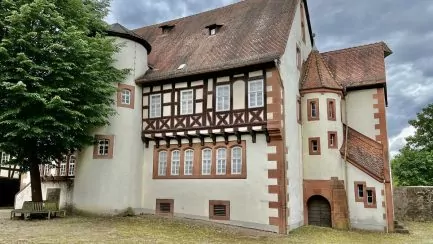 Steinau an der Strasse - with the Brothers Grimm house
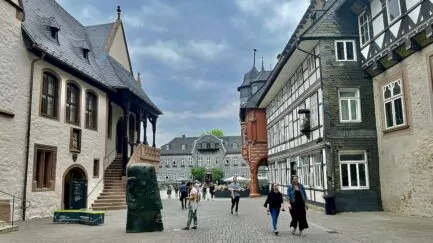 Things to do in Goslar - 11 tips for a historic town in Germany
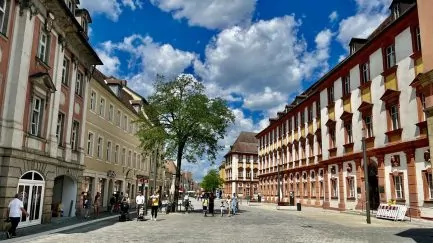 Things to do in Bayreuth, Bavaria - our top 11 tips
 German food - 25 classic dishes you must try
 Things to do in Hildesheim – 15 tips for UNESCO World Heritage sites, half-timbered houses and roses


 English (UK)
 Svenska
Lena - gott för själen says:
Unbelievable! What a thing. So many people in such a small village and for so long have held on to this tradition! Very fascinating. I had never heard of that. I am meeting a number of people tonight who have roots in Germany (A's family and relatives). If I remember, I will ask them if they recognise this event.
Have a nice Saturday!
Hug Lena
22 February 2020 - 6:58
Helena says:
Right? Really fascinating! Fun if you remember to ask the family, feel free to tell us later! 🙂 Nice weekend!
22 February 2020 - 18:01
Matts Torebring says:
I knew that the Passion Play in Oberammergau existed, but not all this. It makes me long to go there. I think my eyes would tear up if I stood there. What a great post by you, it was fantastic! Feels almost unreal, that it is described as you do, so worth reading and nice. It was one of your best posts. So nice to read about this fantastic commitment, by everyone who lives in the small village. It is something else than our own de-Christianised, secularised and atheistically thinking country. Sweden should be ashamed, which cannot even have a school graduation in the church.
22 February 2020 - 7:49
Helena says:
Glad to hear you enjoyed our post Matts! We found it really fascinating to read about this. It's incredibly cool that they're keeping up the tradition!
22 February 2020 - 18:02
Nils-Åke Hansson says:
Interesting post and great tips if we get away this summer. Have Switzerland in mind for the summer.
22 February 2020 - 10:52
Helena says:
Yes, there is a lot to experience in this area! Glad you are thinking about Switzerland, super nice there too!
22 February 2020 - 18:04
Lena Sjöberg says:
I knew about the Passion Play and Neuschwanstein, but not your other tips. Just wondering if the games can really be realised this year given Corona.
22 February 2020 - 13:53
Helena says:
Glad you knew about the games, and great if we could give you some other tips! And the games are fully planned!
22 February 2020 - 18:07
Geddfish says:
A very nice post by you about this game! That you have managed this for so many years and that the locals are so supportive!
Yes, I know about this, but have not been there and have not thought about going there. I realise that it is powerful and a great experience, and there are so many beautiful things to look at.
There is another passion play held every five years in Wintrich in the Palatinate. The next one will be in 2022.
Happy Saturday!
22 February 2020 - 14:46
Helena says:
Isn't it great that it's been going on for so long and that the village is involved, generation after generation. Thanks for the tip about the other passion play! I understand that there are more, although this is perhaps the most famous.
22 February 2020 - 18:09
Maria / MagnoliaMagis says:
This was new! What dedication they must have! No, there will be nothing this year, we'll see in 2030.... The monastery and castles I want to see the next trip to Germany!
22 February 2020 - 17:32
Helena says:
Isn't it? Of course it's cool! Haha, well then you have to aim for 2030 😉.
22 February 2020 - 18:10
BP says:
Having lived and worked in Munich for 7 years, I have seen the Passion Play in Oberammergau. At that time the games included a "march" through the village with Jesus carrying the cross. Just playing Jesus was and probably still is an incredibly big deal and a great honour. I know that more "Jesuses" were recognised after they participated in the games and then made a career as an actor.
Interesting about the other rules you listed. I had no idea about that.
Oh yes, I have been up on the Zugspitze and skied down to Garmisch Partenkirchen. Zugspitze is a glacier so you can go there between November and May. I was there one sunny day in April and burned both my face and eyes - oooops;-)
22 February 2020 - 18:17
Helena says:
But what fun that you actually saw this game!!!! Interesting about Jesus, but you can perhaps understand that it is a special thing to get that role!
23 February 2020 - 9:01
AD says:
In 1970, the church games group I was in travelled down to Oberammergau to watch the games. Incredibly impressive and inspiring for us young people!
23 February 2020 - 23:44