

Writer: Helena Bergström
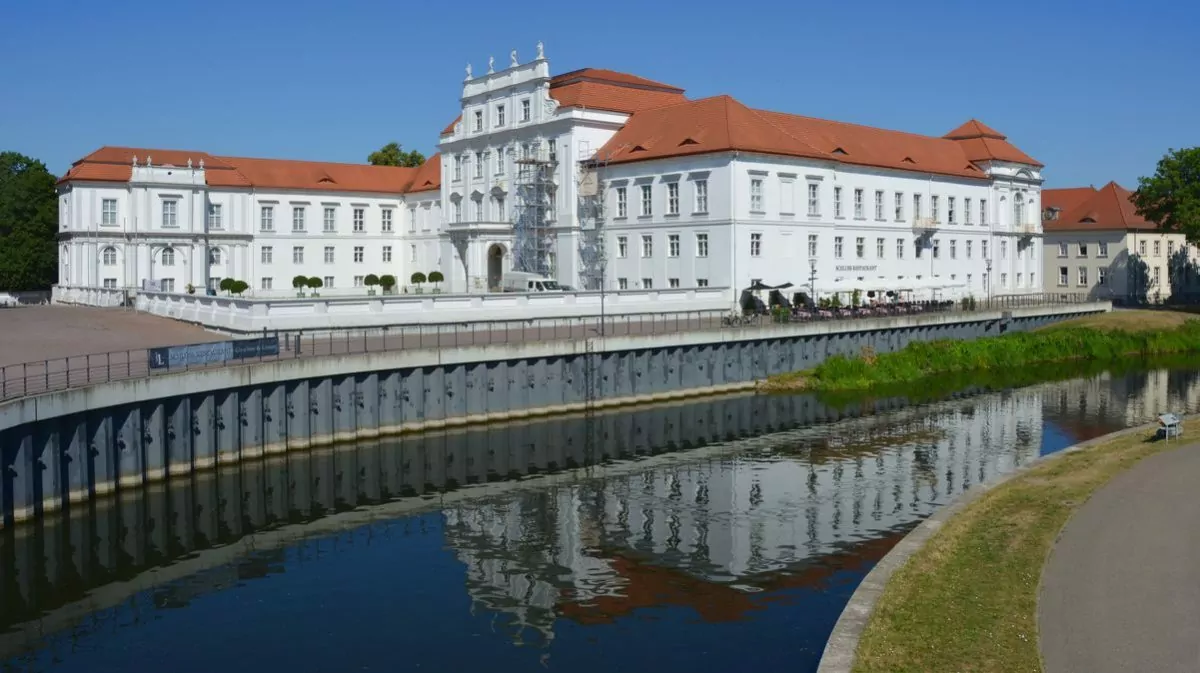
Updated: August 2026 | Oranienburg is located just north of Berlin and is a good stop during a tour of Brandenburg. Here you will find a magnificent baroque castle with a large castle park, beautiful surroundings by the water and good opportunities for those traveling by motorhome. At the same time, the city carries a much darker history through the Sachsenhausen concentration camp.
 Tweet
 Share
 Share
 Pin
 Share
 Share
We visited Oranienburg by camper and were particularly captivated by the beautiful castle and castle park.
Table of contents
Oranienburg – just north of Berlin
Oranienburg is located in Brandenburg, about 35 kilometers north of central Berlin. The Havel River flows through the city and here you will find canals, a marina and green areas.
The city's most eye-catching building is without a doubt Oranienburg Castle, whose history has also given the city its current name. But Oranienburg is a city of great contrasts. Here, Prussian splendor and beautiful castle environments meet one of the darkest parts of Europe's 20th century history.
Oranienburg Castle
There was already a fortified settlement on the site of today's castle in the Middle Ages. Later, a hunting lodge was built here, but it was in the 17th century that the site began to transform into the magnificent residence we see today.
From 1651 a new country residence was built for Lovisa Henrietta of Orange-Nassau, who was married to Elector Frederick William of Brandenburg. It was she who gave her name to both the castle and the town of Oranienburg.
After her death, her son, the future King Frederick I of Prussia, expanded the castle further. Around 1700, Oranienburg was considered one of the most magnificent castles in the Prussian monarchy.

Lovisa Henrietta of Orange-Nassau
Louisa Henrietta was born in 1627 in The Hague and belonged to the Dutch House of Orange-Nassau. In 1646 she married Frederick William of Brandenburg, later known as the ”Great Elector”.
When the couple received the Bötzow estate, a country residence was created here based on Dutch models. Over time, both the castle and the town were named Oranienburg after Louisa Henrietta's family. She lived only 39 years and died in 1667.


Inside Oranienburg Castle
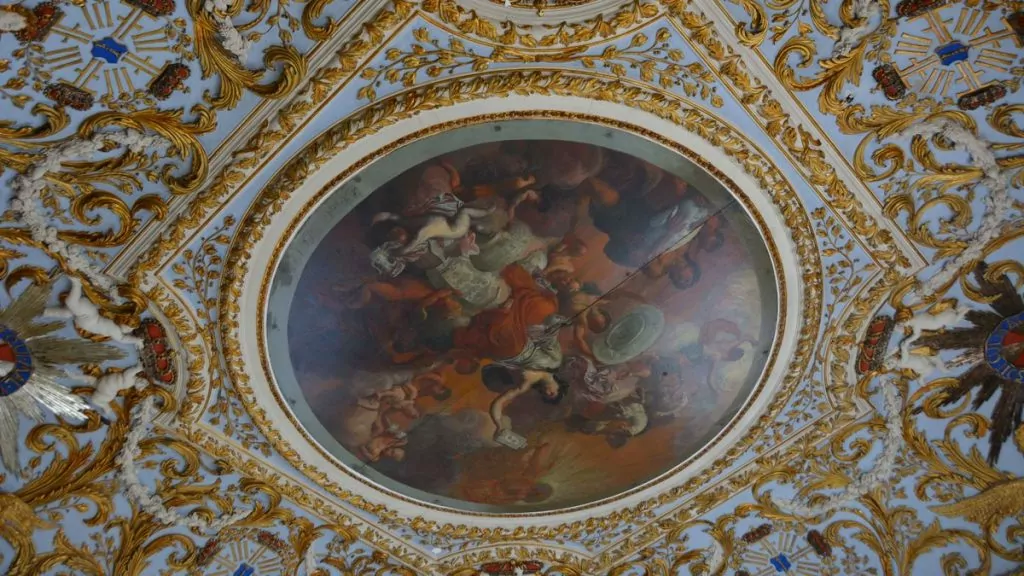
Today, parts of the castle are a museum and contain art, furniture, tapestries and other objects from mainly the 17th and 18th centuries.
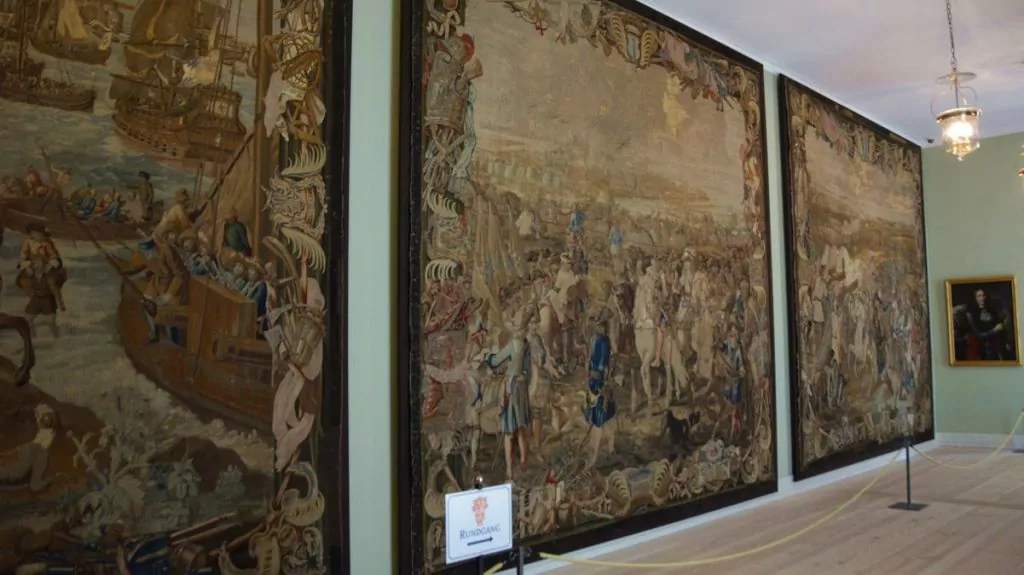
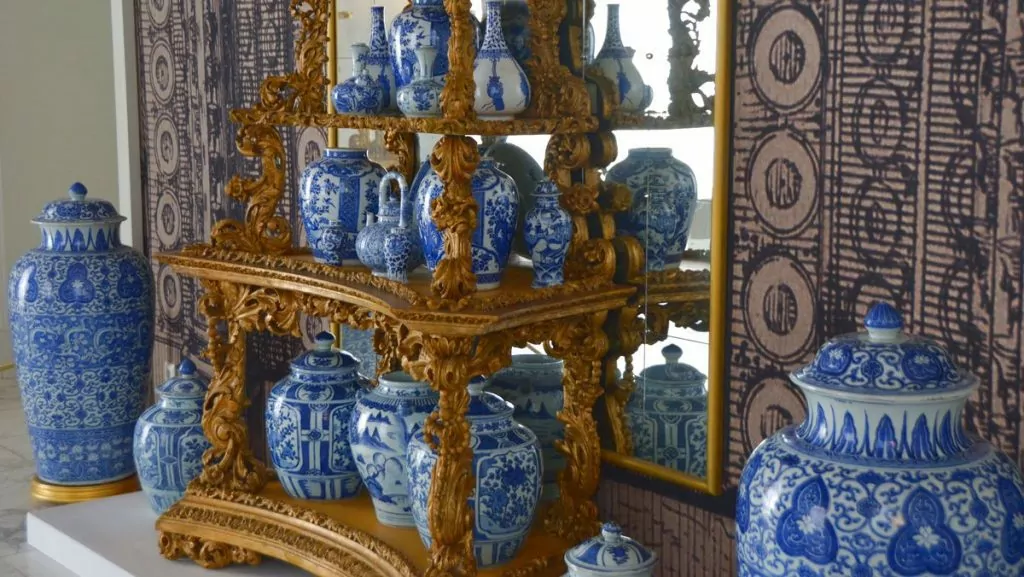
One of the major attractions is the collection of East Asian porcelain. When the castle was at the height of its splendor, there were over 5,000 blue and white Asian porcelain objects here. Part of the collection later disappeared in an unusual way: in 1717, the Prussian King Frederick William I traded 151 large porcelain objects to August the Strong of Saxony – and received 600 soldiers in exchange.
Talk about bartering! Today, some of the famous large vases can once again be seen in the palace's porcelain chamber.
A castle that became a factory
Oranienburg Castle has not always been royal and magnificent. After its heyday, the building was used for completely different purposes.
During the 19th century, the castle was used for industrial purposes, and in later periods, the buildings were also used for military purposes. Much of the original interior decoration was lost or destroyed over the centuries.
The castle you visit today is therefore both a historic residence and the result of extensive work to preserve and recreate the environments.
Castle Park in Oranienburg
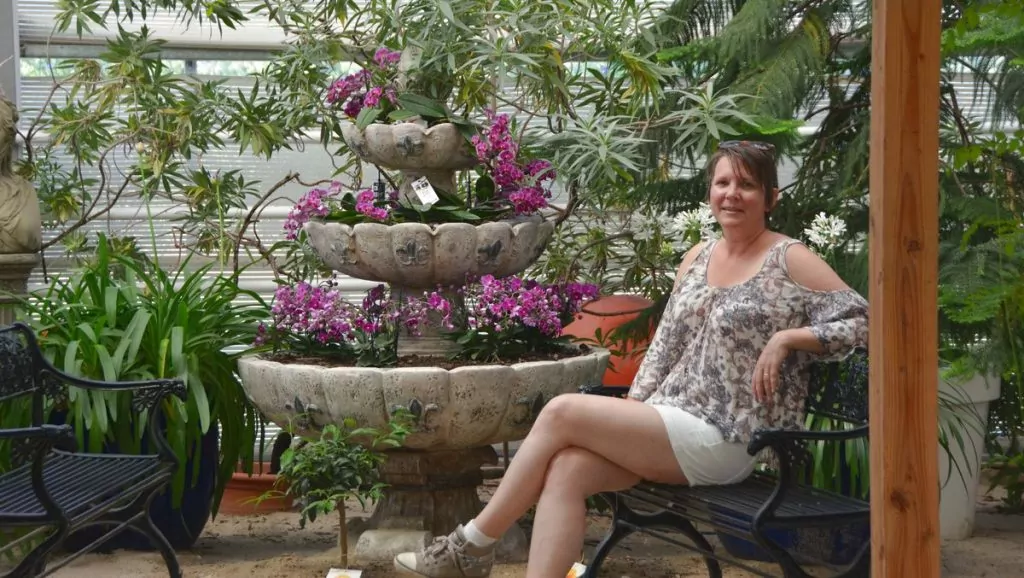
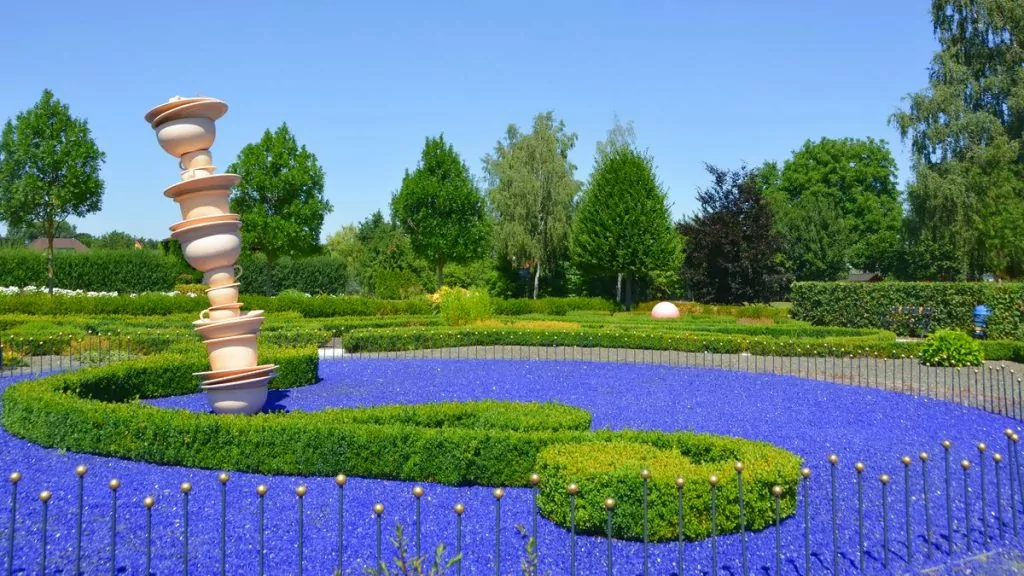
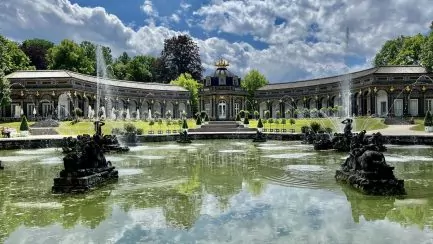
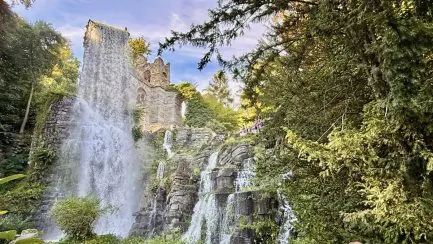
Behind the castle spreads the great Oranienburg Castle Park The park has changed many times over the centuries and received an extensive renovation for the Brandenburg Great Garden Exhibition in 2009.
There are large grassy areas, plantings, play and recreation areas and environments along the water. The park is also used for concerts and other events. When we visited Oranienburg, the castle park was one of the environments we liked the most. It is a nice contrast to the grand castle, and a place where you like to stay for a while.
Sachsenhausen – Oranienburg's dark history
Just a few kilometers from the castle there is a place with a completely different story: Gedenkstätte und Museum Sachsenhausen.
The Sachsenhausen concentration camp was built by the SS in the summer of 1936 and was intended as a model and training camp. More than 200,000 people were imprisoned here between 1936 and 1945. Tens of thousands died from starvation, disease, forced labor, and abuse, or were murdered by the SS.
After World War II, the Soviet security service NKVD took over parts of the area and used it as a special camp until 1950. Around 60,000 people were interned during this period and around 12,000 of them died, mainly from starvation and disease.
Today, Sachsenhausen is a memorial site and a museum with several exhibitions that tell the story of the different periods in the area's history.
Oranienburg by motorhome
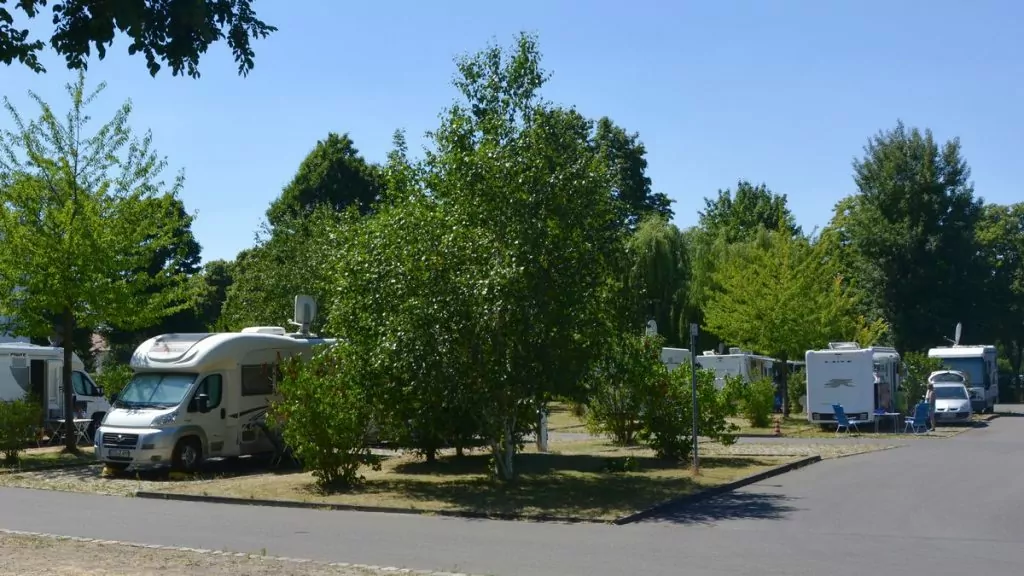
We visited Oranienburg by camper and stood on Wohnmobilstellplatz Schlosshafen, nicely located at the marina and close to both the castle and the city center. When we visited Oranienburg, there was both electricity and other services at the campsite.
It was one of those German campsites that made us realize once again how easy it is to travel by campervan in Germany. From here we could leave the campervan and explore Oranienburg on foot.
More to see and do in Oranienburg
The castle and Sachsenhausen are the two major historical destinations, but Oranienburg also works well for those who want to take it a little slower.
You can stroll along the Havel and the canals, sit in the castle park or discover the city center. For families with children there is also EXPERIENCE CITY TOWER, a large swimming pool with swimming, sports and various activities.
Oranienburg is also so close to Berlin that the city can be combined with a visit to the German capital.
Is Oranienburg worth a visit?
Yes, especially if you are interested in history. Oranienburg offers an unusual combination of the splendor of the Prussian monarchy and some of Germany's darkest historical chapters.
Schloss Oranienburg with its park is a beautiful and easily accessible destination, while Sachsenhausen provides a much more demanding experience that requires both time and thought. For us who traveled by camper, Oranienburg was also a convenient stop on the way through Brandenburg.

See more in the neighbourhood
If you travel further through Brandenburg, there are several interesting destinations nearby:
FAQ – frequently asked questions about Oranienburg
Where is Oranienburg located?
Oranienburg is located in the federal state of Brandenburg, about 35 kilometers north of central Berlin.
What is there to see in Oranienburg?
The two most important historical attractions are Oranienburg Castle with its castle park and the Sachsenhausen memorial site. You can also stroll along the water and visit the TURM ErlebnisCity swimming pool.
What is Oranienburg Castle?
Schloss Oranienburg is a Baroque castle whose current history began when a country residence was built for Louisa Henrietta of Orange-Nassau from 1651. The castle was later expanded by her son Frederick I and was considered one of Prussia's most magnificent residences around 1700.
Can you visit Oranienburg Castle?
Yes, parts of Schloss Oranienburg are museums. Here, among other things, art, furniture, tapestries and valuable porcelain from the former royal collections are on display. For current opening hours and ticket information, it is best to check the castle's official website.
What is Sachsenhausen?
Sachsenhausen was a Nazi concentration camp built in 1936. More than 200,000 people were imprisoned there until 1945, and tens of thousands died. After the war, the area was used as a Soviet special camp. Today, the site is a museum and memorial site.
Can you visit Oranienburg with a camper van?
Yes, Oranienburg is a good place to stop with a camper. We stopped at Schlosshafen, close to the castle and the city center. Check current prices and service before visiting.


 English (UK)
 Svenska
Britt-Marie Lundgren says:
Germany is amazing when it comes to the car park!
We also found it a bit odd that there were no information signs in English, even in major tourist destinations like Mainau, when we were there on our last week of holiday.
Looking forward to further experiences!
06 July 2018 - 7:32
Helena says:
The Germans are fantastic at car parks! They are not always as good at English 😉 It should be easy to have signs in English, but maybe that will come with time 😉 Glad you are joining us on our explorations!
06 July 2018 - 14:57
Ama de casa says:
The castle park looked absolutely stunning. Nice leaning sculpture there 😉.
Have a nice continued trip and a wonderfully happy Friday!
06 July 2018 - 8:28
Helena says:
I liked the sculpture with the leaning teacups 😉 And thank you, we're moving on to new adventures. Have a nice weekend!
06 July 2018 - 14:59
Reiselinda says:
We made a trip to Oranienburg to visit Sachsenhausen a few years ago. Understand there is more to see there!
06 July 2018 - 9:19
Helena says:
Sachsenhausen is certainly worth a visit! We skipped it now, but will probably visit another similar place.
06 July 2018 - 15:00
Nils-Åke Hansson says:
Germany can do this with parking space.
06 July 2018 - 9:35
Helena says:
Indeed! This is the homeland of caravan parks 🙂
06 July 2018 - 15:01
Ditte says:
Nice to have a pitch in beautiful green surroundings and with a good level of service too. Nice to visit the castle and park here in Oranienburg. Didn't have time for that when I was in Sachenhausen because we were then going on to Berlin.
Enjoy the rest of your journey.
06 July 2018 - 12:01
Helena says:
You can't do everything! We opted out of Sachsenhausen now, but understand that it can be an interesting visit,
06 July 2018 - 15:02
Steve says:
Oranienburg, a multi-dimensional experience.
06 July 2018 - 18:00
BP says:
How cultural you have been with the castle tour and everything in the brilliant weather;-)
Once again, the Germans are meticulous. They seem to have mapped the exact number of visitors and the countries they come from. Smart thinking!
06 July 2018 - 20:57
Helena says:
It's quite nice to go into a cool castle when it's over 30 degrees outside 😉.
07 July 2018 - 14:05
Susjos says:
What great pictures and good space for the motorhome!
The garden looked wonderful!
Hugs and happy travelling!
06 July 2018 - 22:13
Helena says:
It is gratifying to take photos in beautiful surroundings! 🙂
07 July 2018 - 16:02