

Writer: Helena Bergström
Updated: August 2026 | Potsdam is located just outside Berlin and is a city full of castles, parks and unexpected architecture. Here you will find Dutch brick houses, a Russian colony, grand city gates and buildings inspired by Italy, among other places. Above all, you will find Sanssouci – Frederick the Great’s famous summer residence and one of Germany’s most fascinating castle areas.
 Tweet
Tweet Share
Share Share
Share Pin
Pin Share
Share Share
ShareWe visited Potsdam by camper van and were much more impressed with the city than we had expected. This is a destination where you can easily spend several days.
Table of contents
Potsdam – an exciting city outside Berlin
Potsdam is the capital of the state of Brandenburg and is located about 35 kilometers southwest of central Berlin. The city is primarily known for its many castles and parks, but also for its historic quarters and its role in European history.
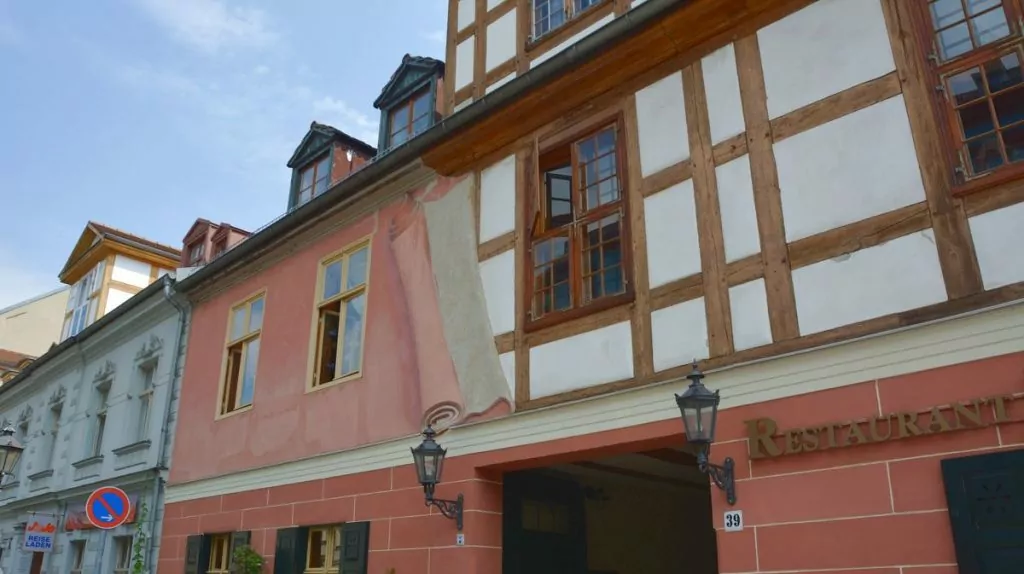
What's special about Potsdam is the mix. In a relatively small area you'll find Prussian palaces, Dutch brick houses, Russian timber houses and Italian-inspired architecture. It can almost feel like you've taken a little trip through Europe without leaving Potsdam.
Sanssouci Castle
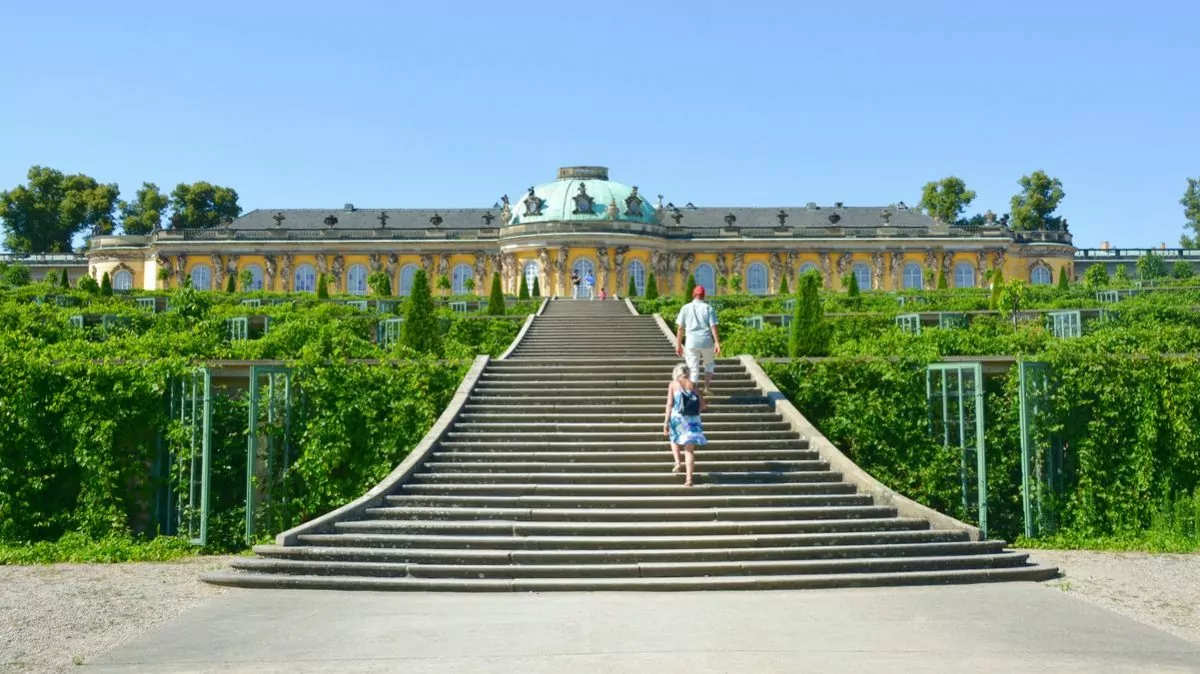
The biggest attraction in Potsdam is Sanssouci Palace, which was built between 1745 and 1747 for the Prussian King Frederick II, better known as Frederick the Great.
The palace was built as the king's private summer residence and retreat. Unlike many other royal palaces, Sanssouci is relatively small and consists mainly of one floor. Frederick did not want to create another huge representative palace, but a place where he could devote himself to such things as music, philosophy and literature.
And perhaps it is precisely the combination of the relatively small palace, the large terraces and the enormous park that makes Sanssouci so special.

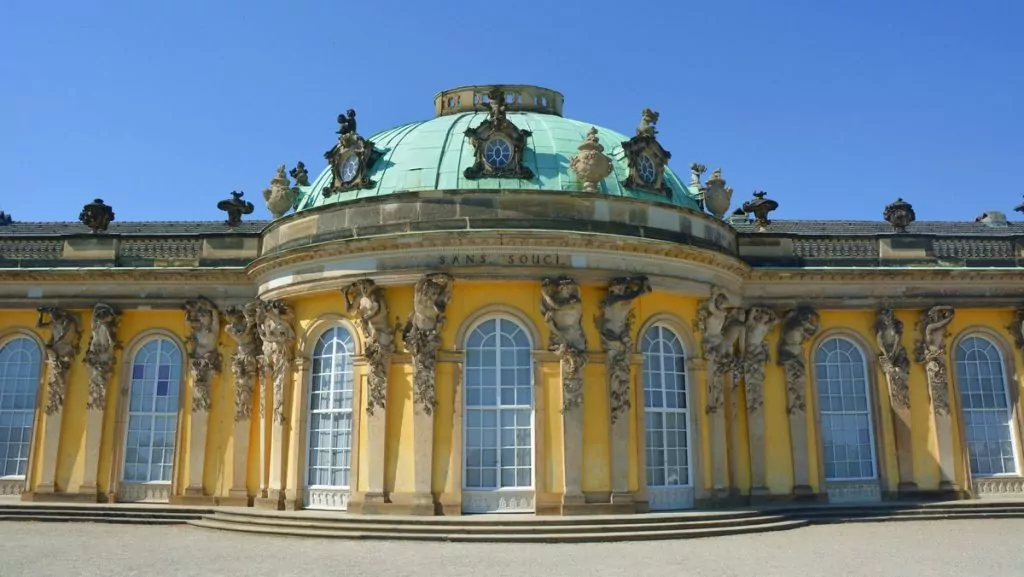
What does Sanssouci mean?
The name comes from the French without worry and means roughly "without worries" or "carefree". The name pretty much sums up what Frederick the Great wanted the place to be – a refuge away from the duties and worries of court life.
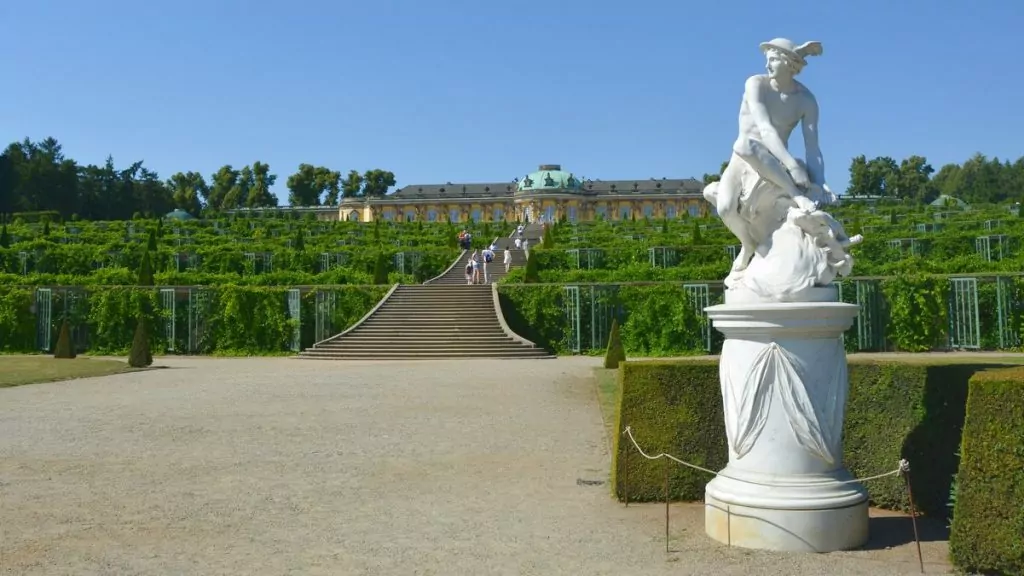
Tomb of Frederick the Great
Frederick the Great also wanted to be buried at his beloved Sanssouci. His grave is today on the top of the palace's famous vineyard terraces. But it took time for his wish to be fulfilled. It was not until 1991, more than 200 years after his death, that Frederick was given his final resting place at Sanssouci.

Inside Sanssouci Palace
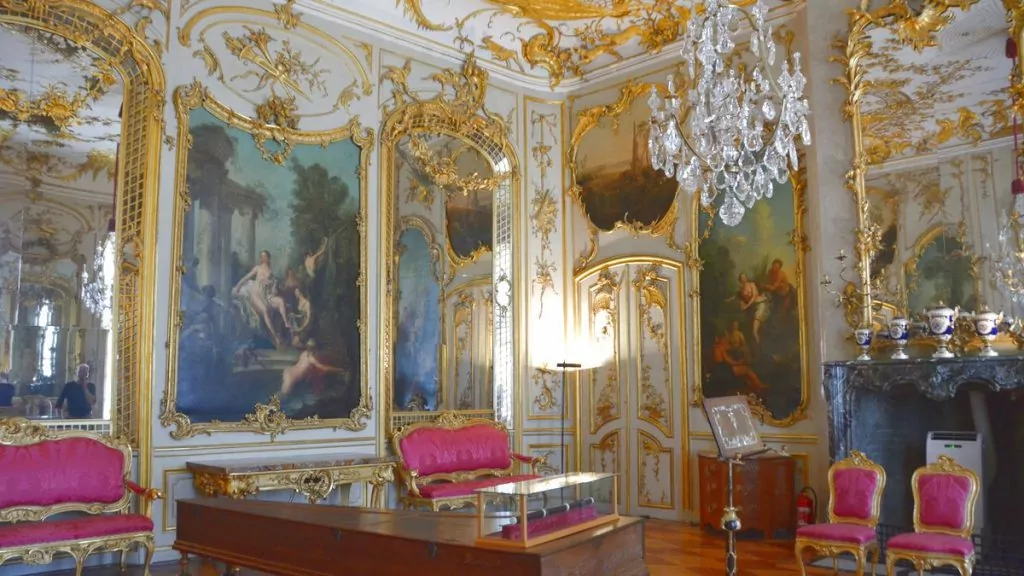
We also visited the castle's interiors, which are at least as impressive as the exterior. Here you will find magnificent rococo rooms, art, sculptures and decorations from the time of Frederick the Great.
Highlights include the Marble Hall, the library and the King's Concert Hall. Frederick himself was a passionate flutist and music played an important role in life at Sanssouci.
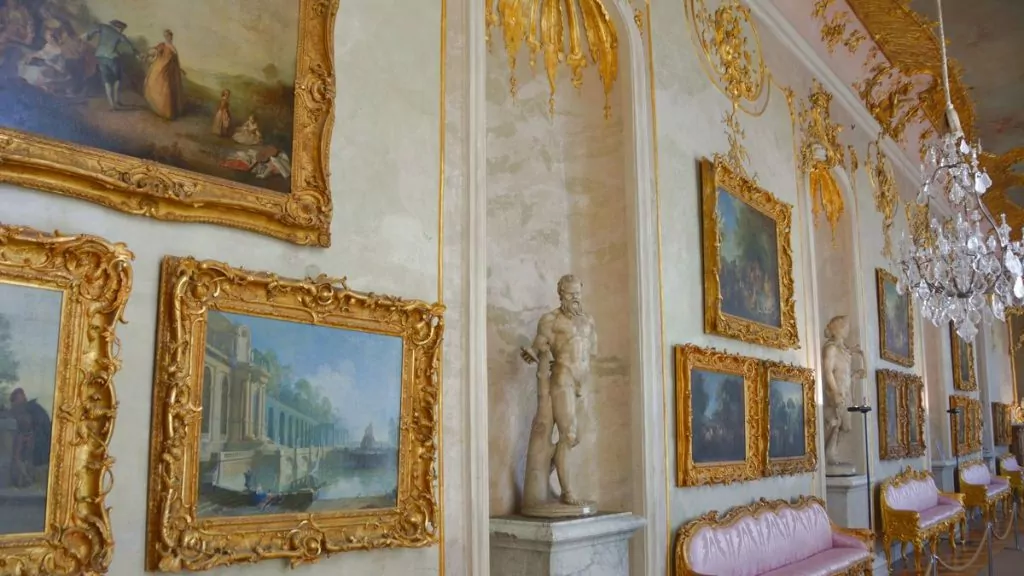
When we were here, we visited with an audio guide. Today you can also use the official Sanssouci app, where guided tours are available in English, among other languages.
Park Sanssouci – much more than a castle
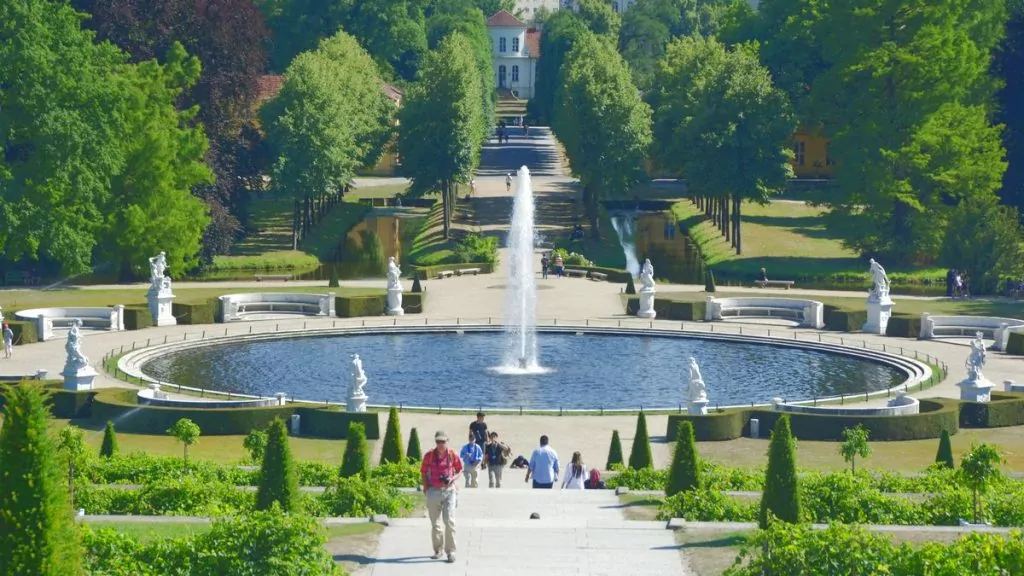
A common mistake is to think of Sanssouci as just a castle. In fact, it is Sanssouci Park almost a destination in itself. The park covers almost 300 hectares and stretches more than two kilometers from east to west. It contains gardens, fountains, sculptures and several different castles and buildings.
Sanssouci and the other palaces and parks in Potsdam and Berlin have been included in UNESCO's World Heritage List since 1990. If you want to experience the area properly, it is therefore wise to set aside at least a full day.
Neues Palais – the magnificent palace
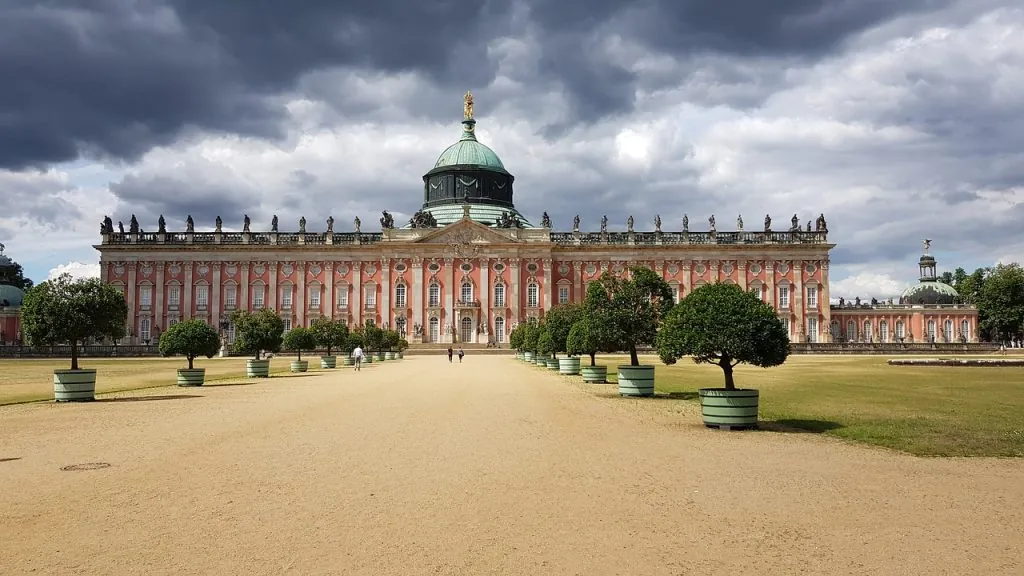
At the western end of the park is New Palace, the New Palace, which is something completely different from the intimate Sanssouci. It was built between 1763 and 1769 after the Seven Years' War and was intended to show the world the power and strength of Prussia. Frederick the Great himself described the building as a boasted – almost a boastful building.
And it was a boastful affair. The palace is around 220 meters long, the facade is adorned with more than 400 statues, and the interior includes large banquet halls and a theater.
More attractions in Park Sanssouci
There is much more to discover in the large park. Here you will find, among other things, the Orangerieschloss, the Neue Kammern, the elegant Chinesisches Haus and the historic windmill. You can stroll around for a long time among the gardens, fountains and buildings without really having to have any particular goal.
This is also what makes the area so fascinating: different kings and generations have left their mark and created new gardens, palaces and buildings over more than two centuries. UNESCO describes the area as a kind of European artistic masterpiece, with influences from Italy, England, Flanders, Paris and Dresden, among others.
Attractions in central Potsdam
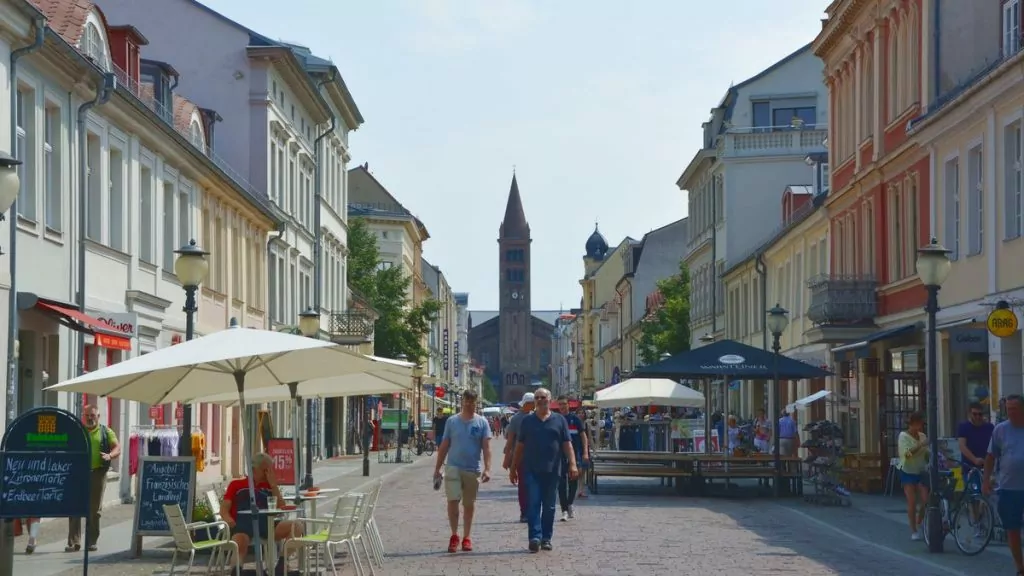
But don't make the mistake of just visiting Sanssouci. Potsdam's city center is also worth a few hours. We took a guided city tour and discovered a fairly low-lying and walkable city with pedestrian streets, small alleys, cafes and restaurants.
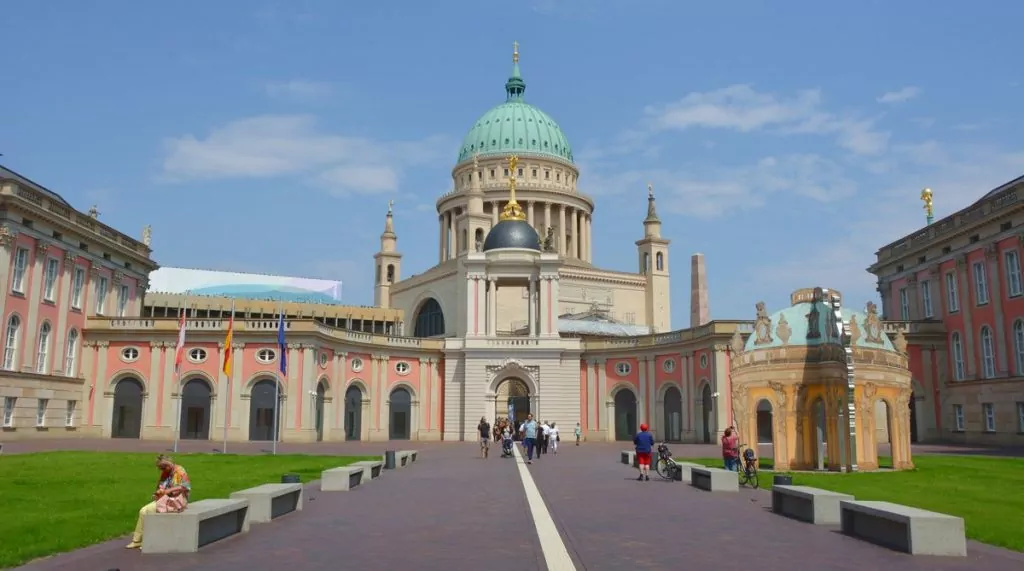
A natural starting point is Old Market, the historic square where, among other things, the Nikolaikirche is located. From here you can continue through the city center towards Brandenburger Strasse and Potsdam's various historic quarters.
Dutch Quarter
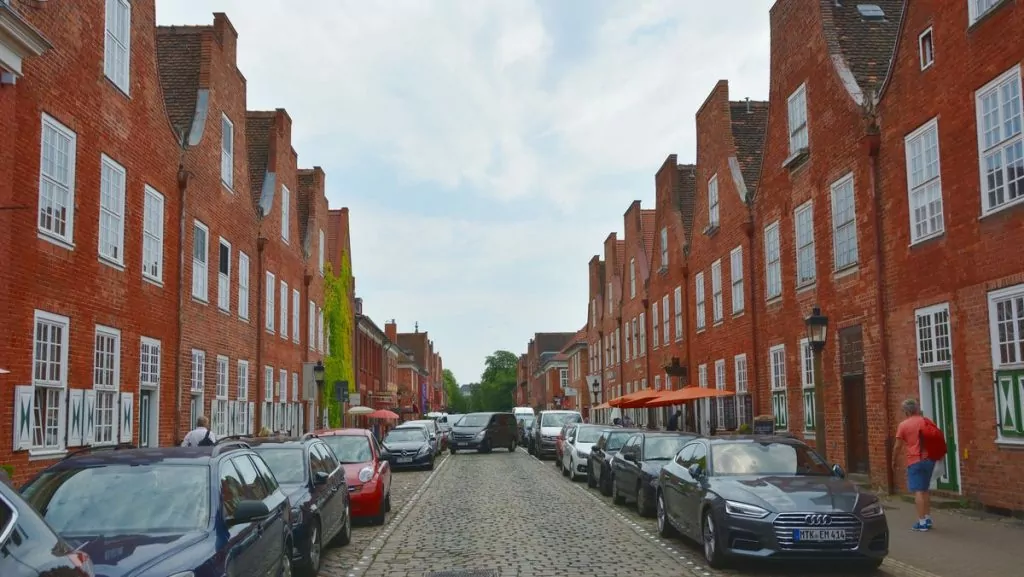
One of our favorite environments is Dutch Quarter, the Dutch Quarter. Here are around 150 red brick houses in the Dutch style, grouped into four blocks. The area was built in the 18th century under Frederick William I and was intended, among other things, to attract skilled Dutch craftsmen to Potsdam.
Today, the neighborhood is filled with small shops, restaurants and cafes and is one of the most charming areas to walk around.
Alexandrowka – a piece of Russia
North of the city center there is another environment that stands out: the Russian colony Alexandrowka. Here are characteristic wooden houses surrounded by large gardens. The colony was established in the 1820s by order of King Frederick William III in memory of his friend, the Russian Tsar Alexander I. There is also a Russian Orthodox church in the area.
Potsdam City Gates
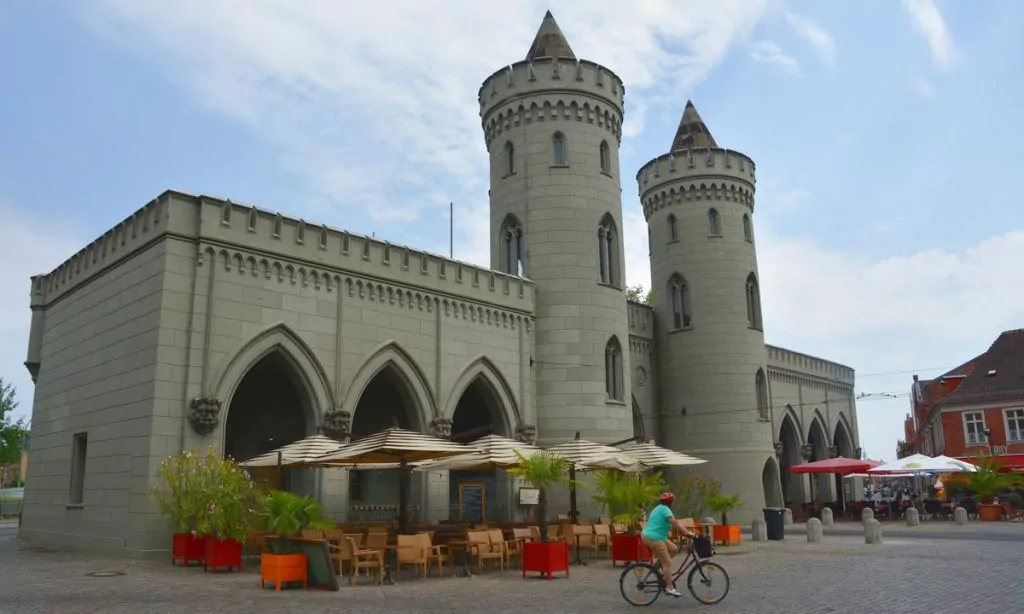
Potsdam once had a city wall with several gates. Three historic city gates still remain: Brandenburg Gate, Nauener Gate and Jägertor.
The Brandenburg Gate should not be confused with the much more famous gate of the same name in Berlin. The Potsdam version is actually older. The Nauener Tor is the most fairytale-like of them all, with its towers and neo-Gothic appearance.
Glienickebron – the bridge of spies
Potsdam also played an important role during the Cold War. After World War II, the city ended up in East Germany, right next to West Berlin.
Across the Havel River Glienicke Bridge, which became world famous as a place for exchanges of captured spies between East and West. The bridge has therefore been nicknamed Bridge of Spies, and the story has been depicted in both books and films.
Potsdam by motorhome
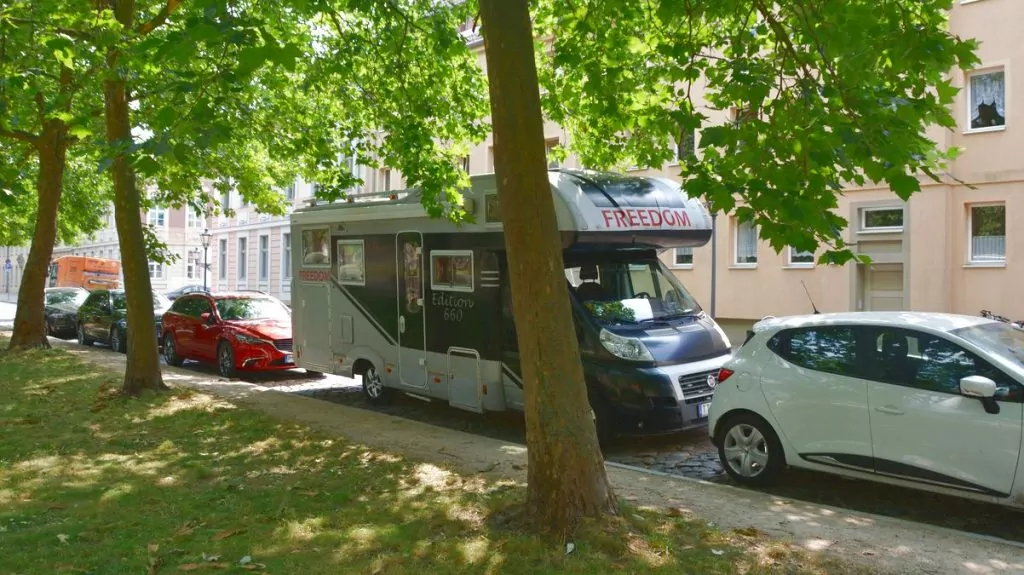
When we visited Potsdam by camper van, we stayed overnight in the parking lot at Sanssouci, which made it very convenient to start discovering the castle area right away in the morning. Parking and overnight stay rules can change, so always check the current conditions before your trip. When we went on a guided tour, we simply had to park along a street, for a few hours in the middle of the day.
How much time do you need in Potsdam?
We recommend at least a full day, but preferably two. Sanssouci with its large park can easily fill a whole day if you want to visit several of the palaces. Add another day if you also want to explore central Potsdam, the Dutch Quarter, Alexandrowka and perhaps the Glienicke Bridge.
Potsdam also works well as a day trip from Berlin, but the city has enough to offer to be a destination in itself.
Is Potsdam worth a visit?
Definitely. We were surprised ourselves by how much there is to see. Sanssouci is of course the big highlight, but Potsdam is much more than its famous castle. The combination of royal palaces, huge parks, charming neighborhoods and architecture from different parts of Europe makes the city unusually diverse. It is grand and picturesque at the same time – and sometimes almost a little surreal.
See more in the neighbourhood
Of course, there is also a lot to see nearby. Here are some tips for more places to visit during your next trip:
FAQ – frequently asked questions about Potsdam and Sanssouci
Where is Potsdam located?
Potsdam is located in the federal state of Brandenburg, just southwest of Berlin. The city is the capital of Brandenburg.
What is Potsdam known for?
Potsdam is primarily known for its many palaces and parks, with Sanssouci Palace being the main attraction. It is also home to the Dutch Quarter, the Russian colony of Alexandrowka, and the Glienicke Bridge, which became famous during the Cold War.
What does Sanssouci mean?
Sanssouci comes from the French without worry and roughly means ”without worries.” The name reflects Frederick the Great’s desire to use the castle as a private retreat.
When was Sanssouci Palace built?
Sanssouci was built between 1745 and 1747 for Frederick the Great according to the king's own ideas and under the direction of architect Georg Wenzeslaus von Knobelsdorff.
Can you visit Sanssouci Palace?
Yes. Sanssouci Palace is open to visitors, but the number of tickets is limited and the visit takes place at a specific time. The palace administration recommends that you book a ticket in advance.
Is Sanssouci on the UNESCO World Heritage List?
Yes. Sanssouci is part of the World Heritage Site ”Palaces and Parks of Potsdam and Berlin”, which was inscribed on the UNESCO World Heritage List in 1990 and has since been expanded.
How much time do you need for Sanssouci?
Allow at least half a day if you mainly want to see Sanssouci Palace and part of the park. If you want to discover several palaces and buildings in the almost 300-hectare park, a full day is much better.
Can you visit Potsdam from Berlin?
Yes. Potsdam is just outside Berlin and is a great day trip. However, as both Sanssouci and central Potsdam have a lot to see, it may be worth staying longer.
You might also like:
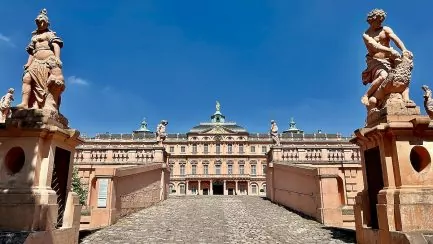
 Castle Favorite in Rastatt - exclusive German summer palace
 Rastatt Castle in Germany - 18th century baroque castle
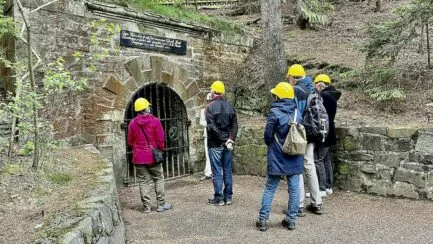 The Rammelsberg Mine – a UNESCO World Heritage Site in Goslar
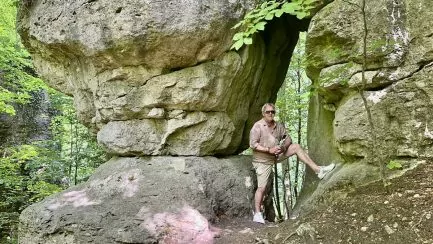 Sanspareil rock garden and Zwernitz castle in Bavaria
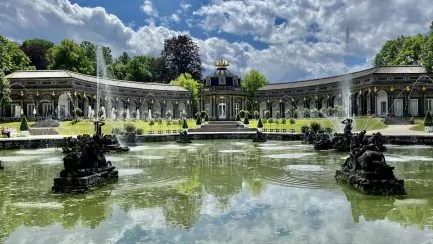 Hofgarten Eremitage in Bayreuth - amazing park in Bavaria
 Visiting Kastelholm Castle - Åland's only medieval castle

 English (UK)
  Svenska
Nils-Åke Hansson says:
We have been to parts of Potsdam. How splendidly they built at that time.
07 July 2018 - 7:32
Helena says:
Indeed! Impressive!
07 July 2018 - 16:05
4000mil says:
How nice!
I love old castles and can also recommend Schönbrunn in Vienna.
07 July 2018 - 7:49
Helena says:
Thanks for the tips! We will have to go to Vienna at some point!
07 July 2018 - 16:06
Kenneth Risberg says:
Impressive what beautiful buildings and many of them are works of art. Have a great weekend!
07 July 2018 - 8:49
Helena says:
Artwork is the right word! Have a nice weekend Kenneth!
07 July 2018 - 16:07
Britt-Marie Lundgren says:
We've just whizzed past Potsdam, next time there will probably be a stop there too. Cool with buildings from different parts of the world.
Castles are not our first priority, but this one looks really cool.
07 July 2018 - 9:18
Helena says:
Potsdam has nice castles, but also the city is very nice. Can really recommend a visit here!
07 July 2018 - 16:09
Maria / Magnolia Magis says:
Thanks for the tips! This will be a visit next time! Beautiful!
07 July 2018 - 10:54
Helena says:
Recommended! Both the castle and the city are worth a visit!
07 July 2018 - 16:09
Steve says:
I knew about Potsdam, but not that it has so much to offer. So beautiful and so far away from the former East Germany.
Stylish pocket parking with FREEDOM.
07 July 2018 - 11:13
Helena says:
The city really has a lot to offer! Apparently it was more grey in Eastern times. Today it is rather a colourful city!
07 July 2018 - 16:11
Johnny Friskilä says:
I myself probably liked the beautiful communist astronaut mosaics in the city best. 🙂
07 July 2018 - 12:44
Helena says:
We have to admit that we missed them 😉.
07 July 2018 - 16:11
Our Vantastic Travels says:
It's amazing that the castle still has so much of its interior compared to Versaille.
When we were in Potsdam, in the early 90s, a lot of the houses were not prepared, so your pictures were a pleasant surprise. Beautifully renovated!
07 July 2018 - 14:49
Helena says:
Ah ok, we have not been to Versailles... Here it was extremely nice inside the castle. We have also only shown a fraction of it 😉.
07 July 2018 - 16:14
Ama de casa says:
What incredibly magnificent buildings you find!
Then I would rather ask the question "WHY pocket park a motorhome"? Haha! Yes, I am a sissy 🙂
07 July 2018 - 15:10
Helena says:
Haha yes, because you want to be very central of course! 🙂
07 July 2018 - 16:15
BP says:
To park a motorhome requires a husband, Peter that is;-) What a fun and different city Potsdam is. The castle beats Oranienburg by a wide margin, I think. Some unnecessary knowledge from my side: Potsdam has one of Germany's best women's football teams. But you just seem to be very cultural during this trip;-)
07 July 2018 - 21:01
Helena says:
An absolutely fantastic city, we think! Just the right size to walk around and so many beautiful things to see, and imaginative architecture! Fun with a little unnecessary knowledge! 🙂
09 July 2018 - 11:08
ReiseLinda says:
Potsdam is very nice. I love strolling in the parks or in the city! There is an equally large castle at the other end of the park and the orangery in the San Souci park is also very nice.
09 July 2018 - 20:26
Helena says:
Yes, we saw on the map that there were more castles! Absolutely incredible! Potsdam is incredibly beautiful, with lots to see!
10 July 2018 - 7:49
Lena i Wales says:
Sanssouci, I have been there many times and some in Potsdam as well. Also Cecilienhof on the outskirts of Potsdam.
Potsdam and its surroundings have so much world-class history.
11 July 2018 - 9:54
Helena says:
Amazing amount of history and architecture in this area!
31 August 2018 - 16:43