


Writer: Helena Bergström
Motorhome life, free camping and winter cold - how does the Bluetti Pioneer Na perform? This portable power station promises 1,500 watts, 900 Wh and a functional operation down to 25 degrees below zero. But how does it perform in real life? We decided to give it a try, and there were several tests both on the road in the motorhome and at home in the houseboat.
 Tweet
Tweet Share
Share Share
Share Pin
Pin Share
Share Share
ShareTable of contents
Test of the Bluetti Pioneer Na portable power station
In co-operation with Bluetti, we had the opportunity to test and use the new Bluetti Pioneer Na portable power station. The company has asked for an honest test, and in connection with this we also have the opportunity to offer you as a reader a discount code - see further down in the report!
First impressions - robust and easy to use
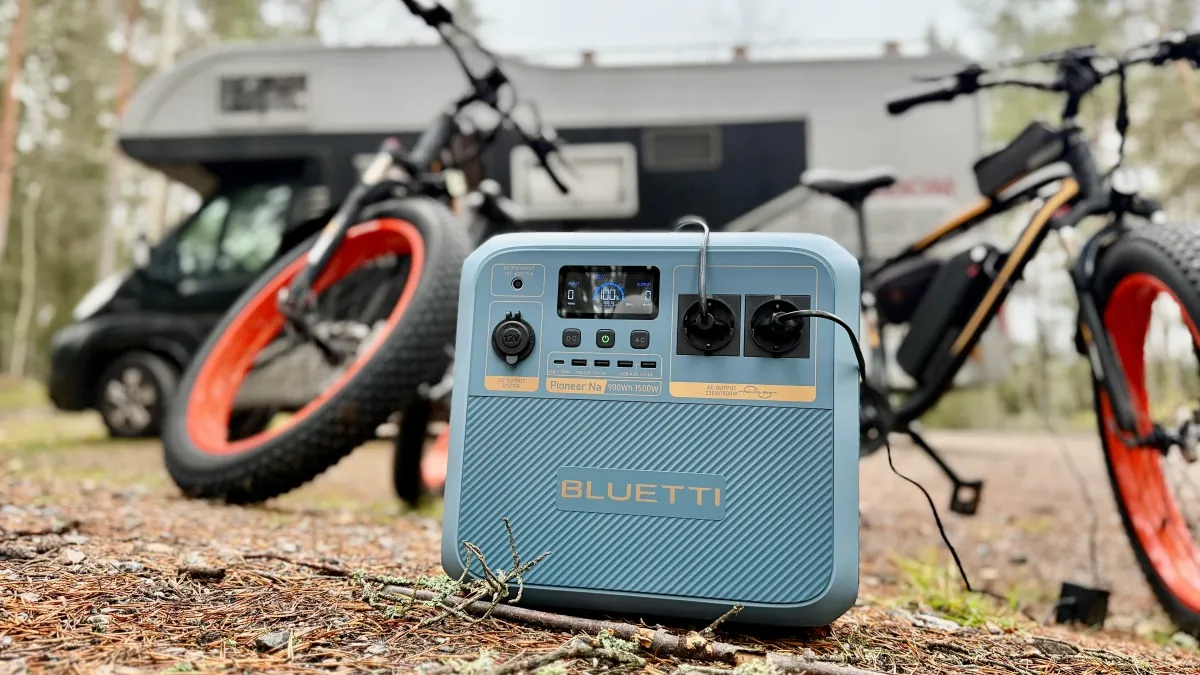
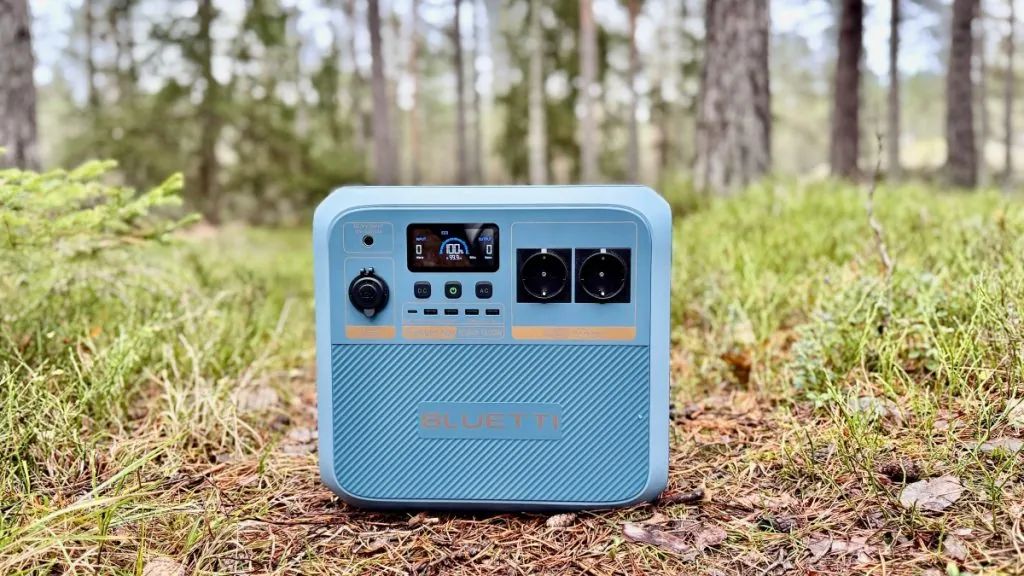
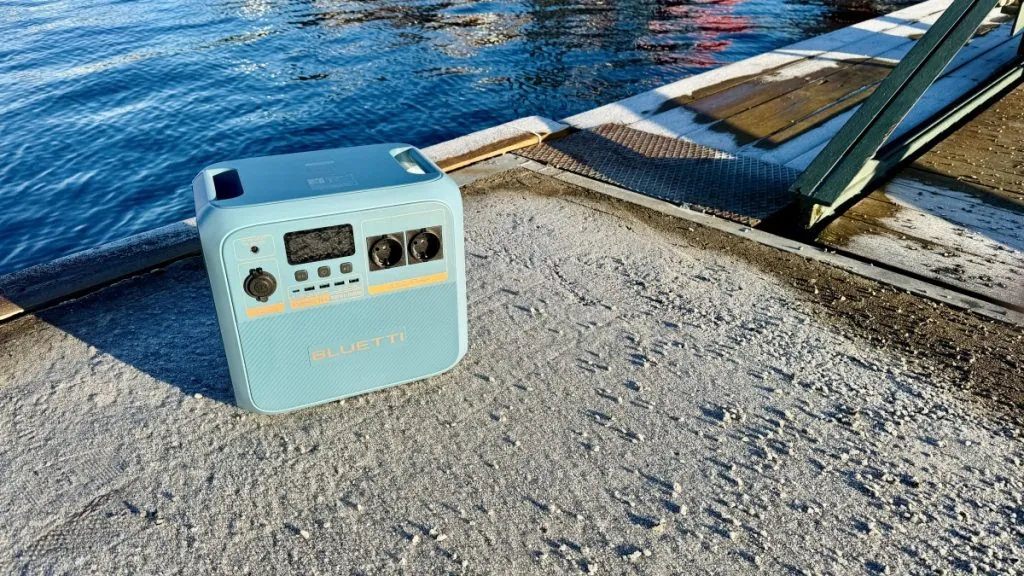
When we opened the box, the first impression was that the Bluettin feels sturdy and gives a sense of quality, while also looking really nice with its soft blue colour. The hefty feel also means that it weighs a lot, but there are easy-grip handles so it was easy to lift it out of the box.

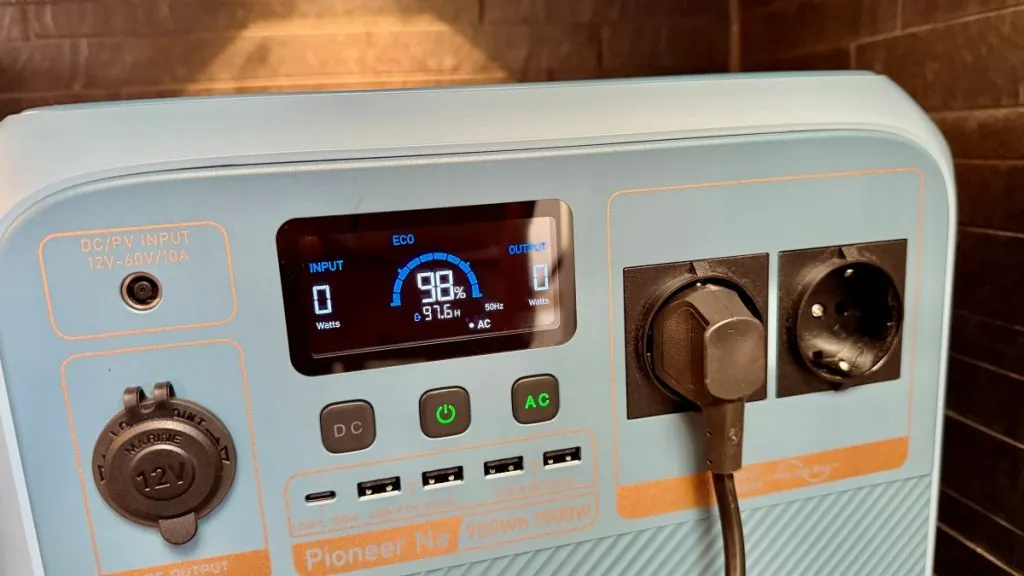
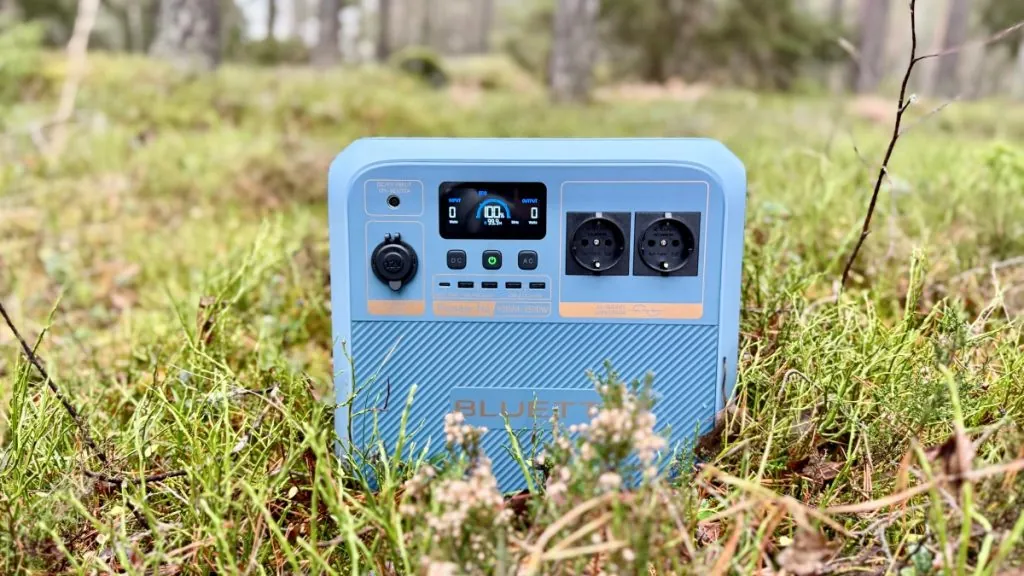
We quickly started exploring the different inputs and outputs, and we have to say that this power station is very easy to use. It took us a little while to understand that you have to select ”AC ON” to charge ordinary electrical outlets and ”DC ON” to charge mobile phones and other things that use USB or c3 sockets, but after we figured this out, most things felt obvious.
We were possibly a little surprised that there are four USB sockets, but only one c3 socket, as we understand that the trend will be towards more and more c3 over time.
How we tested - in the houseboat and in the motorhome
We chose to test Bluettin in a number of ways, first at home in the houseboat and then on wheels in the campervan. This is how it went!
Test 1: Recharging the power station at home
The first test was simply to charge up the power station, from zero to full power. We did this at home in the houseboat, via a standard wall socket (i.e. like charging in a standard wall socket in an apartment or villa). Charging the battery from 0 to 100 took about 3 hours (or maybe slightly less, we didn't check all the time...), and worked completely silently.

Test 2: Uploading a computer
Now that we had fully charged the Bluettin, we chose to use it to charge a laptop. This took an hour and used 10 per cent of the battery's capacity. Smooth and silent!
Test 3: Charging batteries for scooters or electric bikes
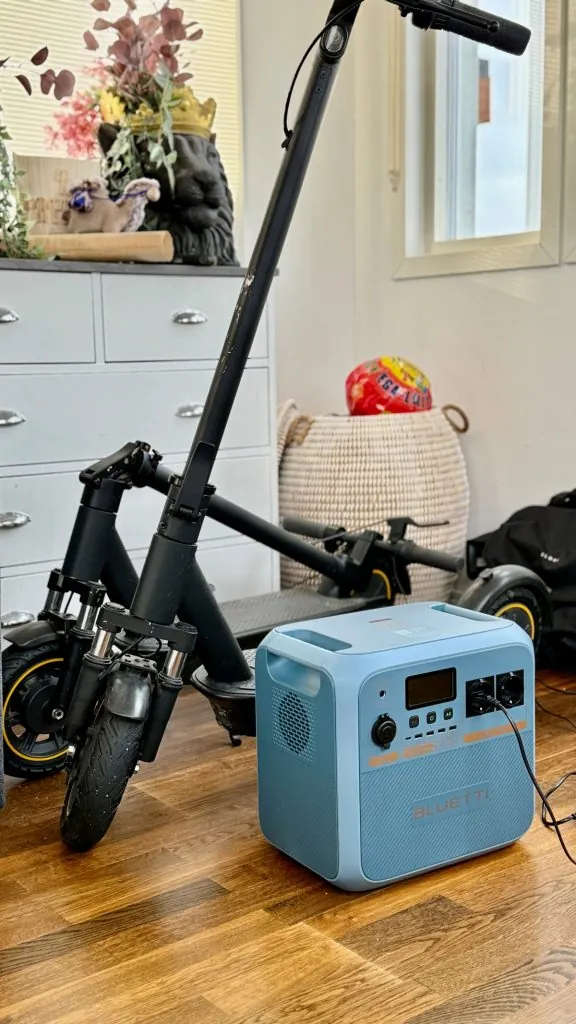
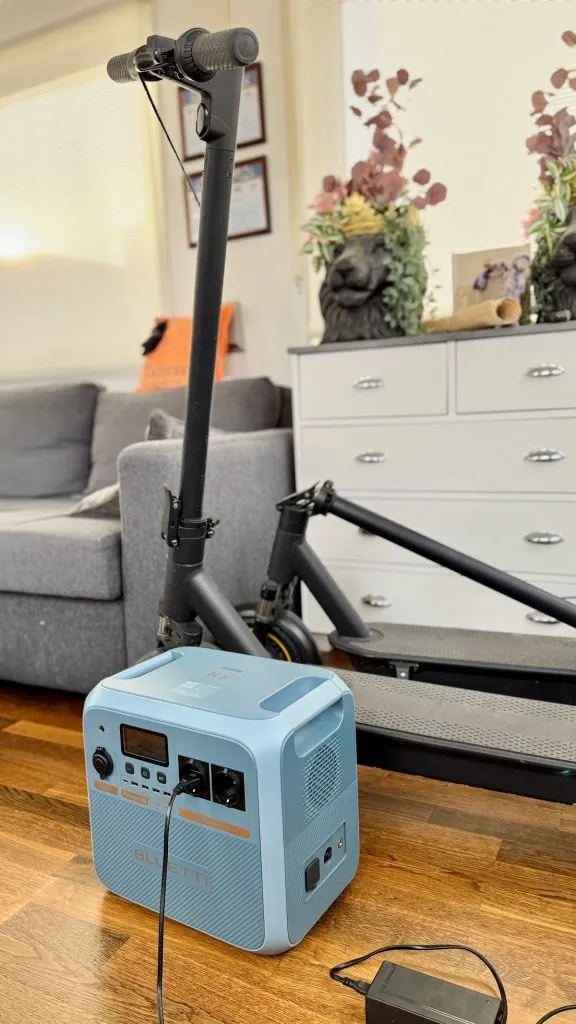
The next test was to use Bluettin to charge a battery for an electric scooter/electric bike. The battery we charged has an output of 250 W, so we're talking about pretty hefty stuff. Charging the battery from 0 to 100 via the power station took about 6 hours and used 56 per cent of the Bluettin's capacity. This was also done completely silently.

Test 4: The coffee test
We have a Siemens coffee machine at home in the houseboat. We don't usually take it with us when we are out with the motorhome, as it can only be used when we are connected to electricity. But maybe it would be possible with Bluettin? The coffee machine draws up to 1,600 W, which is right at the limit of Bluettin's maximum power. Time to test it!
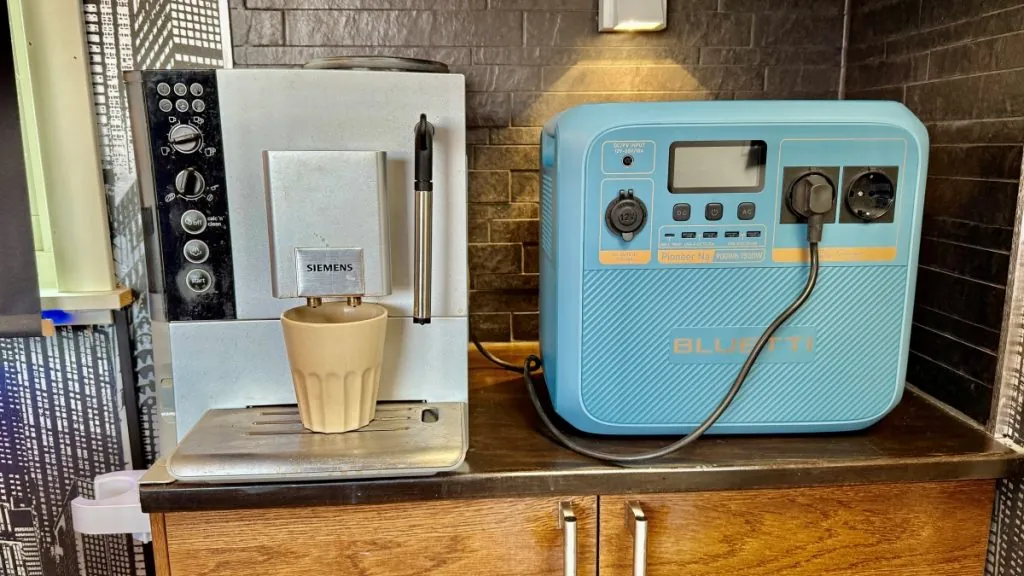
The coffee machine rumbled and the Bluettin screen showed ”1,700 W”. Would the power station switch off now? Not at all! Coffee was delivered without complaint from the machine, and after one cup of coffee, Bluettin had only lost 2% of its capacity. Not bad!
Test 5: Taking the Bluetti Pioneer Na in your campervan
The next test was of a more practical nature. We simply tried taking the Bluettin on wheels in the campervan, to see how it worked. The first thing we reflected on was that the power station is too heavy to carry for a long distance, so we needed a trolley with wheels to transport it between the houseboat and the motorhome. Small wheels underneath and a foldable handle wouldn't have been a bad idea!

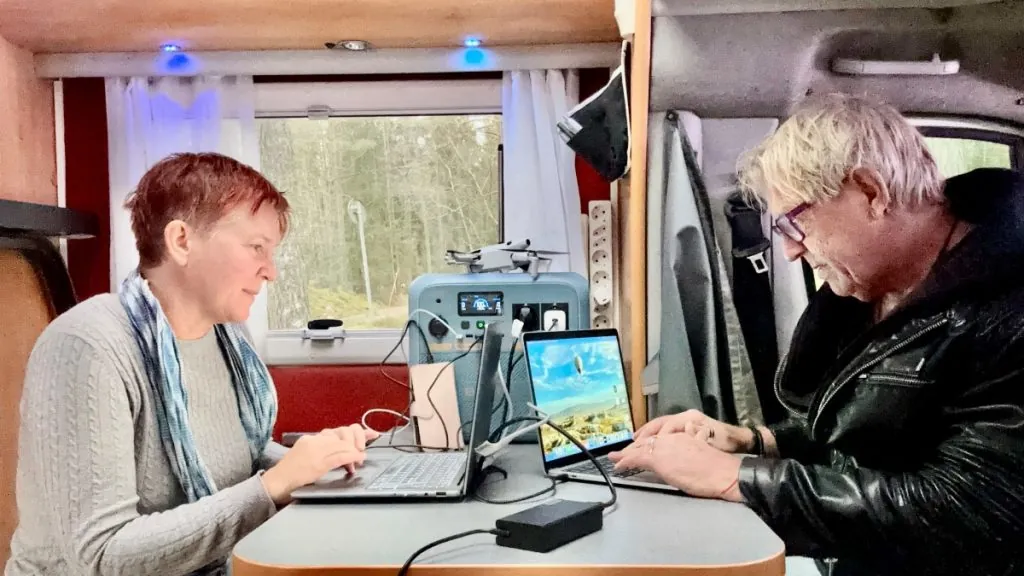
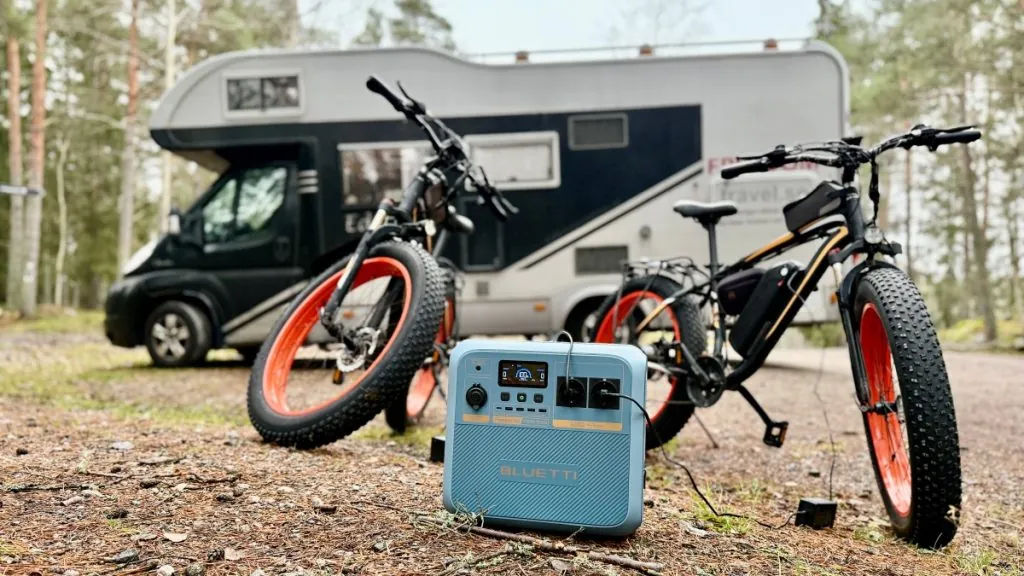
Otherwise, bringing Bluettin worked perfectly, and we were able to charge all sorts of things at the same time: computers, mobile phones, drones...
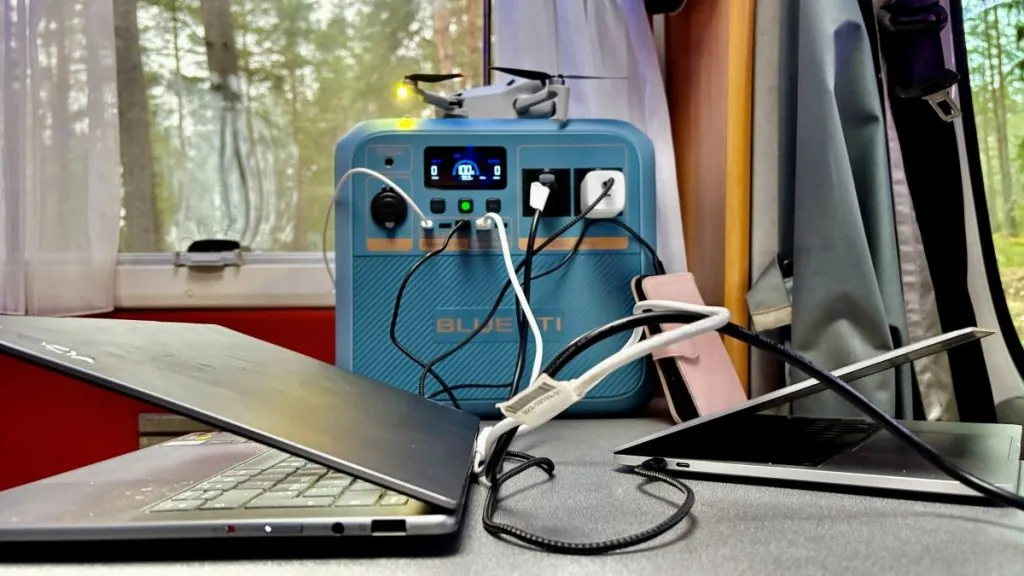
We're thinking about where to put it when we're out, and we're leaning towards storing it in the motorhome garage (i.e. in the rear hatch, under our beds) to get it out when we need it. A power station like this can be useful primarily when you are free camping for several days at a time, or in cold weather, and need to charge a slightly larger amount of electronic equipment.
Test 6: The cold test
Bluetti says that Pioneer Na can work down to minus 25 degrees Celsius. We don't have that kind of cold yet in Stockholm, so it was difficult to test, but for a few days we have had around 5 degrees below zero at night and in the mornings and evenings. We simply tried to put Bluettin outside for a few hours, when it was coldest.
Then we tested again, and we did the toughest test of all: the coffee test. This time the screen showed ”1740 W”, that is, more than the power station promises to cope with. For the first time in all the tests, the machine sounded a bit strained, but... we got our cup of coffee! As before, the procedure required two per cent of the station's capacity.
Pluses and minuses
We like the Bluetti Pioneer Na. The power station feels like a robust quality product, which seems to do what it promises without problems and which is also nicely designed. On the downside, it is a little heavy to carry.
More
- Can handle heavy loads (coffee maker, electric bike battery, etc.)
- Easy to use
- Good display with clear values
- Quiet operation
- Works even in the cold
Minus
- Relatively heavy to lift, and there are no wheels to roll it
- Requires manual activation of AC/DC (simple, but can be difficult to understand at first)
- Only one c3 withdrawal - a few more would not have hurt
Conclusion - who is Bluetti Pioneer Na suitable for?
The Bluetti Pioneer Na feels like a very reliable companion for anyone who needs electricity away from the electricity pole - for example, when free camping with a motorhome/caravan, camping with a car and tent, or going on an adventure by boat. The small power station can easily charge computers, drones and e-bike batteries, and can even provide coffee from a real coffee maker.
The product seems to cope with cold much better than many similar products and we like the fact that it feels like a sturdy and stylish interior detail, rather than another technical wear-and-tear gadget. One thing to bear in mind is that it does take up a bit of space and, after all, it weighs 16kg.
Link and discount code
This test was done in co-operation with Bluetti, who let us try the product and asked for an honest review. The opinions expressed in this post are 100% our own.
You can find Bluetti Pioneer Na on the official website here - where there are currently discounted Black Friday prices on lots of products (up to 73 % off). Readers can also get an extra 5% discount by using the code FREEDOM05 at the time of purchase. The code is valid from 19 November 2025, on all products on the official BLUETTI EU website (but cannot be combined with other coupons).
Facts about Bluetti Pioneer Na
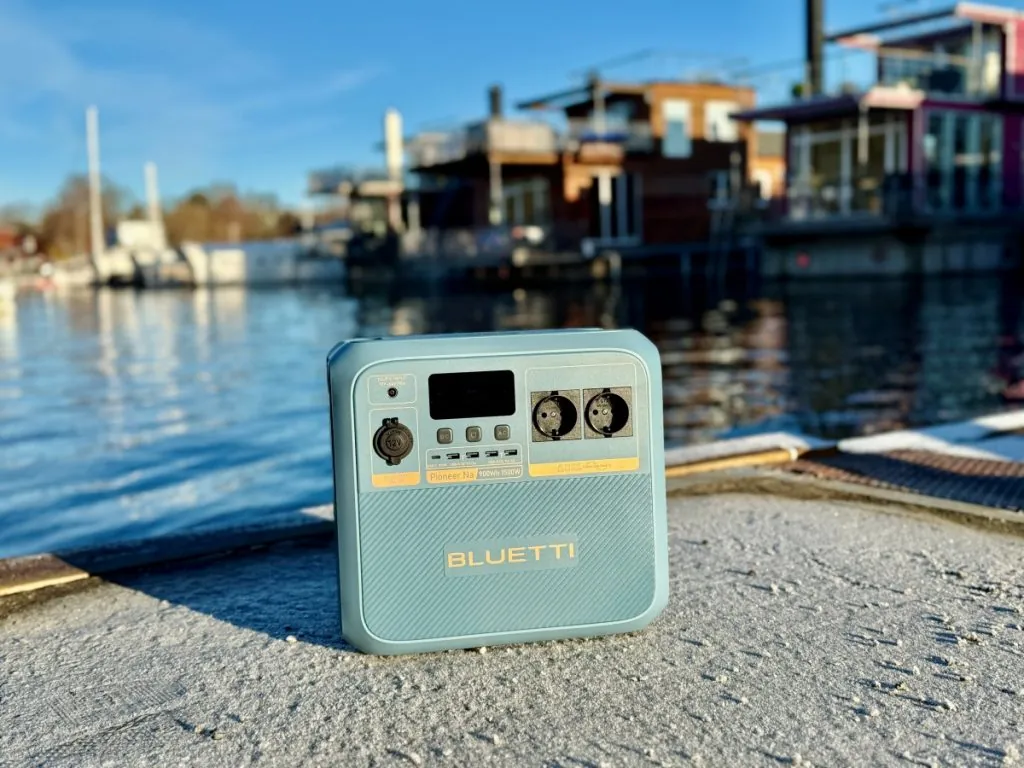
- Effect: 1 500 W (peak up to about 2 000 W)
- Battery: 900 Wh (sodium ion batteries)
- Operating temperature: Down to -25 C
- Size measurements: Width 33.5 cm, height 32 cm and depth 23.5 cm
- Weight: Approximately 16 kilos
- Charging: Via wall, car or solar panel
- Withdrawal: Four USB, one c3, two 230 V and one 12 volt
- Price: Normal price around 13 000 SEK. Discounted price during Black Friday period approximately SEK 9 900. The discount code ”FREEDOM05″ at checkout gives an additional 5 % discount.
You might also like:
 Cool box that can handle roads and waves – we've got one for our motorhome and houseboat
 Motorhome equipment - how we've fixed, decorated and redecorated
 New headlights for the motorhome - this is what we did!
 Installing solar panels on the motorhome - finally solar panels on the roof!
 Portable AC in the motorhome - our experiences



 English (UK)
  Svenska
Monnah says:
We would have liked something like this, but have you tested how long the charge lasts if it is allowed to stand? So, one of these for us would have been relevant mainly in the event of, for example, unplanned power outages.
19 November 2025 - 8:23
Helena says:
What a great question! We haven't tried that. But we'll start looking into it now, and get back to you! I can ask the company too.
19 November 2025 - 9:08
Lisa says:
Interesting post 😀 will show it to my husband who wants to buy a motorhome/caravan 😀
19 November 2025 - 11:35
Helena says:
This is the response I received from the company: If the device is fully charged (900 Wh) and left completely inactive – with all outputs turned off – it consumes only about 1.5 watts. At that rate, it would take approximately 600 hours (~25 days) to drain just 10% of its total capacity. In practice, if stored correctly (in a dry, room-temperature environment with outputs turned off), the Pioneer Na can retain over 80–85% of its charge after one month of inactivity.
20 November 2025 - 18:04
Frido says:
I wonder the same thing. To charge up and have standing (warm and dry) then how long does it have say 50% charge left?
19 November 2025 - 10:31
Helena says:
Hello Frido! I received this response from the company: If the device is fully charged (900 Wh) and left completely inactive – with all outputs turned off – it consumes only about 1.5 watts. At that rate, it would take about 600 hours (~25 days) to drain just 10% of its total capacity. In practice, if stored correctly (in a dry, room-temperature environment with outputs turned off), the Pioneer Na can retain over 80–85% of its charge after one month of inactivity.
20 November 2025 - 18:04
Lillan Kind says:
It sounds like a power station that we could use. We prefer to free camp with the motorhome, and have substantial solar panels on the roof and inverter. So charging mobiles etc and using computer and Wi-Fi usually goes well. But appliances with a little higher power usually do not work. However, I am curious how it handles lower temperatures down to 25 degrees, and how long it holds the charge if you charge it and leave it unused.
19 November 2025 - 11:32
Helena says:
Hello! Yes, it's a bit the same for us! We got solar cells this year and have an inverter, so we can manage quite well. But this will be a perfect addition! When it comes to cooling, that's exactly what they emphasise that this one should handle particularly well, but as I said, we haven't tested it in extreme temperatures.,
When it comes to charging, the company responds as follows: If the device is fully charged (900 Wh) and left completely inactive – with all outputs turned off – it consumes only about 1.5 watts. At that rate, it would take about 600 hours (~25 days) to drain just 10% of its total capacity. In practice, if stored correctly (in a dry, room-temperature environment with outputs turned off), the Pioneer Na can retain over 80–85% of its charge after a month of inactivity.
20 November 2025 - 18:07
BP says:
Yes, it was a cute and dainty little thing, which was not soooo small. And it certainly weighs quite a lot. You don't want to carry 12kg for a long distance.
Although I will most likely never need a Bluetti, I too wonder how long it retains charge when not in use and how many hours/days it works when used for different charges.
19 November 2025 - 18:47
Helena says:
But it's nice, isn't it? Even if it's not that small 😉 We've tested how much power it uses and reported on that in the article. However, we haven't checked how long it holds its charge when not in use. I asked the company and got this answer:
If the device is fully charged (900 Wh) and left completely inactive – with all outputs turned off – it consumes only about 1.5 watts. At that rate, it would take approximately 600 hours (~25 days) to drain just 10% of its total capacity. In practice, if stored correctly (in a dry, room-temperature environment with outputs turned off), the Pioneer Na can retain over 80–85% of its charge after a month of inactivity.
20 November 2025 - 18:10
Elina M Åhlstedt says:
I don't understand! Technical idiot! Can you charge the car battery with it? Is it simple, like plug and play?
23 November 2025 - 20:27
Lena - gott för själen says:
It sounds like a great mate to have with you if you are going to be out for a long time. Great with good stuff. But, as I said, a little strange with the distribution of USB sockets.
Hug Lena
26 January 2026 - 5:53