


Writer: Anna Nilsson Spets
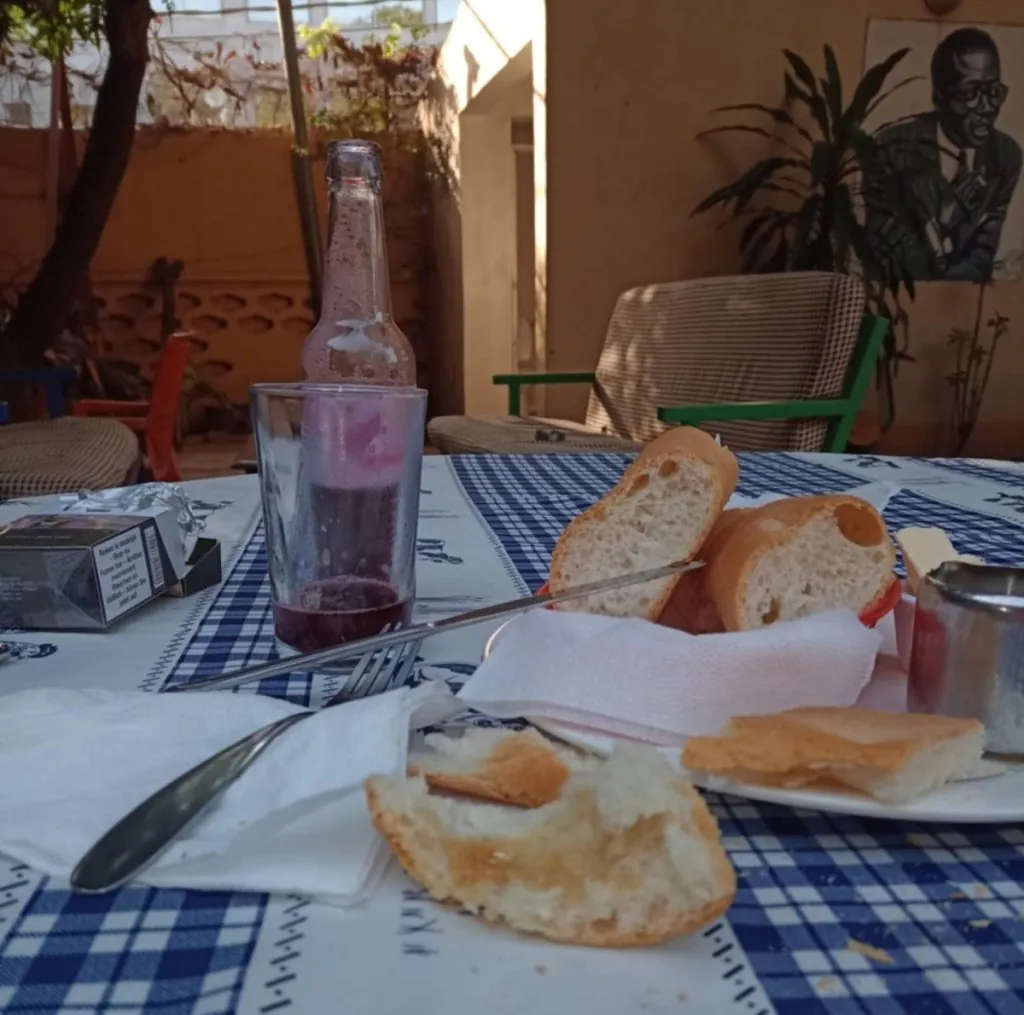
The morning starts chilly at The Sleeping Camel in Mali's capital Bamako, breakfast consisting of those eternal boring baguettes with honey or jam. The coffee is good so it curls on the tongue and the bisap juice with ginger is delicious. Bisap is made from the flowers of the roselle hibiscus and contains a lot of nutrients.
 Tweet
 Share
 Share
 Pin
 Share
 Share
We start to sneak out of town, it's extremely slow considering the traffic, I don't understand the local traffic rules, they must be homemade.
Today's destination is Siby, a larger town located about 230 kilometres southwest of Bamako.

Once we manage to get out of town, the roads are good, tolls and police checks are part of it. But it's empty ... no traffic jams or any traffic at all. The explanation is that transport of fuel into the country is strictly controlled. Al-Qaeda factions have been attacking transports, so now the entry is taking place with great security.
When filling up with petrol at a petrol station, the queues are kilometres long, a whole day's wait to fill up a motorbike or half a tank of a car, it's extremely chaotic.

We make a village visit, in this area it is traditional to decorate the houses with paintings. Now it is the end of the dry season and most paintings have been faded by the sun.


After the rainy season, the houses must be repaired, i.e. re-mudded with clay and then dried and decorated. The building material is clay, cow dung and plant parts.


The small round houses are storage, they are walled up completely to be protected from intruders and weather.

Peanuts are widely grown, a clever machine separates the shell from the nut, the rest of the cleaning is done by hand.



Some cotton is also grown.

The mango trees are full of unripe fruit, the season hasn't really started yet. A pity. I love the taste of sun-warmed mango.

We make a stop at a school where a volunteer organisation distributes school supplies and backpacks.


In Siby we check in at a homestay; Auberge de l'arch. Bintou and her French husband run a small business where tourists can enjoy home-cooked food in a nice family and quiet environment.


My little hut consists of a bed with mosquito net and ceiling fan. Tourists yes, there are hardly any at all now, just Aunt Anna!


Imagine my surprise when I learn that one of Mali's greatest artists has his house next door to mine. Jah Fakoly is one of my favourites. Too bad he was on tour, I would have loved to have coffee with him.

In this area, people make a living from farming and small-scale animal husbandry; the family has goats, cows, ducks and chickens.

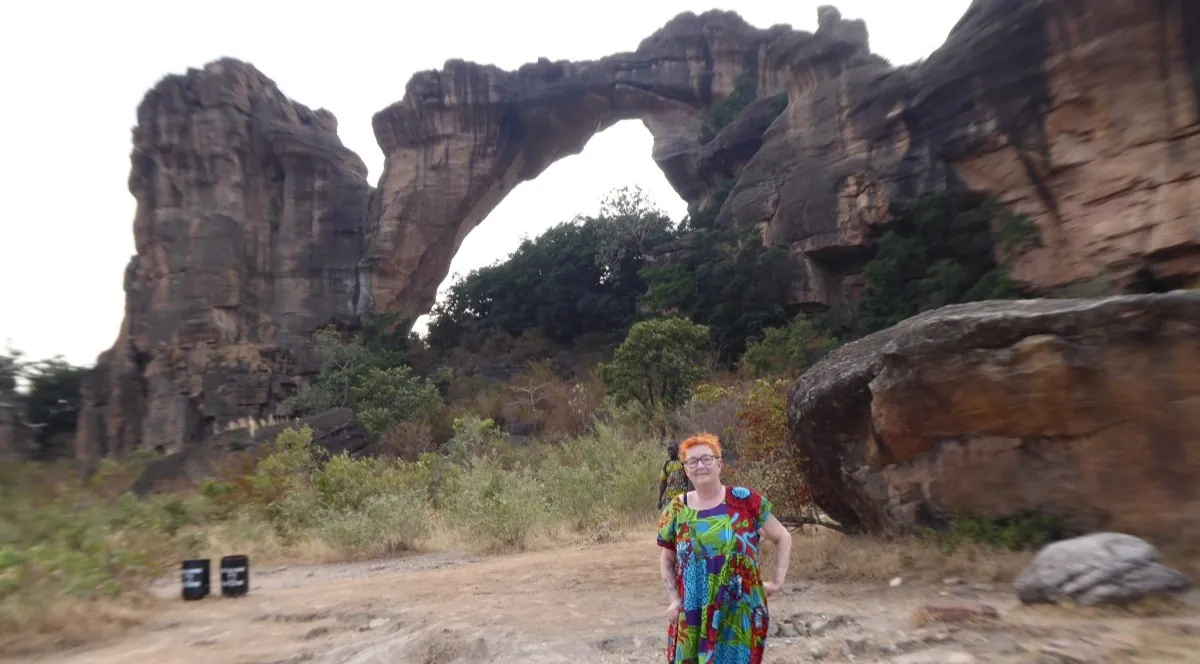
Tonight's walk will be to The Arch of Kamandjan, which is a strange rock formation with many deep caves.

It is a historically important site as it was used by warriors in the 14th century, who hid in the caves for several years. The ark is also important from a cultural point of view as it is sung about and tells the story of the Mandinka people. The view is stunning and almost meditative.


Today, people visit the Ark to make sacrifices and to place a stone on a cairn. You make a wish and if the wish comes true, you have to give a gift or do something kind-hearted. Of course, I lay a stone, make a wish and make a promise.

This night I get sick, my stomach protests but it was no more than expected. The toilet is secluded, it is pitch black so with the headlamp on I can rush there x number of times. Well I survived the stomach flu with the help of my good and have pills and the day after with a light diet.

Another village visit, here too the day's activities are in full swing. Sad to see that infrastructure in the form of waste management is not a priority.


Herbs and grains are dried under the blazing sun. The corn grains are separated from their cobs with a special machine.


Sabadilla hibiscus flowers to bisap juice.

There is a fantastic large sausage tree in the centre of the village, and my driver has to buy some fruits. The fruits can be cooked but also used for medicinal purposes. The bark is used to treat stomach infections.


The vital water doesn't come from a tap here ... Through aid, they have access to a well where the water is collected.

Some older men are braiding beautiful baskets, and on another farm, washing is done by hand with a washboard and homemade water in jerry cans.


It's lunchtime and women and children gather for a break, usually with a stew of meat, fish or vegetables in peanut sauce. The food is cooked on a cooking fire in the kitchen hut.


The late afternoon is devoted to a special experience in the form of traditional dance. The Dogon are a tribe that lives very simply on the edge of the mountains, they are a farming people who live in funny walled huts. The tribe believes in three gods; earth, sky and water.

The tribe has a tradition going back more than a thousand years of connecting with their ancestors through dance, song and drumming.

They believe in an afterlife and one of the rituals takes place at death to help the deceased to the other side. Some ceremonies may be held for days and repeated after a number of years. Rituals also include the typical home-made beer, the ”liquid bread” brewed from sorghum, yeast and other grains.
Drummers prepare their instruments by heating and drying them with live fire, a trade passed down on the paternal side.

Being a mask maker is an honourable job and these are held in high esteem in the village community, even here the profession is passed down from generation to generation. There are more than 70 different masks, each with its own meaning.

The dance and rhythms are evocative; for the Dogons, it is an important element that encourages harmony between life and death. It takes many years to become a fully-fledged dancer, including memorising texts.


Tonight's dance, however, is a performance and not part of any ritual. We spend another night at Bintou's and the next morning I write a note to Tiken Jah Fakoly and then we skim between the mango trees.
The village school we visit is packed with kids, the children are curious and shout hello in their home language, I enter the classroom and thank them for letting me visit them. School in Mali is compulsory until ninth grade, if you can afford it, you go to a private school for better education, however, many children leave early to help their parents.

We leave the mountains behind us and roll on towards Segou where the next two days will be filled with new knowledge and impressions.

Follow Anna here:

Anna Nilsson Spets
You might also like:
 Ségou in Mali - Aunt Anna on cultural trails
 Film and TV series shooting locations - 10 places to visit
 Mali in West Africa - Aunt Anna among ants and motors
 Departure with Dotche - now the boat trip in the Philippines begins
 Gorillas in Uganda - Aunt Anna and the Silverback
 By train around Uzbekistan: Zomin National Park



 English (UK)
 Svenska
Znogge says:
What a trip and so much you get to experience. So interesting to leave the big city and visit smaller towns in the countryside. Wonder if it is such juice that is drunk even in Egypt ... So good that school is compulsory until ninth grade but too bad that the reality is different. The ambition is there in any case.
31 January 2026 - 10:14
Anna says:
Thank you for reading. I prefer country life, it was an experience too
31 January 2026 - 18:06
Channal says:
Hi Anna! What a lovely post! I really felt like I could go to Siby... the drums, the masks and the beautiful nature all come to life in your text.
Thank you for sharing such great encounters and experiences... it really inspires new adventures!
HUGS to YOU! Anna
31 January 2026 - 18:15
Anna Nilsson Spets says:
I'm glad you enjoyed it. Yes, the worm dance was special.
Take care
31 January 2026 - 18:55
BP says:
WOW!!!
So after this post I think you should be very grateful that your stomach flu passed in one day. It is terrible conditions there in Mali, Somehow I understand that you were the only tourist in this poor country that God (or someone else) seems to have forgotten. It's disgusting conditions, and the rubbish everywhere - no yuck! I'm glad you made it through unscathed I must say.
As usual - incredible pictures showing both the misery, but also local celebrations. Amazing that you can dress up like that when the temperature is probably around 30 degrees and more.
I must say that I am very happy and grateful that I live in Sweden with running water, washing machine and functioning waste management...
PS. Were you tipped when locals posed for photos? Had you booked the trip and the private driver before you left? DS
31 January 2026 - 18:26
Anna Nilsson Spets says:
Yes it was an exciting trip, the stomach flu was like a piss in the Baltic compared to previous times.
No, I didn't drink anything for the pictures.
I had booked my guide before travelling, long before, the driver was included.
Thank you for your comment
31 January 2026 - 18:57
Lena - gott för själen says:
I searched for that artist on Spotify and it became the theme song to your post while I was reading 🙂
Wow, what masks and costumes! Was surprised about compulsory schooling until 9th grade! Prejudice of course, but still.
Very interesting reading.
Hug Lena
13 February 2026 - 12:28