

Writer: Anna Nilsson Spets
The travel warning is written in angry red at the Ministry of Foreign Affairs: travel advice in the weeks before travelling to Mali. Swedes are urged to leave the country, warned of kidnappings and armed attacks. I see the country that has been at the top of my bucket list disappearing into the periphery.
 Tweet
 Share
 Share
 Pin
 Share
 Share
My local guide at the destination keeps updating me while friends and family try to persuade me to go to a normal country, like Mallis or something.
I fill in my visa application online, a laborious French affair with x number of documents attached. A few weeks later, I take the train to Brussels and collect the visa.

The family doctor gives me malaria pills and various other good things to have. The medicine bag undeniably grows with age.

So on a snowy and cold Sunday I take the train to Brussels, the usual Starbucks coffee and cigarette in the icy wind. From -3 to +33.

Casablanca is the first stop, then on to Bamako where I land in the middle of the night and discover that my luggage is not with me, shit. The heat strikes with a vengeance.
A driver is waiting for me, drives me to my accommodation where it turns out that my booking has been misunderstood and all rooms are full. The driver drives across a pitch-black Bamako and wakes up a night watchman at a small family hotel. It's three o'clock in the morning and the sheets from the previous guest are changed to something with a Valentine's theme. That the room is clean is a strong exaggeration.
The generator has stopped and the fan is not working and I fall asleep from sheer exhaustion.
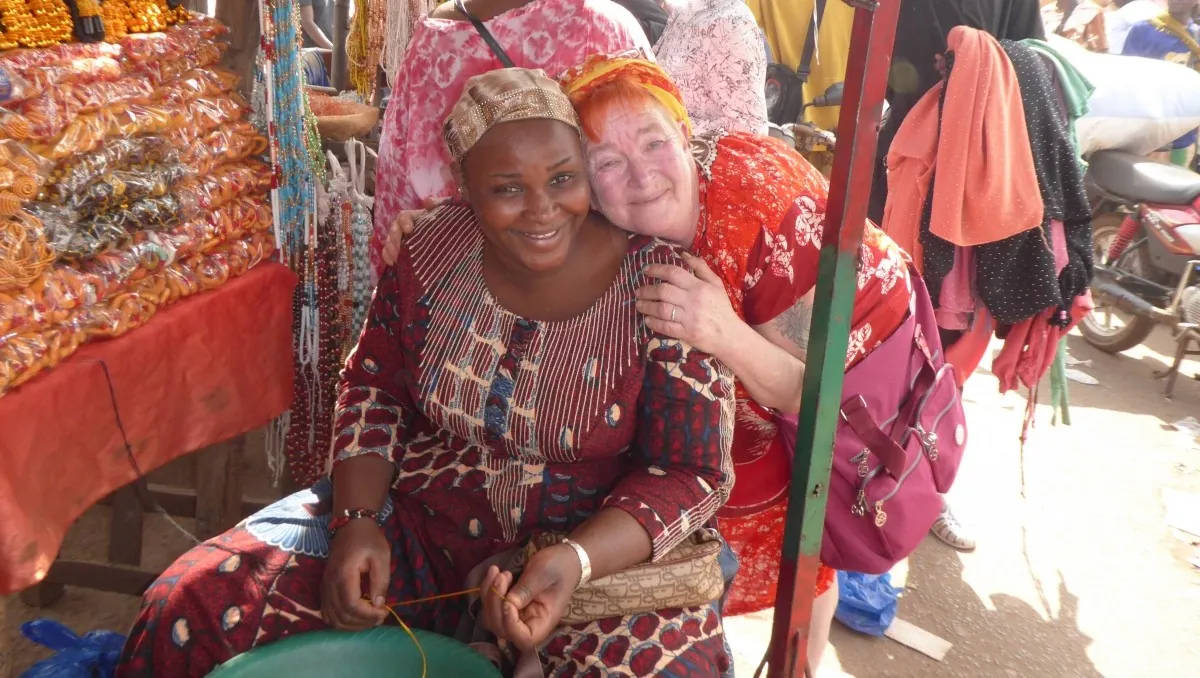
The morning after on to the right accommodation; The sleeping camel which fortunately has a small shop where I can buy a dress instead of my warm travel clothes. The camel is a chill meeting place for expats and locals.


Tuesday is coming and with it my local guide Amadou, we will do the capital this day. Amadou is a freelance guide who collaborates with international travel companies as well as doing his own tours. We click right away !

Bamako is extremely large, it is located between 3 bridges and the traffic is terrible, would not have driven a metre here.


6 million inhabitants and 1 million motorbikes.


The driver, Aboucabar, has ice in his stomach and we are slowly but surely moving forward.


The markets are scattered, we start with one with mixed content. In my quiet mind I wonder WHERE do all these people come from? It's like the hustle and bustle of an anthill with its invisible aisles.


The most interesting thing here is the area where necessities for traditional folk medicine and rituals are sold. Dried monkey heads, wild dogs, snakes, you name it ...


It's a hodgepodge of stalls, vendors and customers, if I hadn't had my guide with me I would never have found my way out again.


The craft market offers things that we tourists drag home with us, these eternal carved wooden figures of course.

Beautiful wooden masks, drums and the typical funny hat worn by the Fulani people.


High level recycling is seen in the next market, different metals are dismantled, melted down and turned into something else. The axes burn and the sweat varnishes.


Recycling in another form, an old tisha from Stockholm ...

Child labour is common, and my mother's heart aches when I see little boys pulling hair in the smithies when they should be in school.


I have travelled to quite a few African countries but I don't think I have seen as much rubbish as in Mali, especially plastic. It looks awful and the dust from the dry unpaved roads adds to it. Soon the rainy season will start and everything will be a mud puddle instead.


Sales are going on everywhere, the roads are lined with simple stalls where you can buy a bed or deep-fried balls.


The sad thing is the refuges where the women with a number of small children wander back and forth to beg for a meal. The poverty is painful. I wonder where they live and how they survive.


The cattle market would probably make a Swedish animal welfare inspector faint, but the animals look reasonably healthy and not too thin. A cattle from 450 euros and a goat at least 60 euros.


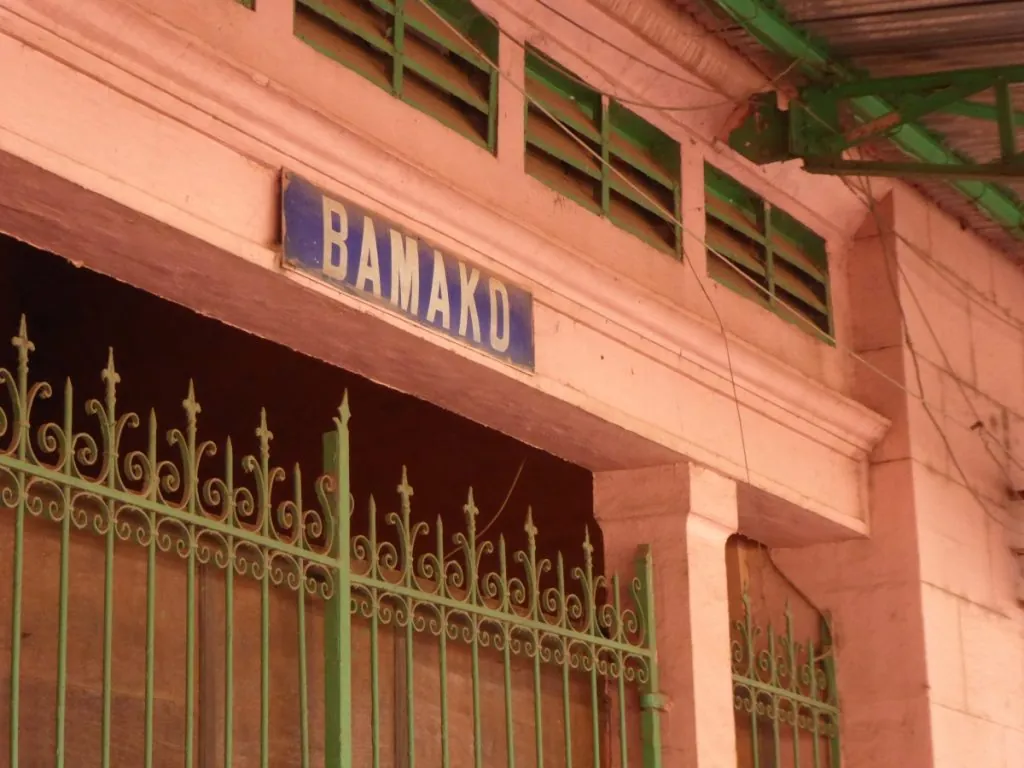
The old railway station has not seen any trains for many years, but the building is beautiful in its desolation. A design that bears witness to an earlier colonial era.


Along the road there are boys trying to sell handkerchiefs or wash car windows for a few Korvören.

We continue to the outskirts of the capital where the Niger River flows and where the boat builders are based.


A boat takes around two months to build, sealing it with heated plastic. Recycling again. The children collect wood waste that is taken home and burned.


Boats linked together like a train arrive from the other side of the Niger. Full of sand, they are loaded onto lorries for further transport. Young girls carry big buckets of sand on their heads, it looks extremely heavy.


My luggage then... after a trip to the airport I managed to find it between hundreds of other lost bags, hallelujah.
My second day in Mali is over, many, many impressions and thoughts swirl around in my brain when I go to bed at night. I feel grateful that I was born in another part of the world, a part with different conditions.

The AC buzzes and cools nicely in the 30-degree heat until the power goes out and everything becomes pitch black and quiet.
Facts about Mali
- Geography: Mali is located in West Africa, the seventh largest country in Africa. 8 regions.
- Inhabitants: Around 22 million. One of the 25 poorest countries in the world.
- Steering: Currently military government, former French colony.
- Ethnic groups: Bambara, Fulani and Tuareg.
- Language: The majority speak Bambara, French.
- Religion: 90 per cent Muslim, 9 per cent indigenous religions, 1 per cent Christian.
Travelling to Mali - good to know
- Visas: Yes, no visa on arrival (VOA), visa is applied for online and collected at the nearest embassy. To visit Mali you need a LOI; letter of invitation.
- Vaccine: YES!!! Especially the yellow fever required upon entry into the country. Malaria prophylaxis and basic vaccine.
- Insurance: The Ministry of Foreign Affairs advises against travelling to Mali, your regular travel insurance does not apply.
- Money: West African francs, there are ATMs that work with luck. Bring Euros for possible exchange.

Follow Anna here:
Anna Nilsson Spets
You might also like:
 Siby village in Mali - Aunt Anna and the magic masks
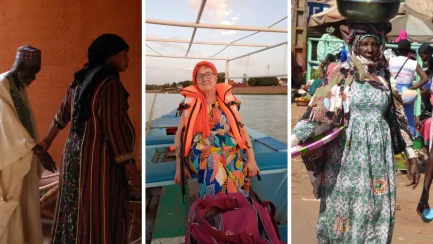 Ségou in Mali - Aunt Anna on cultural trails
 Himokilan Island in the Philippines - cave and encounters with the locals
 Southern Ethiopia - Aunt Anna keeps on damming
 Greetings from Johannesburg, South Africa
 Riding the wine train in Franschhoek, South Africa


 English (UK)
 Svenska
Frido says:
Anna's texts are always so good and interesting, with a humorous twist! A bed and deep-fried balls, ha ha! In between, deep insight into countries and places you never think about.
27 January 2026 - 17:14
Anna Nilsson Spets says:
Thank you for your nice comment. Mali is a rather unknown country.
27 January 2026 - 18:56
Znogge says:
It was interesting to read more about Mali. I still had some knowledge because for many years we had a sponsored child there. However, the cooperation with the Children's Fund was broken so it ceased completely.
When you read a text like this, you can really feel grateful to live in a country like Sweden. It should be a matter of course for all children to go to school because education is often the way out of poverty. Unfortunately, this is not the case for all children today.
A brave choice to travel there.
27 January 2026 - 18:33
Anna Nilsson Spets says:
Yes, that's how I feel too, gratitude. I will now pay for school for a girl. I have a sponsored child in Tanzania through Plan and another girl in Kenya.
Thank you for reading
27 January 2026 - 18:58
Hanneles boktips says:
Very different destination.
27 January 2026 - 20:18
Anna Nilsson Spets says:
Yes it is a bit different, but I like travelling out of the box ! Thanks for your comment.
28 January 2026 - 6:14
BP says:
You are a very brave woman. Travelling to Mali already requires a great deal of courage, but doing it as a woman requires a man, so to speak.
What a horrible shithole Mali is. Thanks to all the unrest, BBC World News reports quite regularly on Mali, so I had a bit of a handle on it.
But their images are definitely not in the same class as yours.
And we who moan if there is a pot hole in our tarmac roads... Shame on us. On top of that, I didn't see a single motorcyclist with a helmet on his head...
Googled ”The sleeping camel” and that place was really cool.
What a stroke of luck or should I say skill that you found your luggage.
Now you have also seen Mali. As I said, to pay a lot of money to stay in such a ”shithole country” - well, it must be proof that you really love Africa:-) Hope it will be part II of the trip to Mali.
27 January 2026 - 20:26
Anna Nilsson Spets says:
Thank you for being my loyal reader.
How I love my Africa !
And of course there will be more, 2 more !
28 January 2026 - 6:16
JoY says:
Interesting to read about your trip in Mali. It is sad that the children work instead of going to school. And all those people cleaning car windows and selling various things at the traffic lights/crossings, great recognition factor.
27 January 2026 - 21:24
Anna Nilsson Spets says:
Thank you for reading, yes, it is sad with working children, something you see in many countries.
28 January 2026 - 6:14
Christel says:
How well you write and describe! I have not read anything by you before but will do so immediately. I too have a lifelong love of the African continent and have visited about half the countries there. Upcoming trip will be an expedition through Tunisia and Algeria. Great to discover you via Freedomtravel's Instagram. Mali sounds exciting!
31 January 2026 - 9:19
Anna Nilsson Spets says:
I'm glad you like Africa. I did North Africa back in 1980, Algeria is amazing. Thank you for reading
31 January 2026 - 18:54
Lena - gott för själen says:
Wow, so much impression just from reading. Can understand how it spun in place. Somewhere in all the misery they find their place in life to survive. So useful to read things like this from time to time.
Hug Lena
10 February 2026 - 16:32