

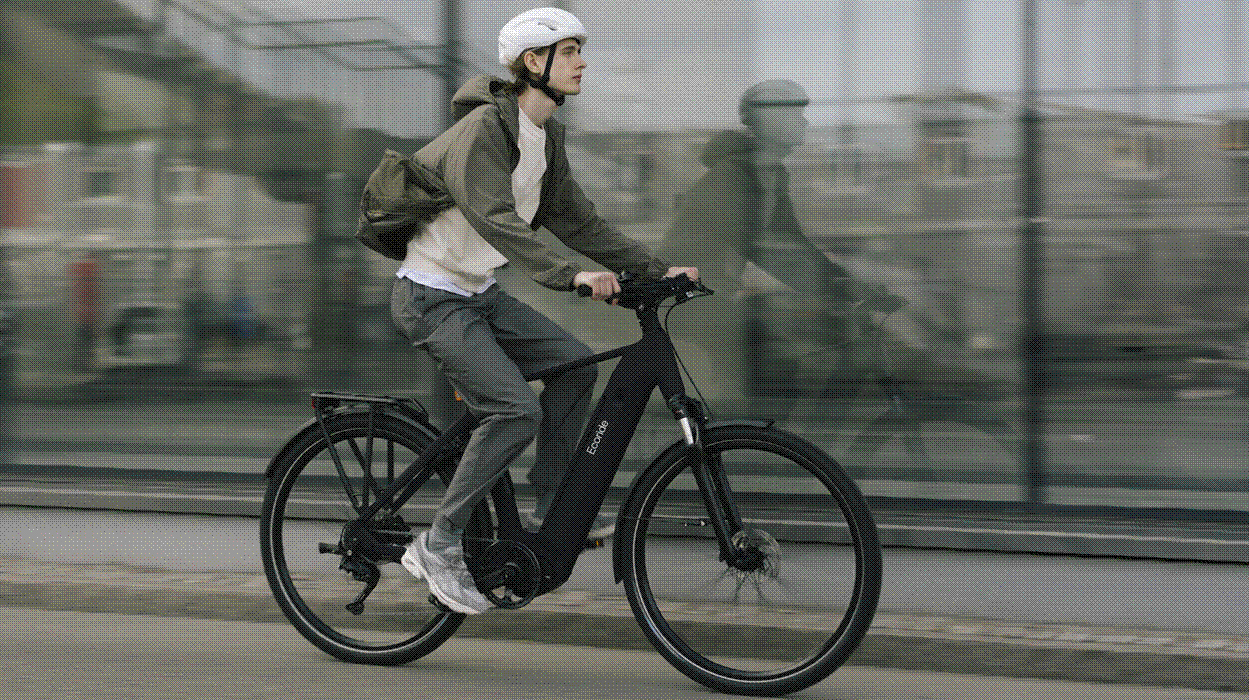

Writer: Co-operation partner
There is something special about parking your camper for a few days and leaving it standing. The awning is folded out, the chairs are brought out and the rest of the journey takes place at a slower pace. But the campsite is rarely located in the middle of a village, and the grocery store, swimming area or fish smokehouse you have read about may be quite a distance away. That is why an electric bike has become an obvious companion for many who travel with a camper. With electric assistance, distances shrink, the slopes become gentler and the excursions become more frequent.
 Tweet
 Share
 Share
 Pin
 Share
 Share
At the same time, a different electric bike for the camper from a regular commuter bike. The weight, the step-in and how you charge the battery during the trip play a bigger role than many people think. Here's what to keep in mind.
Table of contents
Why the electric bike is so well suited to the motorhome
Once the camper is in place with the electricity connected and everything set up, it's a hassle to drive off just to buy breakfast bread. The bike solves that in a few minutes.
The electric assistance also makes longer excursions possible. A day trip of a few kilometers along the coast becomes a pleasure rather than a workout, and you'll arrive without being sweaty.
Many small towns, both in Sweden and in Europe, have narrow alleys that are not built for a seven-meter long motorhome. By bike you can get there, and parking problems disappear. If you are two people traveling with different fitness levels, the engine also evens out the difference, so that no one has to wait at every hilltop.
Check the weight before you buy
This is the point that is often forgotten. An electric bike weighs more than a regular bike, and it is noticeable when it is hung on the back of a camper or parked in the garage. The bike racks have clear weight limits.
There are bike racks that are mounted inside the motorhome's garage, i.e. the large storage space at the back, that can handle less than 20 kilos per bike, and rear-mounted racks with a total load capacity of 50 kilos. If two electric bikes weigh 25 kilos each, you end up right on the limit, and on a rack with a lower limit per bike, even a single electric bike is too heavy.

Here's how:
- Find out the weight of the bike, both with and without the battery.
- Compare with the holder's limit, both per cycle and total.
- Remove the battery while driving if the manufacturer recommends it. This reduces the weight of the holder and protects the battery from rain and theft.
- Count the bicycles in the total weight of the motorhome. With a B driving license, the limit is 3.5 tons, and on many motorhomes the margin is small even with water, LPG and packing.
More tips on preparing the vehicle can be found under Fix your motorhome here at FREEDOMtravel.

Women's electric bike: low entry that makes a difference
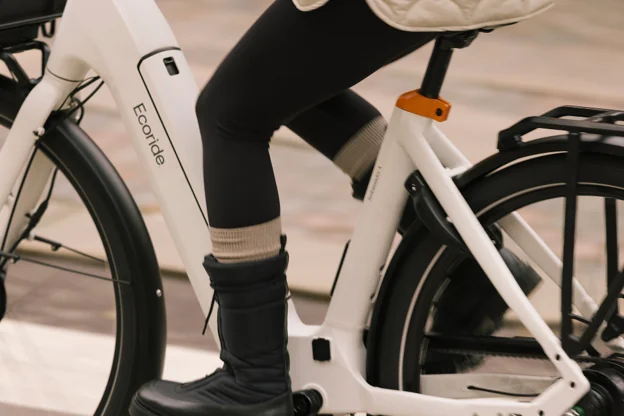
What is called women's electric bike is in practice about the frame. A women's bike has a low step-in, meaning there is no high top tube to lift your leg over. It sounds like a detail, but on a motorhome trip you get on and off many times a day: at the bakery, at the lookout point and at every gate on a gravel road.
With luggage in the basket or bags on the luggage rack, it's also easier to keep your balance when you don't have to swing your leg high. Anyone with stiff hips or knees will notice the difference immediately.
Don't let the word "ladies" dictate your choice. Ecoride describes the difference between women's and men's models as a matter of the frame, not the technology. The technology is the same, and a low step-in works equally well for anyone who wants to get on easily.
Folding or full-size electric bike?
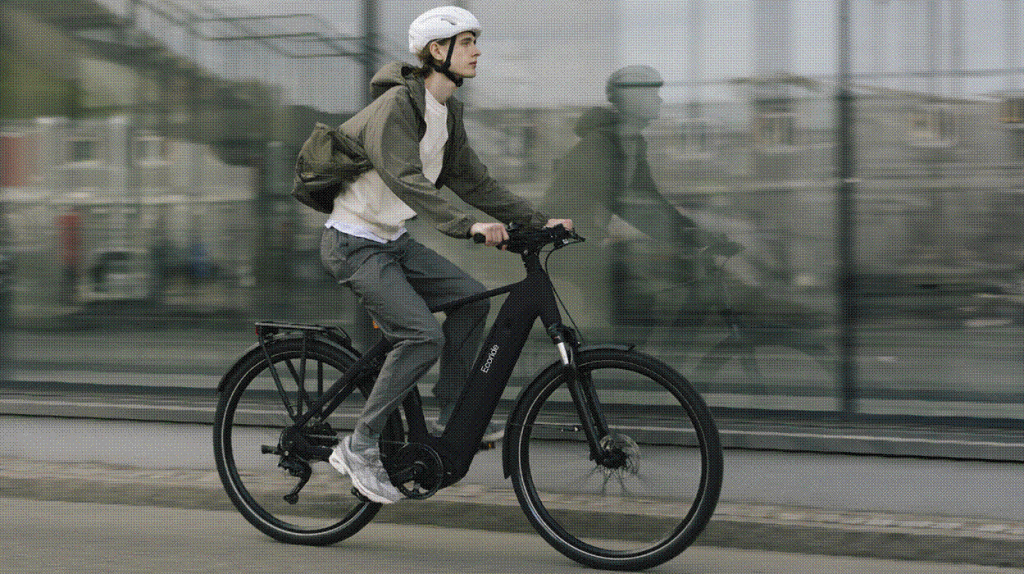
For many motorhome owners, the biggest question is where to store the bike. A folding electric bike can be stored in the garage or inside the vehicle, where it is protected from both weather and thieves. The Ecorides Flexer 3, for example, has 20-inch wheels, a low step-in and a range of up to 85 kilometers per charge according to the manufacturer. It weighs 25 kilograms, so even a folding electric bike is heavier than many people think.
A full-size e-bike is more comfortable on longer rides, and larger wheels roll more easily on gravel and uneven surfaces. However, it almost always requires a rack.
A simple rule of thumb: if you are short on space and mostly run short errands, choose a foldable electric bike that can be stored inside the vehicle. If you want to cycle all day along trails and dirt roads, choose a full-size bike with a low entry.
Range and charging on the go
The range stated by the manufacturer applies under good conditions. Cold, headwind, hills, low tire pressure and heavy luggage will draw more power. Plan your day trips with a margin, especially in spring and autumn when it is cold.
If you are at a campsite with electricity, connect the charger to the camper's regular 230-volt outlet and charge overnight. If you are camping without electricity, you will need an inverter and sufficient capacity in the leisure battery, which far from all campers have. Therefore, plan the charging for the nights when you are camping with electricity.
Rules that are good to know
According to the Swedish Transport Agency, an electric bicycle is considered a regular bicycle as long as the motor only amplifies the pedaling force, stops assisting at 25 km/h and has a maximum output of 250 watts. In that case, the same traffic rules apply as for other cyclists.
Children and young people under the age of 15 must wear a helmet, and it is strongly recommended for everyone else. If you are going to cycle abroad, check the local regulations before you leave, as helmet requirements, for example, differ between countries.
Checklist before departure
- Weigh the bikes and compare with the maximum weight of the rack
- Remove batteries while traveling if recommended by the manufacturer, and store them dry.
- Lock your bikes to the rack and pack a sturdy lock for on-site parking.
- Pack the charger and any extension cord
- Check tire pressure, brakes and lighting
- Bring a helmet
- Protect the bikes with a cover if they are ridden outside.
With the right electric bike and a little planning, your campervan becomes a base rather than a means of transport. The destination grows with every trip you take, and it is often on the bike that the best experiences of your holiday await.
You might also like:
 Installing solar panels on the motorhome - finally solar panels on the roof!
 Portable AC in the motorhome - our experiences
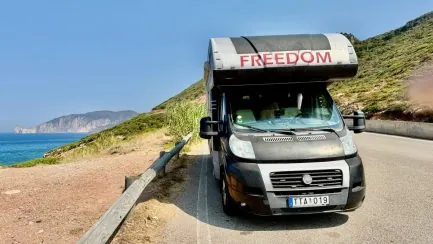 Motorhome equipment - how we've fixed, decorated and redecorated
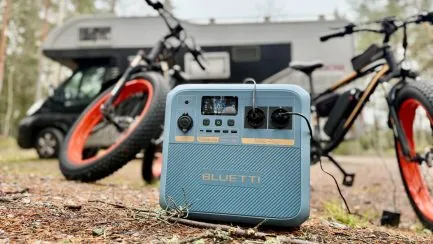 We tested the Bluetti Pioneer Na in a motorhome and houseboat - portable power station test!
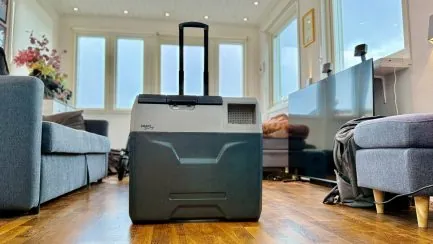 Cool box that can handle roads and waves – we've got one for our motorhome and houseboat






 English (UK)
 Svenska