


Writer: Helena Bergström
Updated: September 2026 | Advent is for many people the time when candlesticks and stars appear in the windows, the first candle is lit and Christmas begins to feel close. But what does Advent really mean? Why do we celebrate four Advent Sundays, why do we light candles – and what does the Advent calendar actually have to do with Advent?
 Tweet
 Share
 Share
 Pin
 Share
 Share
Here we have collected 10 facts about Advent and some of the traditions that have grown up around this special time of year. Some have Christian roots, others have come much later – and several of our Swedish Advent traditions actually have their origins in Germany.
Table of contents
1. Advent means arrival – not waiting
You might think that the word Advent means ”waiting.” That would be quite logical, since the entire Advent season is about waiting for Christmas. But it’s not quite that simple.
The word comes from the Latin advent, which means arrival. In the Christian church year, Advent is about waiting for Christ and his coming. The expression Advent of the Lord means roughly ”the coming of the Lord.” So we wait during Advent – but the word itself means arrival.

2. First Advent is the church's New Year's Day
For most of us, the new year begins on January 1, but the church has a different calendar. The Christian church year begins on the first Sunday of Advent.
The first day of Advent is therefore something of a New Year's Day for the church. This is followed by the various feasts and periods of the church year, from Christmas and Epiphany to Easter, Pentecost and the rest of the year.
In Swedish churches, the first day of Advent is also a big day. The Psalm Prepared way for the Lord is one of the classic elements and the first day of Advent is usually one of the most well-attended church Sundays of the year.


3. Advent has four Sundays – but different numbers of days
Advent encompasses the four Sundays before Christmas, but that does not mean that Advent is always exactly four weeks long.
The first Advent can fall sometime between November 27 and December 3, depending on which day of the week Christmas Day falls on. Therefore, the length of Advent can vary from year to year.

Sometimes the fourth Advent also occurs on Christmas Eve itself. In other words, both Advent and Christmas are on the same day. The four Sundays of Advent, however, are always fixed – and that is of course why we have four candles in the traditional Advent candlestick.

4. Advent used to be a time of fasting and preparation
Today we may associate Advent with mulled wine, gingerbread, Christmas tables, Christmas markets and Christmas gift shopping. Historically, the atmosphere has been different.
Within Christianity, Advent developed into a period of preparation for the celebration of the birth of Jesus. In different places and at different times, the period has also been associated with fasting, much like the time before Easter.
Traditions have varied both between different churches and throughout history, so it is not possible to say that Advent has always involved a specific fasting period of a certain number of days.
The contrast to today's Advent celebrations is still quite large. From restraint and preparation to mulled wine party, Christmas table and a generous cake plate …

5. The four Advent candles count down to Christmas
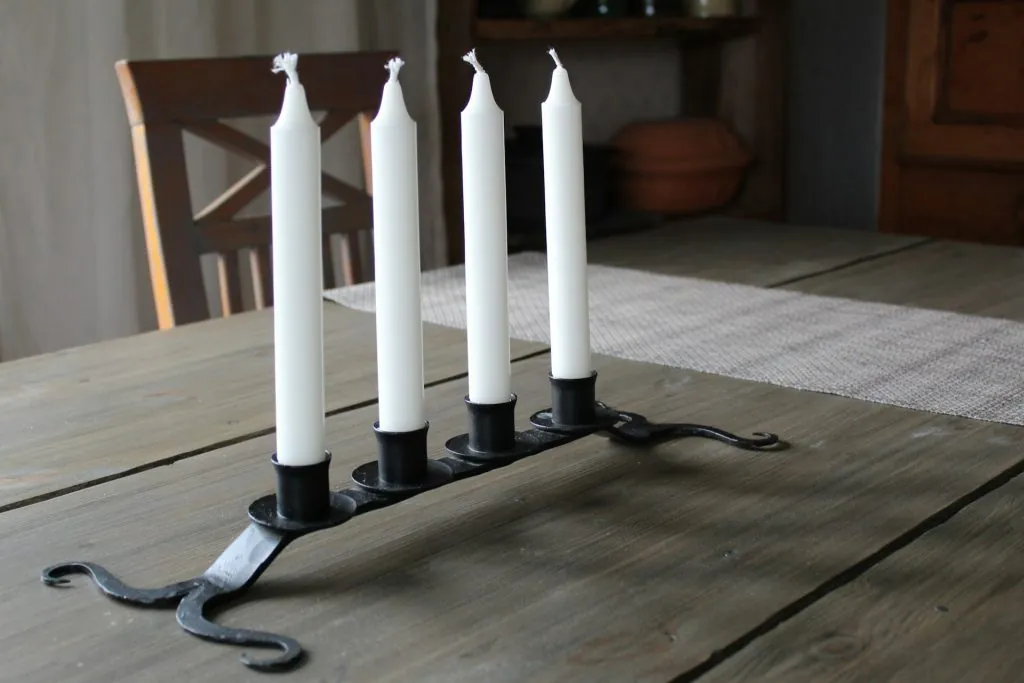
One of our most well-known Advent traditions is, of course, lighting candles. On the first Advent we light one candle, on the second Advent two, and so on until all four candles are lit on the fourth Advent. The candlestick thus becomes a simple countdown to Christmas.
The Advent candlestick with four candles, however, should not be confused with the electric Advent candlestick that stands in many Swedish windows. The two traditions have partly different histories – and the electric version is considerably younger.

6. A predecessor to the Advent candlestick had 28 candles
The story behind our Advent candles includes a rather spectacular variation. At the First Deaconess Institute in Stockholm, they began using a so-called Advent tree in the 1870s, inspired by a German model. The tree contained a whopping 28 candles.
On the first Advent, seven candles were lit, on the second Advent another seven, and so on. By the time the fourth Advent arrived, all 28 candles could be burning.
The Advent tree is usually mentioned as a predecessor to the Swedish Advent candlestick with four candles – one for each Advent Sunday. Much easier to keep track of. And probably a little less flammable too.
7. The electric Advent candle holder is a Swedish invention
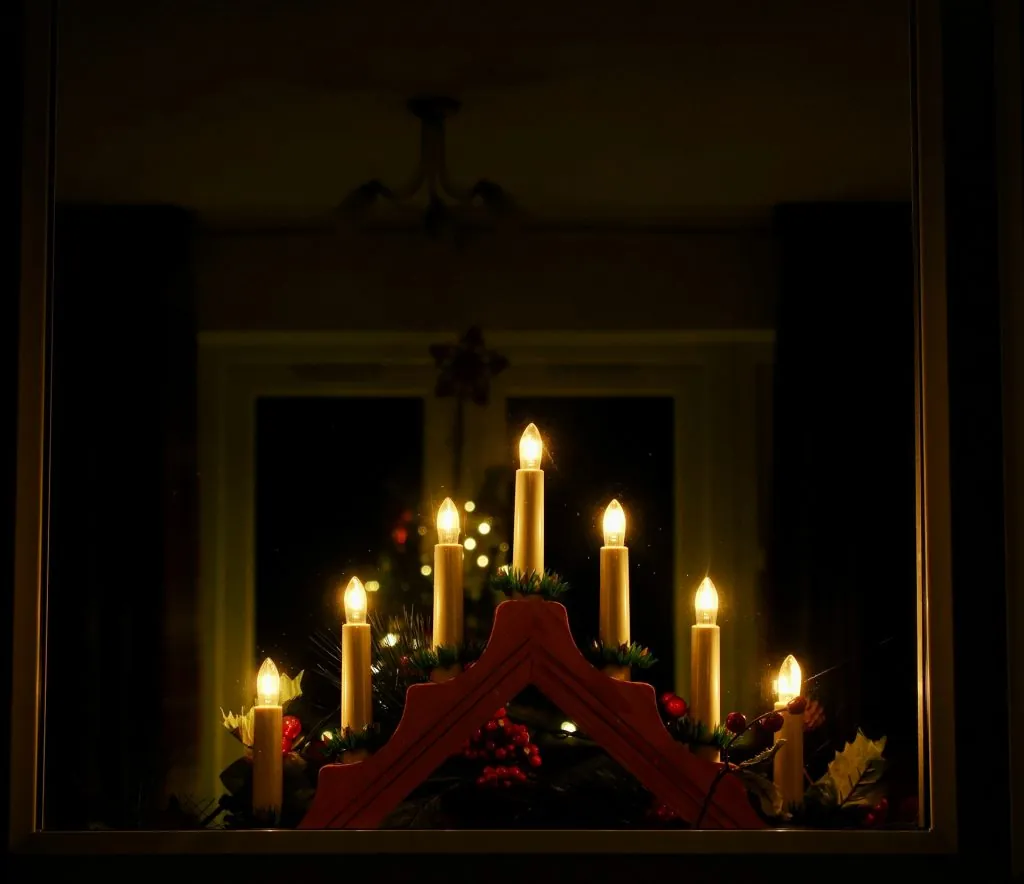
The electric Advent candle holder with several candles in a row feels almost self-evident in Swedish windows during December. But the tradition is not very old.
The first electric Advent candle holder is usually attributed to Oscar Anderson, who worked at Philips in Gothenburg. In 1934 he built a candlestick with electric lamps, and a few years later the model began to be manufactured and sold.
At first, interest was rather lukewarm, but eventually the candlestick became a Swedish Advent classic. Today, it is so common that it is difficult to imagine Swedish December windows without it.
It is therefore good to distinguish between two things: the Advent candlestick with four candles, where a new candle is lit every Sunday, and the electric Advent candlestick, which is primarily used as Christmas lighting.
8. The Advent star came to Sweden from Germany
Another obvious sight in Swedish December windows is the Advent star. The tradition has its origins in Germany and is associated with, among other things, the so-called The Herrnhut Star, which began to be manufactured within the Herrnhut tradition in the 19th century. During the 20th century, Advent stars also spread to Sweden, not least in the form of illuminated paper stars.
The star has clear Christian symbolism. It is reminiscent of the Star of Bethlehem, which, according to the Gospel of Matthew, showed the wise men the way to Jesus.
And I, Helena, actually have personal experience with the wise men. When I lived in Iceland in 1992, I participated in a Christmas play – dressed as one of them. Someone has to follow the star…

9. The Advent calendar has its roots in Germany
The advent calendar also has German roots. During the 19th century, there were various ways to help children count the days until Christmas. For example, you could make chalk lines, hang pictures, or use other simple forms of countdown.
One person who usually has an important place in the history of the Advent calendar is the German Gerhard Lang. According to the often-retold story, his mother made a calendar-like countdown for him when he was a child. As an adult, Lang worked in printing and, in the early 20th century, was involved in developing and selling printed Christmas calendars.
In Sweden, the first printed Advent calendar was published in 1932 by the Swedish Girl Scouts Association. The artist Aina Stenberg-MasOlle was responsible for the motif.
Later, radio and television calendars also came. Swedish Radio began broadcasting a calendar in 1957 and in 1960 the first television calendar was broadcast, Title page. Eventually it began to be called the advent calendar, the name used today.
Nowadays, of course, there are calendars with everything from chocolate and toys to tea, coffee, cosmetics and other surprises.

10. The Advent calendar doesn't actually follow Advent
Here comes a little paradox. We call it advent calendar, but it doesn't actually follow Advent.
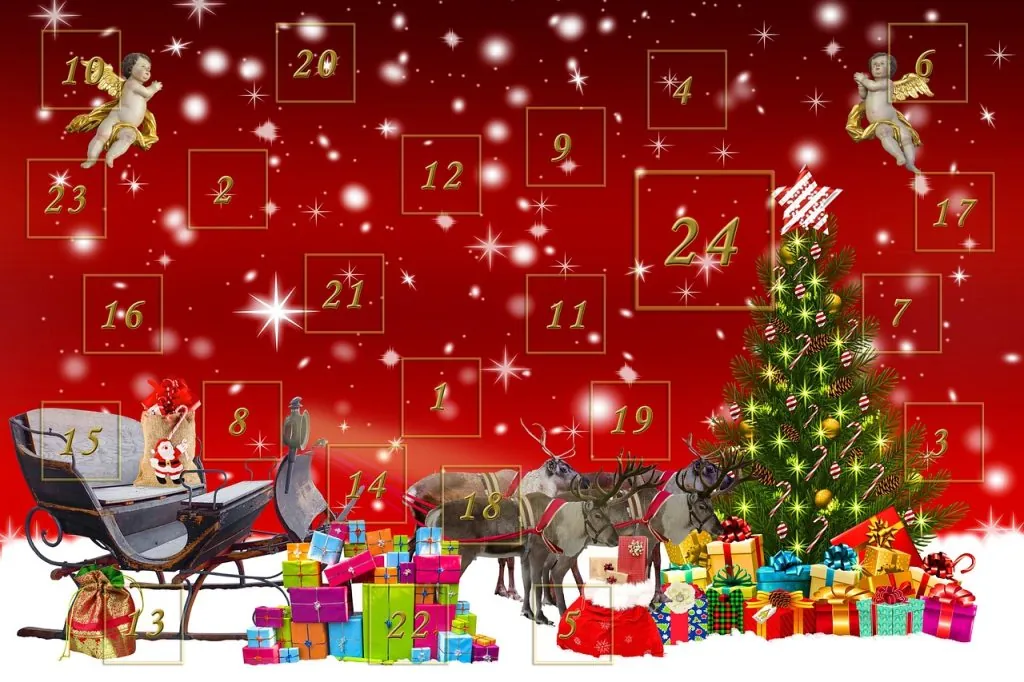
The church Advent season begins on the first day of Advent, which can fall between November 27 and December 3. The Advent calendar, on the other hand, always begins on December 1 and normally has 24 slots – one for each day until Christmas Eve.
Some years Advent begins before the Advent calendar and other years the calendar begins before the first day of Advent has arrived.
Our modern Advent calendar is therefore more of a countdown from December 1st to Christmas Eve than a calendar of the Advent season itself. But ”December calendar” may not sound quite as cozy.
What does Advent mean for us today?
Advent has changed a lot throughout history. From a church period of preparation and, in some places, fasting, it has become for many a time when we brighten the darkest weeks of the year and begin to prepare for Christmas.
We light candles, hang stars, go to Christmas markets, drink mulled wine and open calendars. For those of faith, Advent still has its Christian meaning, while others primarily see the period as a cozy prelude to Christmas.
Yet there is a common idea in much of what we do. The lights, the star, and the calendar are all in different ways about counting down, preparing, and waiting for something to come.
And perhaps that is precisely why Advent has become such a strong tradition – even in a modern and fairly secularized Sweden.

READ MORE: Christmas traditions - why do we do what we do?
You might also like:
 Christmas rhymes - 25 tips for Christmas presents with rhymes



 9 places associated with Lucia
 Christmas trees through the ages – Aunt Anna and the Christmas trees
 The Yule Goat, the Yule Witch and the Yule Cat – meet Europe's Christmas creatures
 Facts about Lucia - 15 things you (maybe) didn't know



 English (UK)
 Svenska
Matts Torebring says:
As usual, a nice post. For us as a family, Advent and Christmas is one of the most beautiful and wonderful holidays we have all year. Nothing in the world, no travel, nothing, could lure us away from this, as long as we are healthy. To sit in church and sing the old Christmas hymns is so atmospheric and beautiful. A way to stop and look around, in a stressful everyday life,
02 December 2018 - 6:41
Helena says:
Thank you very much! It sounds like you have great advent traditions! Wishing you a nice advent!
02 December 2018 - 10:40
Ama de casa says:
I LOVE Christmas and First Advent is the starting point. Then it's time to go all-in - bring out all the Christmas stuff! Including the Christmas tree. Although here I don't have room for a big Christmas tree, I compensate with three small ones on the terrace instead. Can't be too much Christmas! (Although there will be no Christmas presents, probably why I like Christmas even more now - no stress whatsoever 🙂 ).
I ran a Christmas calendar in the blog for a couple of years as a kind of "annual story" with a picture per day from something that happened during the year from January to December and the actual Christmas Eve on Christmas Eve then. Very difficult to choose "only" 24 pictures from the past year actually 🙂 .
02 December 2018 - 9:39
Helena says:
Haha, like the enthusiasm! 🙂 We're not so good at Christmas decorations ... Fortunately, others are good at it, so there is still a little Christmas spirit 😉 .
02 December 2018 - 10:42
Ama de casa says:
Ooops! The trigger finger came on too quickly. Of course, I want to wish you both a really happy first advent! 🙂
Hugs
02 December 2018 - 9:40
Helena says:
Thank you, and you too! 🙂
02 December 2018 - 10:42
Maria/ Magnolia Magis says:
I wish you a very nice first Advent! For me, Advent is light, hope and joy. As long as the children lived at home, we had an advent calendar with a little treasure hunt. This year they each got an Advent calendar from Friends, the Kindness Calendar. It is based on doing something nice every day. Yesterday it was to smile at people you don't know, for example. Yes, we have one too? I follow three advent calendars on Facebook. Yoga, food health and thoughtful words by Kay Pollak. And now it's time to check out today's exercises! Have fun! ?
02 December 2018 - 9:55
Helena says:
Thank you very much! Cozy with a treasure hunt, and the kind calendar sounds super nice! 🙂 Nice calendars you found on FB too!
02 December 2018 - 22:01
Renates Reiser says:
Interesting post about Advent! I think Advent is both beautiful and hectic, with many preparations before Christmas. The whole city is covered in lights and it is very beautiful in the dark. 🙂
02 December 2018 - 10:28
Helena says:
Agree, both nice and hectic! 😉
03 December 2018 - 6:06
Ann says:
Lovely =)
We will do advent blogging with wish lists every Sunday =)
02 December 2018 - 12:04
Helena says:
Great! The address you entered for your blog (anngelic.com) does not work, is it true that it is the nouw address you should use?
03 December 2018 - 6:10
Rolle o Carina says:
When you were a little boy, you used to go to church with your parents!
Nowadays we don't make such a big fuss about Christmas in our house 🙂 .
Happy 1st Advent on your.....
02 December 2018 - 12:35
Helena says:
Thank you very much!
03 December 2018 - 6:12
Marias Memoarer says:
Thanks for the link ? I guessed that you would also like the dialect calendar, hehe 😉.
02 December 2018 - 15:24
Helena says:
Haha yes exactly, the dialect theme was fun! 🙂
03 December 2018 - 6:12
Ann-Louise says:
Thanks for the link! ? We usually light candles and have coffee every Advent Sunday and William has some Advent calendars that he opens. I used to decorate a lot in the past but now it gets less every year. The most important are the Advent candlesticks in the window because they light up a bit when it's so grey and dull outside. Wishing you a nice first advent!
02 December 2018 - 17:00
Helena says:
Advent candlesticks are nice! Wishing you a nice first advent!
03 December 2018 - 6:13
BP says:
Very useful and interesting in your post. Much (read: everything) was new to me. I am terrible at such info. So thank you:-)
We are like you, not at all "Christmassy". But I actually bought a poinsettia today. It remains to be seen how long it will survive this time;-)
02 December 2018 - 17:47
Ruth i Virginia says:
Poinsettias in the windows are something very special in Sweden.
I remember when we travelled by tram across the Traneberg Bridge and the
saw all the windows of the apartment buildings from a distance with the nice
the stars - like the red-orange ones best.
Advent didn't mean anything to me, but when I was a child, the
second Advent Christmas signage day, when everyone who could went out and
back on Storgatan, admiring everything in the windows. The Salvation Army's
a brass band honked its horn in the square. It was during the war, so everything
uplifting was appreciated.
Advent is something that is forgotten here, except perhaps for those who...
goes to church.
03 December 2018 - 3:36
Helena says:
Ruth, interesting to hear about your memories! Interesting also the comparison with the USA. Although people are not particularly religious here, they still celebrate Advent!
03 December 2018 - 6:18
Helena says:
Nice with a poinsettia! As I said, we're not "Christmassy" either, but I think this kind of tradition is interesting 😉.
03 December 2018 - 6:15
Resfredag says:
Thanks for the tip about my calendar. I LOVE anything to do with Advent and Christmas, best time of the year!
04 December 2018 - 9:49
Lena - gott för själen says:
I always look forward to Advent. After a long dark, (often) slushy and boring autumn, it's so cosy when you "get" to start picking out some winter decorations and then Advent decorations to later top it off with Christmas decorations. Lighting candles can be done at any time, but it feels a little more effective during Advent.
Hug Lena
07 December 2018 - 7:09