



Writer: Helena Bergström
Updated: August 2026 | Tarragona is a historic coastal city in Catalonia, where Roman ruins meet medieval alleys, outdoor cafes and beaches on the Mediterranean. The city is especially known for its impressive remains from the Roman era, which are now a UNESCO World Heritage Site. We visited Tarragona during our motorhome trip through Spain and discovered a city that combines history, city life and the beach in a really nice way.
 Tweet
 Share
 Share
 Pin
 Share
 Share
Table of contents
Tarragona on the Mediterranean
It is no coincidence that Tarragona is a UNESCO World Heritage Site. Walking around the city, it is impossible to miss the remains of the Roman era. They are everywhere and it's very clear that modern Tarragona is built on the basis of the Roman Empire. on top of its ancient predecessor.

Tarragona is located on the Costa Daurada in Catalonia, about 100 kilometers south of Barcelona. The city is easy to reach along the Mediterranean coast and is a good stop on a road trip between Barcelona and Valencia.
Tarragona – a city with Roman history
Tarragona was called Tarraco During Roman times, Tarraco developed into one of the most important cities of the Roman Empire on the Iberian Peninsula. In 26–25 BC, Emperor Augustus stayed here while leading the Roman campaigns on the peninsula. Tarraco became the capital of the large Roman province of Hispania Citerior, later Hispania Tarraconensis.

Roman attractions in Tarragona
The Roman Amphitheater
One of Tarragona's most spectacular remains is the Roman amphitheater, located right next to the Mediterranean Sea. The arena was built in the early 1st century AD and was used for gladiatorial games and other public performances. The combination of the ancient ruins and the view of the sea makes this one of the city's most special places.

The Roman city walls
Parts of Tarragona's Roman city walls still remain. Along the Passeig Arqueològic you can walk alongside the walls and see some of the oldest Roman remains in the city.

The Roman circus area
In the middle of modern Tarragona are the remains of the Roman circus, where horse and chariot races were held. Parts of the structure lie beneath the modern buildings, which really shows how the modern city has grown on top of ancient Tarraco.

Balcó del Mediterrani – sea view
At the end of the main street, Rambla Nova, is the Balcó del Mediterrani viewpoint, about 40 meters above the sea. From here you have views of the Mediterranean Sea, the beach and parts of the Roman amphitheatre. A local tradition is to to play iron – ”touch the iron” – on the observation deck railing for luck.

Stroll in the old town of Part Alta
Tarragona's historic center, Part Alta, is one of the most pleasant parts of the city to explore on foot. Here, narrow alleys wind between old stone houses, small squares, restaurants and outdoor cafes. In the middle of the neighborhoods also stands Tarragona's cathedral, Catedral de Santa Tecla, which began construction in the 12th century.


Tarragona is a charming city to walk around, and there are lots of nice outdoor cafes. We stumbled into one place by chance and were surprised by a really good 3-course lunch.
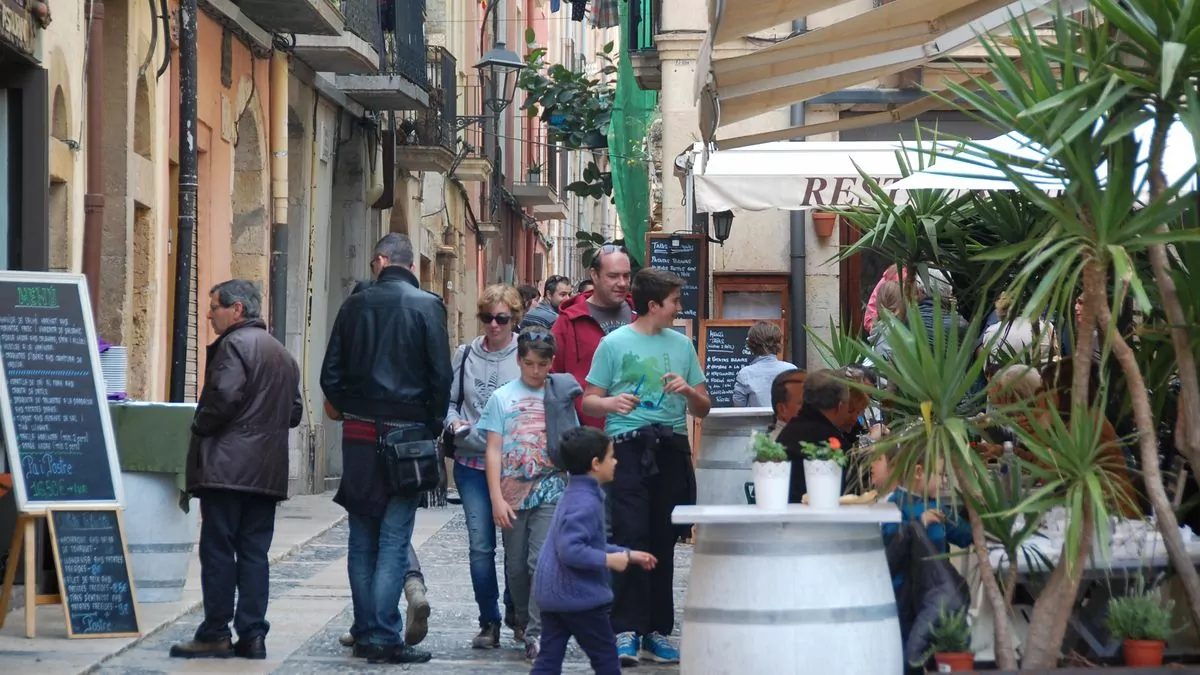
For starters we had steamed mussels and then we were served pork fillet with gorgonzola sauce and grilled vegetables. The meal ended with a really good cheesecake. For this we had to pay a modest price, and we were very satisfied.

Easter celebrations in Tarragona
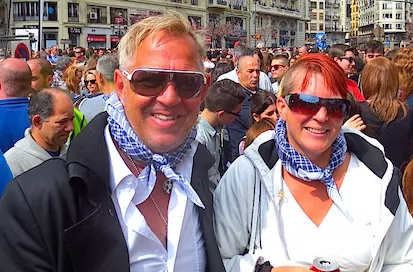
We also happened to visit Tarragona during Easter week, Semana Santa, when the city was filled with religious processions. It was one of our strongest experiences from the visit, with long processions, traditional costumes, music and a festive atmosphere.
READ MORE: Easter in Spain - a mighty display!

Beach life in Tarragona
Tarragona is also a good choice for those who want to combine sightseeing with sun and swimming. The closest place to the city centre is Miracle Beach, a long sandy beach below the railway and the Roman amphitheater. Further along the coast there are several other beaches and small coves. Among them is a very nice beach at the Torre de la Mora campsite.


Tarragona – short facts
- Best time: Spring and autumn for sightseeing, summer for swimming
- Country: Spain
- Region: Catalonia
- Coastal: Costa Daurada
- Distance from Barcelona: Approximately 100 km
- Best known for: Roman Tarraco and UNESCO World Heritage Site
- Don't miss out: Amphitheater, Part Alta and Balcó del Mediterrani
- Suitable for: History, city life, food and beach
- Time consumption: 1–2 days for the main attractions
Tarragona with a campervan – Camping Torre de la Mora
We stayed with our camper at a campsite in Tarragona called Torre de la Mora. The campsite is nicely located on a sandy beach and you can easily get into town by bus.


More to see and do in the neighbourhood
Starting from Tarragona, you can get to many other exciting and beautiful places in Spain. Here you will find more tips:

FAQ – frequently asked questions about Tarragona
Where is Tarragona located?
Tarragona is located on the Mediterranean Sea in northeastern Spain, about 100 kilometers south of Barcelona. The city is the capital of the province of Tarragona in the region of Catalonia.
What is Tarragona famous for?
Tarragona is best known for its well-preserved Roman ruins, which are a UNESCO World Heritage Site. The city also attracts with a charming old town, fine beaches and a pleasant Mediterranean climate.
How to get to Tarragona?
Tarragona is easily reached by train from Barcelona, and the journey takes about an hour. The nearest major airport is in Barcelona, but there is also an airport in Reus, about ten miles from Tarragona.
How many days do you need in Tarragona?
Two days is enough to experience the city's main attractions. If you also want to enjoy the beaches or take excursions in the surrounding area, you can stay for three to four days.
What is there to do in Tarragona?
Explore the Roman amphitheater, stroll through the historic city center, visit the cathedral and enjoy views of the Mediterranean. Tarragona also has several fine sandy beaches and a pleasant promenade.
Is Tarragona a good destination for history buffs?
Yes, Tarragona is one of Spain's top destinations for those interested in Roman history. The city's Roman remains are among the best preserved outside of Italy and are listed as a UNESCO World Heritage Site.
Is Tarragona a good destination for swimming?
Yes, Tarragona offers several fine sandy beaches both near the city center and along the surrounding coast, making the city an excellent destination for those who want to combine culture with sun and swimming.
Do you need a car in Tarragona?
No, the city center is compact and best explored on foot. Trains and buses make it easy to get here and on to other parts of Catalonia.
When is the best time to visit Tarragona?
Spring and autumn offer pleasant temperatures and are ideal for sightseeing. Summer is warm and perfect for those who want to combine city life with a beach holiday.
Can you combine Tarragona with other destinations in Spain?
Yes, Tarragona is often combined with Barcelona, Sitges and the Costa Dorada. Many also make trips to the Poblet Monastery, the Roman aqueduct of Les Ferreres or the PortAventura World theme park.
You might also like:
 Things to do in Valencia - 15 tips and attractions for your trip
 Spanish food - 25 classic dishes you must try
 Agritourism in Cyprus - 7 tips for the Cyprus countryside
 Hospital Kuks in the Czech Republic - an unusual attraction


 One of Turkey's most beautiful cities - which almost no Swedes know about


 English (UK)
 Svenska
BP says:
Beautiful and really nice!
Spontaneously, your first picture reminds me of the beach view of Playa Poniente in Benidorm - seen from the Finestrat mountain (ok, minus the skyscrapers).
In Tarragona's city centre is a copy of Alicante's ditto (ok then, minus the ruins then). In other words, strongly favoured!
So much fun to follow your blog:-)
03 April 2015 - 21:31
Lennart says:
Wishing you a happy Easter!
In svedala we have shitty weather!
04 April 2015 - 8:32
admin says:
BP, the coast is perhaps a bit similar! Glad to hear that you enjoy following our blog!
🙂
Lennart, same to you! Hope you get better weather soon!
04 April 2015 - 8:45
Steve says:
Tarragona seems to be a real gem. Delicious lunch I think even though I don't eat meat.
04 April 2015 - 8:50
solveig rhann says:
We blew past Tarragona, rain, rain and more rain. But we will probably come there in a few years, inspired by your blog Helena.
We save on, on Monday towards Bad Salgau. The car is due for its annual service in Isny, the birthplace of Dethleff...
04 April 2015 - 9:02
Marina says:
Oh, what fun! A city that I don't even have any preconceived ideas about 🙂 Happy Easter!
04 April 2015 - 9:28
Lars Permeln says:
Tarragona is a chocolate cake with nuts for me, the city of Tarragona looks exciting with all the old remains from another era. Have a good time down there in the heat.
04 April 2015 - 9:47
admin says:
Steve, Tarragona is really a gem! Unexpectedly beautiful and interesting!
Solan, we can really recommend Tarragona! Charming and historically interesting! Sounds great with a spa both for you and the car!
🙂
Marina, neither did we, but it was a city that surprised! Happy Easter!
Lars, we have also discussed that chocolate cake!
😉
04 April 2015 - 10:27
Ditte says:
Nice to have a look at Tarragona and read a little more about the city. Maybe there will be a visit there at some point. There is much to see around Spain and of different characters.
Wonderful that you also got good food and spotted a good restaurant that may not be a "tourist trap", I believe in "you get what you pay for" and so with most things.
I can think of Västerlånggatan and Drottninggatan where there are many tourists and many very bad restaurants. But the visitors don't know that. If you go just a few alleys/streets away, they often serve much better food.
We wish you a happy Easter.
04 April 2015 - 11:55
Ladies Abroad says:
Nice city! will remember if we visit Barcelona again
04 April 2015 - 13:10
Lars andersson says:
Hello!
Happy Easter to you!
Nice pictures and texts, you seem very historically informed,
This makes it all the more enjoyable for those of us following your interesting journey.
Goodbye!
Lars and Inger
04 April 2015 - 15:03
admin says:
Ditte, we have discussed exactly the same thing when it comes to restaurants! Especially those around Drottninggatan, where you would never go... where many tourists probably end up! We wish you a happy Easter!
Ladies Abroad, definitely worth a detour from Barcelona!
Lars and Inger, glad to hear that you appreciate some historical facts! We often think that places become more interesting if you read a little. We wish you a nice Easter!
04 April 2015 - 15:45
maria at inredningsvis says:
GREAT photos) I hope you had a sunny and wonderful Easter as we did here in GBG.
New post today...a bedroom with a marvellous renovation:)
Have a nice new week of everyday life
LOVE Maria at the interior design show - interior design it's, Swedish for decor 🙂
06 April 2015 - 11:31
A-mamman says:
Thanks for the tip! Have been to Barcelona and northern Spain and Castilla y Léon but completely missed that Tarragona would be worth a visit. Looks like a nice city for a weekend with both city and beach (if you can get there easily from Sweden).
10 April 2015 - 13:44
admin says:
Maria, great that you had sun in Gothenburg too! Have peeked into your nice blog!
A-mum, we can really recommend Tarragona, which surprised us. I suspect you have to go to Barcelona and from there to Tarragona (about an hour I think), but I don't really know....
10 April 2015 - 18:19