


Writer: Helena Bergström
Updated: August 2026 | The Schwedenfest in Wismar is a unique folk festival in northern Germany, where the city's long Swedish history takes center stage. For a few days in August, Wismar's old town is filled with blue and yellow flags, carols, historical displays, music, market stalls and festivities.
 Tweet
 Share
 Share
 Pin
 Share
 Share
We visited Schwedenfest 2018 together with a group of Swedish campervan travellers. It was a day with everything from muskets and galloping horses to outdoor cafes, rain showers and a lot of Swedish recognition in the middle of Germany.
Table of contents
Schwedenfest celebrates Wismar's Swedish history
Wismar is located on the Baltic coast in Mecklenburg-Western Pomerania and has a long history as a Hanseatic city. But the city also has an unusually strong connection to Sweden.
Swedish troops captured Wismar as early as 1632 during the Thirty Years' War. Through the Peace of Westphalia in 1648, the city formally passed to the Swedish crown and became part of Sweden's possessions in Germany.

The Swedish period left a clear mark on the city. Among other things, the Royal Swedish Tribunal was established in Fürstenhof in 1653, as the highest court for the Swedish provinces in Germany. Today, this part of history is commemorated every year during the Schwedenfest.
Schwedenfest is one of Wismar's largest folk festivals.
The Schwedenfest has grown into one of the major annual events in Wismar. The festival is held over several days in August and spreads mainly over the Marktplatz and the area around the old harbor.
The program varies from year to year, but recurring features are historical Swedish troops, Carolines in period uniforms, music, market stalls, activities and various performances. Swedish groups participate regularly, including Bohus Elfsborghs Caroliner. In 2026, the 25th Schwedenfest was celebrated, which says something about how established the festival has become.


Historical displays are a big part of the festival
When we visited the Schwedenfest, many people gathered at the Marktplatz in front of the town hall to see the historical displays.


At first it was more narrative and historical scenes, but then there was significantly more action. Infantry and cavalry marched in, horses galloped across the square, and the air was filled with smoke as muskets and cannons were fired.


It was effectively done – and a little extra fun for us Swedes to suddenly hear commands in Swedish in the middle of a German city.


The whole of Wismar is colored blue and yellow
During Schwedenfest, the Swedish theme is felt throughout the city center. Swedish flags are visible on buildings, restaurants and market stalls, and people in historical uniforms move among the visitors. It is at the same time as much a modern folk festival as a historical event, with music, food, drink and activities.
When we were there, it almost felt a little strange to see so much blue and yellow in the middle of northern Germany. But the more you know about Wismar's history, the more logical it becomes.

Wismar was Swedish for more than 150 years
It is sometimes said that Wismar was Swedish until 1903, but the history is actually a little more nuanced.
The city belonged to Sweden from 1648 to 1803. At that time, Sweden mortgaged Wismar and the surrounding areas to Mecklenburg-Schwerin for 1.25 million thalers, with the option to redeem the area after a hundred years.
When the hundred years had passed in 1903, Sweden chose not to retake Wismar. This formally ended the Swedish connection and the area became definitively Mecklenburgian again. However, traces of the Swedish era remain in the city's history and cityscape.

Swedish traces remain in Wismar
Even outside of Schwedenfest, you can look for memories from the Swedish period. In Fürstenhof was the royal Swedish tribunal. Armory, the old cloth house, is another building from the time, and around the town there are signs and details that tell about Wismar's Swedish history.
The so-called Swedish heads, the Swedish heads, is also a symbol that still appears in various places in Wismar. This makes the city extra interesting for Swedish visitors, even when there is no festival.

Wismar is worth discovering even without Schwedenfest
The festival is of course a good reason to go here, but Wismar is a city worth visiting all year round. The historic city center is on the UNESCO World Heritage List, along with Stralsund, and is filled with brick Gothic architecture, old merchant houses, churches and a large marketplace.
At Marktplatz you will find, among other things: Water art, the historic water art, and the old house Old Swede. From here it is also close to Fürstenhof, the churches and the old harbor.
READ MORE: Things to do in Wismar – attractions and Swedish history

Our experience of Schwedenfest
We came to the festival together with a large group of Swedish campervan travellers. We stayed in nice Baltic Sea campsite on the coast and took us into central Wismar by bus or bike.

Our experience began with historical displays in the square and continued with caroling, horses, market stalls and outdoor seating. The weather alternated between rain and drizzle, but it didn't matter much – the city center was full of people and the festival atmosphere continued all day.
We had a beer in the middle of town in the afternoon and in the evening we ate breaded pike perch down by the old harbor. The evening ended with fireworks. We were a part of a truly wonderful and unique folk festival!


When is Schwedenfest held?
The Schwedenfest is held every year in August, but the exact dates and program vary. Current dates and program can be found on the festival's official website: Swedish Festival Wismar.
More to experience in Germany
Of course, there is much more to see and experience in Germany. Are you interested in history or do you like festivals? Here you will find tips and reports:
- Festivals in Germany
- Things to do in Mecklenburg-Western Pomerania
- German beer-themed experiences
- Places in Germany with a Swedish connection
FAQ – Frequently asked questions about the Schwedenfest in Wismar
What is Schwedenfest in Wismar?
Schwedenfest is an annual historical festival in Wismar that celebrates the city's Swedish history. During the festival, the city is transformed into a living historical spectacle with caroling, muskets, market stalls and festivities.
When is the Schwedenfest in Wismar?
Schwedenfest is usually held every year in August, usually over a weekend in the middle or end of the month. The exact dates vary from year to year.
Why is Schwedenfest celebrated in Wismar?
The festival is celebrated because Wismar belonged to Sweden between 1648 and 1903. It is a way to recognize the city's long connection to Sweden and its historical significance.
What can you experience during Schwedenfest?
During the Schwedenfest you can experience historical displays, carolers in period costumes, cannon salutes, markets, music, food stalls and fireworks. The whole city is filled with activities and a festive atmosphere.
Is Schwedenfest worth visiting?
Yes, Schwedenfest is one of the biggest events of the year in Wismar and is perfect for anyone interested in history, culture and folk festivals. The festival is particularly popular with both Swedes and Germans.
How long was Wismar Swedish?
Wismar was Swedish for over 250 years, from 1648 to 1903, making the city's Swedish history an important part of its identity even today.
You might also like:
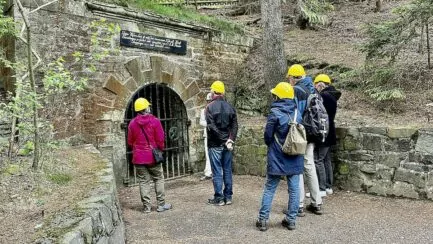 The Rammelsberg Mine – a UNESCO World Heritage Site in Goslar
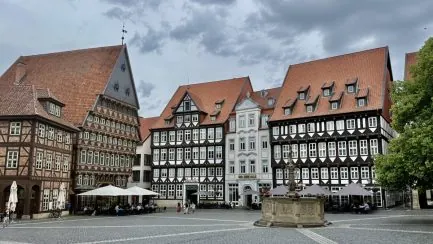 Things to do in Hildesheim – 15 tips for UNESCO World Heritage sites, half-timbered houses and roses
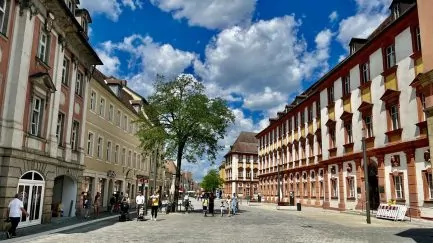 Things to do in Bayreuth, Bavaria - our top 11 tips
 Things to do in Einbeck – 15 tips for beer culture, vintage cars and half-timbered houses



 English (UK)
 Svenska
Steve says:
Nice party, but a bit too belligerent. But that's how it was in those days.
20 August 2017 - 9:49
Helena says:
It was probably like that back then ... much nicer today! 😉
20 August 2017 - 14:23
4000mil says:
It looks really nice, that one. I like history, and I know German, so I think I would have enjoyed it! 🙂
20 August 2017 - 10:09
Helena says:
I think you would do that! And German definitely helps 🙂
20 August 2017 - 14:24
Husisblogg says:
How nice that the owners can enjoy the city again, but in a different way and, above all, with a completely different theme.
20 August 2017 - 10:36
Helena says:
A completely different theme this weekend ... fun to be part of! 🙂
20 August 2017 - 14:32
Nils-Åke Hansson says:
Well, now you know all about the Swedes' wild ride in Europe. But you must have had fun
20 August 2017 - 10:43
Helena says:
It is hopeless to keep up with all the tours back and forth through history, I think, but you learn a little more each time! 🙂
20 August 2017 - 14:33
Ditte says:
What fun to be part of this. And it's great to be in the centre of history.
Stay well!
20 August 2017 - 11:33
Helena says:
It's like being in the middle of a theatre performance 🙂.
20 August 2017 - 15:49
Lena & Jan says:
Does the celebration prove that the Swedes did not behave too badly after all, as it is celebrated, or do I misunderstand that it is instead celebrated because the Swedes gave back the area?
20 August 2017 - 13:32
Helena says:
It is said that they celebrate to remember the years Wismar belonged to Sweden. The Swedes built a lot, among other things, and there is a Swedish history here that is celebrated. On the other hand, the celebrations are always close to the date when Mecklenburg retook the town.
20 August 2017 - 15:52
Znogge says:
What a great feeling to be at the centre of this historic celebration! Sweden has been very involved in these areas.
Happy Sunday!
20 August 2017 - 15:13
Helena says:
Really! Nice to be part of Swedish history outside of Sweden 🙂 ðŸ™'
20 August 2017 - 15:52
Matts Torebring says:
Nice and historical, to move on former old Swedish lands.
20 August 2017 - 16:31
Helena says:
At times it felt like a very historic weekend! 🙂
20 August 2017 - 23:58
Åsa says:
Haha! Schwedenfest! That doesn't sound entirely clean these days, does it? 😉
20 August 2017 - 18:12
Helena says:
Haha, well, I see nothing wrong with celebrating historical events (as long as you don't have a dubious agenda) 😉.
21 August 2017 - 0:01
LinizTravel says:
What a nice trip! You barely got home 😉 hope to see you soon?! Hugs
20 August 2017 - 19:47
Helena says:
I managed to work three days between Switzerland and Germany ... 😉 Guess the "event season" starts soon, so I'll probably see you then 😉 .
21 August 2017 - 0:02
BP says:
Wismar really seems to be a cosy town. Also, I spontaneously thought of the Carolinians whose holding of the weapons was not very organised;-)
I recognise that grill from the food festival at Sergels Torg. You see - history is not my thing;-)
20 August 2017 - 20:07
Helena says:
It is skilful to find other things to focus on in the pictures when you are not interested in history 😉 .
21 August 2017 - 0:03
Dryden - Traveler's Edition says:
Go Sweden fresh mood!
20 August 2017 - 23:03
Helena says:
Haha, right? 😉
21 August 2017 - 0:03
Kjell/Dessan says:
We were there a few years ago, and there was also a Swedish party ?great little town?
21 August 2017 - 6:03
Helena says:
How nice that you were there at the same event 🙂 .
22 August 2017 - 7:45
Veiken says:
Sweden advances! Fun with a bit of history. Imagine celebrating Sweden in this way in Wismar!
21 August 2017 - 8:18
Helena says:
Yes, but isn't it? We were very surprised when we first heard about it!
22 August 2017 - 7:45
Husbilen Helge says:
Lovely party in old Swedish parts. Always fun with historical elements, no matter what type, when travelling. In addition, Wismar has so many buildings with exciting history.
21 August 2017 - 11:18
Helena says:
Agreed! Wismar is a nice and interesting city in itself!
22 August 2017 - 7:46
Christina & Måns says:
Thank you very much for a nice stay at the campsite in Otsee and in Wismar. Almost forgot the trips across the Baltic Sea and the Boarder shop... We defied the rain and kept our spirits up? Big hug to all of you who were on this trip ? Hope to see you again on new adventures❤.
21 August 2017 - 19:10
Helena says:
Thank you! So much fun that you wanted to come along and you really contributed to a nice and happy atmosphere with the mood on top, despite all the rain! Have a great time! Hugs
22 August 2017 - 7:47
Johan Persson says:
Such a fun thing! Must go there next year:)
23 August 2017 - 22:43
Mycket annat och lite betong says:
So fun to travel so many together! You seem to have had a great time!
Greetings Agneta
25 August 2017 - 11:21