

Writer: Helena Bergström
Updated: August 2026 | In the Viking Age, Haithabu, or Hedeby, was one of northern Europe's most important trading posts. Today, you can visit both an archaeological museum and reconstructed Viking houses at the historic site in Schleswig-Holstein. We visited Haithabu by camper van – and got an exciting insight into life here more than a thousand years ago.
 Tweet
 Share
 Share
 Pin
 Share
 Share
Table of contents
Haithabu – the Vikings' major trading post
Haithabu, or Hedeby as the place is usually called in Swedish and Danish, was one of the most important trading posts in northern Europe during the Viking Age. The city was located on the Schlei fjord, near present-day Schleswig, in a strategic location between Scandinavia and the European mainland.
Important trade routes between north and south, but also between the Baltic Sea and the North Sea, intersected here. Between the two seas, goods only needed to be transported a relatively short distance overland before they could be reloaded onto boats and continued their journey. This made Haithabu a real hub during the Viking Age.

People and goods came here from far away, and over the course of about 300 years, Haithabu developed into one of northern Europe’s largest and most important trading cities. It had houses, workshops, streets, a harbor, and marketplaces – an early urban community at a time when most people still lived in the countryside.
What did the Vikings trade in?
Haithabu was ideally located for trade between different parts of Europe, and archaeological finds show that goods came here from distant places. In the harbor, merchant ships docked at long piers, and here different types of goods changed hands before being transported onward.
But Haithabu was not just a marketplace. Craftsmen and other people also lived here permanently, and the city was divided into plots with houses, workshops and roads. Coins were even minted here during parts of the Viking Age.
It is precisely the mix of trade, crafts, shipping and everyday life that makes Haithabu so exciting. This was not just a place where Vikings happened to meet occasionally – it was a real city.
Haithabu and Dannevirke – World Heritage
Haithabu was also an important place politically and militarily. The trading town was located on the border between the Danish kingdom to the north and the Frankish kingdom to the south and was protected by a semicircular rampart.
In the 10th century, Haithabu was connected to the Dannevirke, the large system of defensive walls that stretched across the narrow isthmus in present-day Schleswig-Holstein. Together, the trading town and the defensive works made it possible to both protect the area and control important trade routes.
In 2018, Haithabu and Dannevirke were added to the UNESCO World Heritage List. One reason is that the archaeological remains are unusually well-preserved and tell a lot about trade, cultural encounters and social development during the Viking Age.

And there is still much to discover. Approximately 95 percent of the old trading town has not yet been excavated. So, large parts of the Vikings' Haithabu still remain underground.
I find that detail dizzying. You walk around on top of a city that is mostly still waiting to tell its stories.


Viking Museum Haithabu
Today you can get to know Haithabu at Viking Museum Haithabu, which is considered one of Germany's most important archaeological museums. The visit actually consists of two parts: the museum building itself with archaeological finds and the open-air area where a small part of the old Viking city has been reconstructed.
It was above all the outdoor area that made the place come alive for us. From the museum you walk through a green landscape before the Viking houses appear down by the water.

The Viking houses in Haithabu
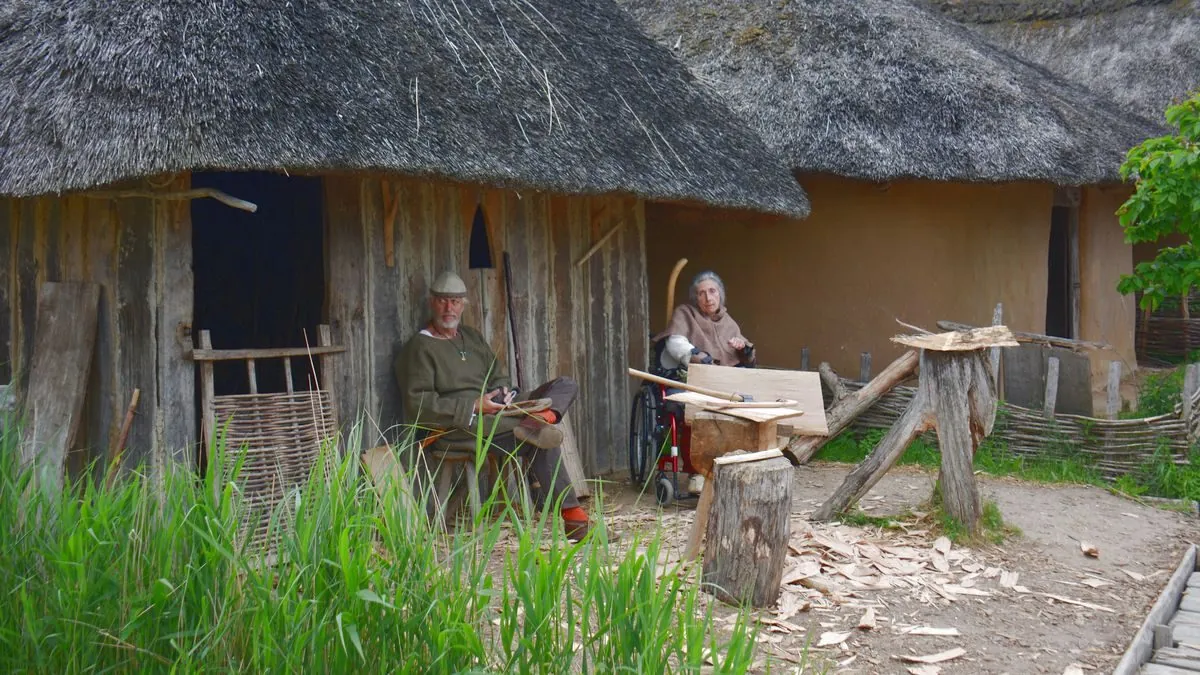
The historic site features seven reconstructed Viking houses, providing a glimpse into how people may have lived and worked here more than a thousand years ago.
When you walk between the houses and look out over the water, it becomes much easier to imagine the old trading town. Here were homes and workshops, while piers stretched out into the water where merchant ships could dock.

We were also lucky enough to have a knowledgeable guide who told us about both everyday life and trade during the Viking Age. It's the kind of place where a good guide makes a big difference – suddenly you're no longer just looking at reconstructed wooden houses, but a city where people actually lived, worked and did business.

Life in the Vikings' Hedeby
Life in Haithabu must have been much more international than one might first imagine when thinking of a Viking town. Trade routes from different parts of Europe met here and people with different languages and cultural backgrounds came into contact with each other.
At the same time, of course, normal everyday life went on. People needed food, clothing and housing, and craftsmen made and repaired things needed by both the residents and the merchants who passed by.
The area also has animals that contribute to the feeling of stepping into another time. When we visited Haithabu, we were met by sheep and very woolly cows, among other things.

It's the combination that makes Haithabu so interesting, we think. The museum tells the story through the real archaeological finds, while the houses, animals and outdoor environment help the imagination run wild.
What happened to Haithabu?
After several hundred years as an important trading town, Haithabu lost its role in the mid-11th century, at the end of the Viking Age. The function as a trading post was instead transferred to Schleswig on the other side of the Schlei.
This would prove to be an advantage for archaeologists much later. Since no new city was ever built on top of Haithabu, the old remains are still preserved underground. This is an important reason why the site can today provide so much knowledge about how people lived during the Viking Age.
Good to know before visiting Haithabu
The Viking Museum Haithabu consists of the museum with the archaeological collections and the open-air area with the seven reconstructed Viking houses. Various activities and events related to the Viking Age are also arranged throughout the year.
Expect the visit to involve some walking. The Viking houses are located in the historic area a bit away from the museum building itself, but the walk through the landscape is also part of the experience.
Practical: The museum is located in Busdorf just outside Schleswig. Opening hours and programs may change throughout the year, so check the latest information before visiting. Viking Museum Haithabu website.
Taste Schleswig-Holstein
Matjes and Northern German flavors
In northern Germany, the proximity to the sea is also evident on the plate. During our trip, we tried matjes, served with classic side dishes, at the Odin restaurant next to the Viking Museum.
Another North German alternative was Sauermeisch, cold meat in jelly. The Matjesen definitely appealed to us the most, and also fits very well into a trip through northern Germany.

White asparagus – Germany's white gold
Another classic is white asparagus, which in the spring season almost gains cult status in Germany. We had the privilege of tasting it at the Gut Basthorst restaurant, a historic estate located in the countryside east of Hamburg. We ate the asparagus with salmon, potatoes, hollandaise sauce and clarified butter. Very tasty!
READ MORE: All about asparagus in Germany – festivals, routes, recipes

Schleswig-Holstein by motorhome
Schleswig-Holstein is a great place to explore by motorhome. The state is relatively compact, the distances between many destinations are affordable and there are plenty of campsites and parking spaces.
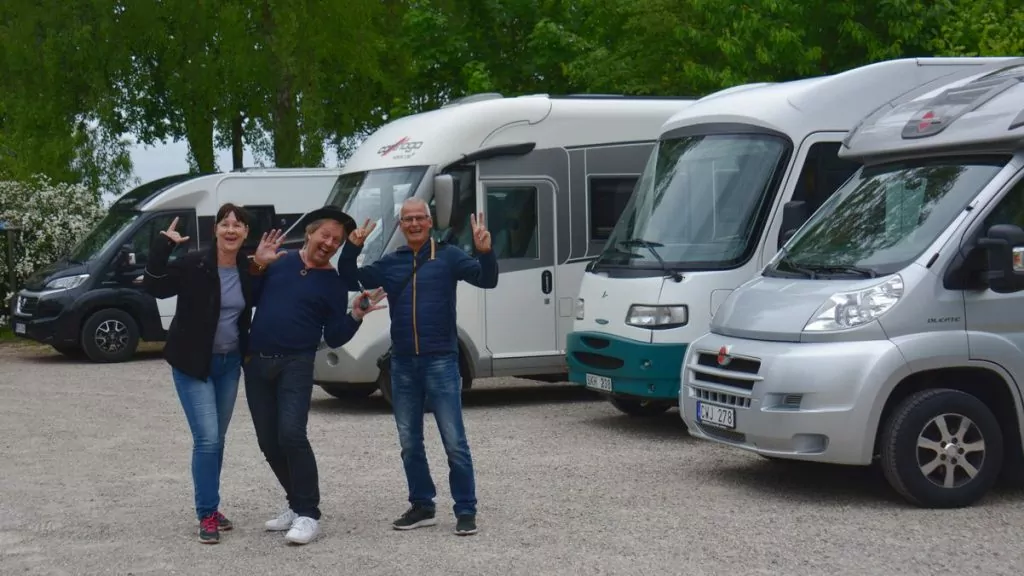
For us, Schleswig-Holstein was the first part of a longer tour of northern Germany. We arrived by ferry from Gothenburg to Kiel and were able to roll straight onto the German roads with the camper van.
The ferry between Gothenburg and Kiel is also a convenient option if you want to avoid part of the drive through Denmark. You get directly to Schleswig-Holstein and can either continue south in Europe – or do like us and start discovering northern Germany right here.
READ MORE: From Kiel to Gothenburg – ferry between Sweden and Germany

On this particular trip we continued from Haithabu south through the countryside, but we have returned to Schleswig-Holstein several times. There is much more to discover here than you might think when just speeding past on the Autobahn.

More places to see in Schleswig-Holstein
If you want to continue your journey, there is much to see and experience in Schleswig-Holstein. Here you will find tips and reports:
FAQ – Frequently asked questions about Haithabu
What is Haithabu?
Haithabu was one of the most important trading posts in northern Europe during the Viking Age. Here, trade routes between the Baltic Sea, the North Sea and areas further south in Europe met. Today, there is a museum and a reconstructed area with Viking houses.
Is Haithabu the same as Hedeby?
Yes. Haithabu is the German name for the historic trading post that is usually called Hedeby in Swedish and Danish.
Where is Haithabu located?
Haithabu is located in Schleswig-Holstein in northern Germany, near the city of Schleswig and not far from the Danish border.
Is Haithabu a World Heritage Site?
Yes. Haithabu and the nearby Dannevirke defence works were together added to the UNESCO World Heritage List in 2018.
What can you see at Haithabu Viking Museum?
The visit consists of a museum with archaeological finds from the Viking Age and an outdoor recreation area with reconstructed Viking houses. Here you get a picture of how people lived, worked and traded in Haithabu more than a thousand years ago.
How long do you need at Haithabu?
Allow at least a couple of hours if you want to see both the museum and the Viking houses without stress. If you are particularly interested in the Viking Age or are visiting Haithabu when there are activities going on, you can easily stay longer.
Can you visit Haithabu with children?
Yes, especially the reconstructed Viking houses make history more concrete and accessible to children. During parts of the year, activities and demonstrations related to Viking Age crafts and everyday life are also arranged.
Can you visit Haithabu by camper?
Yes, it is possible to come to Haithabu by camper and park at the museum. Keep in mind that the Viking houses are a short walk from the museum building and parking lot.
You might also like:
 German food - 25 classic dishes you must try
 10 picturesque towns in Germany - a great road trip
 Bergpark Wilhelmshöhe in Kassel – guide to Germany's unique water spectacle
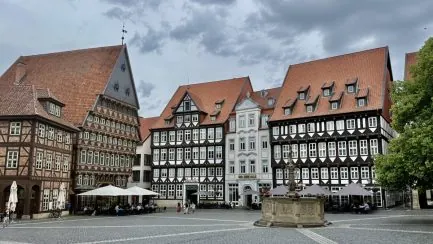 Things to do in Hildesheim – 15 tips for UNESCO World Heritage sites, half-timbered houses and roses
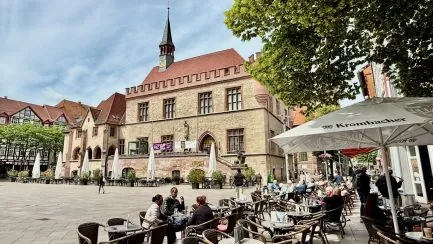 Things to do in Göttingen – 15 tips for pubs, student life and half-timbered houses
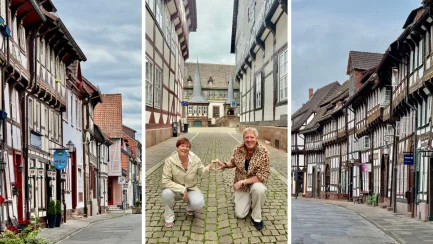 Things to do in Einbeck – 15 tips for beer culture, vintage cars and half-timbered houses



 English (UK)
 Svenska
Birgitta Kärreman says:
So far so good! We eat food and we also get umleitung, we have used Eckenförde's long promenade and night parking unexpectedly happens to us too? So everything seems normal? but I would like you to describe the surroundings while travelling. Wide roads, deep mountains and high valleys, open farmland or through small villages and country lanes? I know what it looks like, I have done your trip many times, but for those who you will attract on the trip with the final destination Rügen, it may be good to know!
Good trip?
26 May 2019 - 8:33
Helena says:
Yes, the unexpected is part of the "normal" 😉 Great suggestion that we should describe the surroundings more, we will think about that! ?
26 May 2019 - 9:28
Steve says:
What a wonderful "challenge" you are on.
Apple blossom whisky. An odd combination.
Fun to test a new motorhome, I guess.
26 May 2019 - 9:02
Helena says:
Isn't it fun to test a new motorhome! We'll tell you a bit more about it later, but let's get to know it a bit first?
26 May 2019 - 9:29
Tia says:
Nice to follow you and all the other HB enthusiasts. The day was fun and intense we heard, some coffee would have tasted ? We usually fill the thermos with water directly in the morning so you can get your coffee empty in a stau ?? We go HB ?✨?
26 May 2019 - 9:11
Helena says:
Yes, it was an intense first day! Smart to be able to get their coffee even in a traffic jam! 🙂
26 May 2019 - 9:30
Husisblogg says:
Wonderful experiences you had on day 1. Fortunately you all have a motorhome so there is no major panic at a closed campsite.
It is said that you humans eat with your eyes, and with the fine presentation of food, I am now beginning to understand this.
26 May 2019 - 9:29
Helena says:
Motorhome is amazing! 🙂
06 January 2020 - 16:23
Ama de casa says:
Oops... There, the motorhome clearly has a big advantage over tents... Although we have in fact poached a night at a campsite in Germany. Easier to force the barriers with a tent under the arm 😉 (The "permanent residents" at the campsite cheered happily and it was they who encouraged us from the beginning 😉 ).
What a great start you got! Except possibly the thing with the closed campsite, but you solved that very well 😀.
The guide Tröger, by the way? Sounds like one of Snow White's mates 😀.
Have a good trip!
26 May 2019 - 9:29
Helena says:
Motorhomes are great! (But we have tried to force barriers once, when our payment method did not work and no staff was present. A bit annoying ;))
06 January 2020 - 16:24
Elisabeth says:
What a wonderful trip!!!
26 May 2019 - 12:38
Helena says:
Really! 🙂
06 January 2020 - 16:25
Britt-Marie Lundgren says:
What fun to read your post from the same day we just wrote about. A wonderful, eventful day together with wonderful people we never met a couple of days ago ....
26 May 2019 - 14:35
Helena says:
Likewise! Fun to read everyone's different perspectives! 🙂
06 January 2020 - 16:25
Maria/Magnolia Magis says:
Started well! Still... I follow you but from London! Birthday present from my children! Have a nice trip! ?
26 May 2019 - 14:40
Helena says:
What fun that you follow! Wishing you a continued nice trip!!!
06 January 2020 - 16:25
Nils-Åke Hansson says:
One should be a little inventive just as well outside the campsite! Got the honour to get into the bridge between Rügen and Sweden it was interesting.
Asparagus so good!
26 May 2019 - 17:22
Helena says:
With a motorhome, you can manage nicely even outside the campsite! 🙂
06 January 2020 - 16:26
BP says:
What a great start and what good dishes you were served. Mums I just say especially for the typically German matjes fillets, which taste completely different from the Swedish variant. Also white asparagus:-)
26 May 2019 - 19:06
Helena says:
The matjesfiles were an interesting experience! Delicious! 😉
06 January 2020 - 16:26
Reiselinda says:
It's great to start the journey and fun to read your story from the same day that I also wrote about!
26 May 2019 - 21:02
Helena says:
Right? Fun to read everyone's different perspectives! 🙂
06 January 2020 - 16:26