



Writer: Helena Bergström
Updated: October 2026 | Following the Göta Canal by motorhome was a slow-paced journey through Sweden. We started in Mem on the Baltic Sea and continued via locks, small towns, bike rides and spontaneous detours all the way to Sjötorp on Lake Vänern. Here is our big guide to the Göta Canal by motorhome – based on our own journey along the canal.
 Tweet
 Share
 Share
 Pin
 Share
 Share
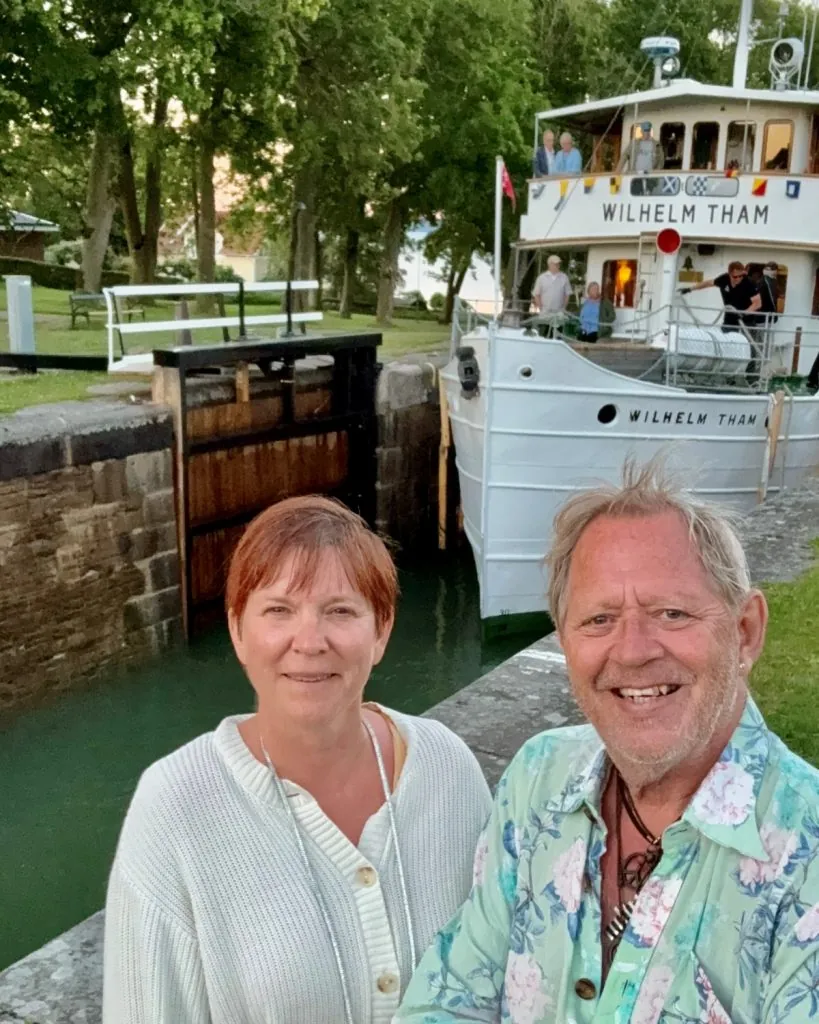
Table of contents
Göta Canal by motorhome – when the road became part of the journey
We had decided to follow the Göta Canal by motorhome. It sounded easy. Start in Mem, follow the canal through Sweden and end in Sjötorp. But we soon discovered that a canal trip by motorhome works in a completely different way than a trip by boat.

Sometimes we drove right next to the water and sometimes the canal disappeared far away from the road. We parked the camper and continued on with the electric bikes, making detours to castles, monasteries and national parks and hunting for parking spaces that strangely often filled up before we arrived.

Somewhere along the way we also realized that Göta Canal is not really an attraction. It's a journey. And maybe that's why the channel suits us so well. Here you don't have to rush to the next destination. Here the journey is the destination.

What is the Göta Canal?
The Göta Canal stretches approximately 190 kilometers between Mem on the Baltic Sea and Sjötorp on Lake Vänern. The canal was built between 1810 and 1832 and is one of the largest construction projects in Swedish history.

There are a total of 58 locks along the Göta Canal. A large part of the route consists of a dug or blasted canal, while the rest of the journey goes through lakes such as Roxen, Boren, Vättern and Viken. But those are the numbers. We only discovered the beauty of the Göta Canal when we started following it.

How to follow the Göta Canal with a campervan?
The first thing to know is that there is no road that follows the canal the entire way. On some stretches you can drive close to the water, while on others you have to take a detour. Above all, Lake Vättern means that the motorhome has to take a completely different route than the boats.


For us, this was an advantage rather than a problem. The camper gave us the freedom to leave the canal sometimes, make detours and then find our way back again. The electric bikes were also perfect when we wanted to get really close to the water. We made the trip from Mem to Sjötorp, but it of course works just as well in the opposite direction.
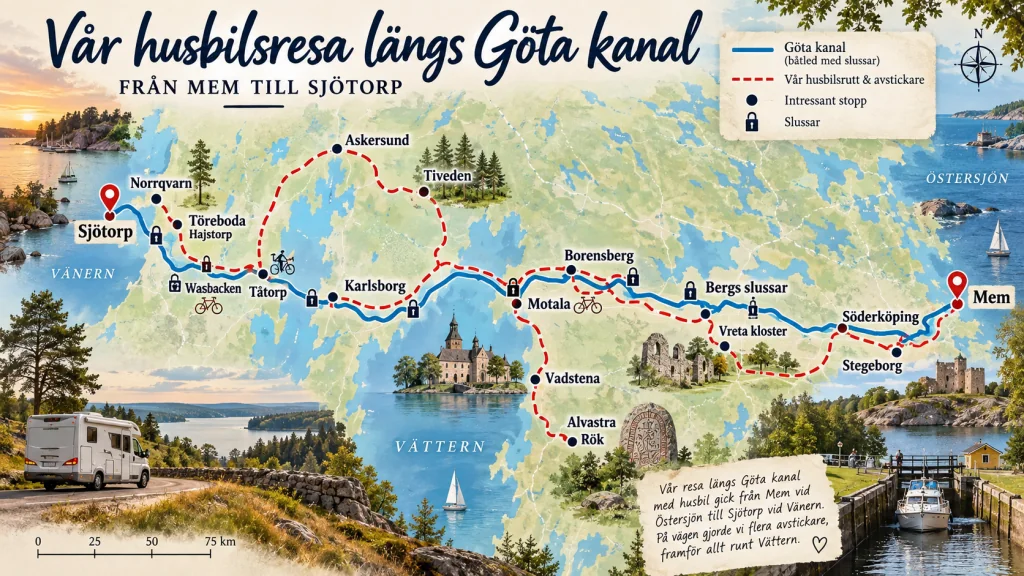
1. Mem – this is where our journey along the Göta Canal began
It felt obvious to start in Mem. This is where the Göta Canal meets the Baltic Sea and this is where the entire canal was inaugurated in 1832. When we rolled in with the camper van, we were at one end of the journey we were now planning to follow across the country.


Mem is not big. Here you will find the lock, the boats, the Canal Storehouse and the water that continues out towards Slätbaken. When we arrived we parked and started walking around the area.

We knew there was a small parking lot and saw the sign saying to ask before driving on. We had arrived quite late. Already there, a recurring theme during the trip began to come to mind: Would there be any room left for us? But Mem was above all the starting point. In front of us lay the entire Göta Canal.
READ MORE: Mem - The Baltic Sea Gateway to the Göta Canal

2. Stegeborg – a detour we enjoyed making
You don't have to follow the canal slavishly when you have a camper. That's part of the freedom. That's why we made a detour to Stegeborg, a couple of miles from Söderköping. Here are the ruins of Stegeborg Castle on a small island in Slätbaken.

The environment with the castle ruins, the boats and the harbor taverns made the stop feel like much more than just a detour. And of course there was the question that followed us through the height of summer in Sweden: where would we park the camper?
READ MORE: Stegeborg - castle ruin, harbour, tavern and campsite

3. Söderköping – the canal in the middle of the city
In Söderköping, Göta Canal becomes part of city life. The boats pass amidst people walking, having coffee and eating ice cream, and here you can stand for a long time just looking at the locks.

We strolled through the old Drothemskvarteren, saw the canal and discovered a city where it is very easy to stay longer than you first thought. And of course it is difficult to write about Söderköping without mentioning ice cream. Here ice cream almost seems to be its own cultural form. It suited us perfectly.
READ MORE: Söderköping - 9 tips for things to see and do

4. Bergs locks – here the Göta Canal shows its muscles
If you just want to see a really large lock area along the Göta Canal, Berg is hard to beat. There are a total of eleven locks here and the large lock staircase down towards Roxen is one of the canal's most impressive sights.

But it's not just the construction itself that fascinates. It's the life around it. Boats wait, people gather along the edges and lock after lock is filled and emptied of water. Here it also becomes clear how slow a canal trip actually is. No one presses the gas and overtakes. The boat simply has to wait until the water decides it's time to continue.
READ MORE: Berg's locks - Göta Canal's impressive lock staircase

Vreta Monastery and Ljungsbro
When you have a camper van, it is easy to combine the canal with other things nearby. We took the opportunity to visit Vreta Monastery and also saw the aqueduct at Ljungsbro. It is exactly the type of stop that made our canal trip grow. We followed the Göta Canal – but kept letting ourselves be lured away from it.
READ MORE: Vreta Abbey and Stjärnorps Castle ruins


5. Borensberg – here the Göta Canal slows down even more
After the mighty locks in Berg, you encounter another side of the canal in Borensberg. The town is small and the canal flows right through the community. Here is also one of the Göta Canal's two remaining hand-operated locks.

We like places like this. You don't really have to do much. Stroll along the canal, watch a boat pass by, have a coffee or eat ice cream and let the time pass. In the area we also took the opportunity to fill the camper with goodies. Brunneby Musteri became one of the stops, and those purchases would eventually reappear on our dinner table.
READ MORE: Borensberg on the Göta Canal - locks and delicacies

6. Motala – the capital of the Göta Canal
We stayed longer in Motala. Here are Borenshult's five locks, which together form the canal's second largest lock staircase and the steepest. We arrived and almost immediately started looking at the locks.

Once the electric bikes were charged, we set out along the canal. The water was mirror-clear and this day was a good example of why bikes are so useful on a motorhome trip along the Göta Canal.

We passed Baltzar von Platen's grave, continued to the harbor and had a beer while vintage cars rolled by. Motala Motor Museum was right next door, but when the sun came out the beer and the beach won. The museum had to wait until another time. Finally we cycled on to Varamobaden. A canal trip had suddenly become a beach holiday.
READ MORE: Things to do in Motala – the capital of the Göta Canal

When the Göta Canal disappears into Lake Vättern
Here something interesting happens for those who follow the canal with a motorhome. The boats leave Motala and head out to Lake Vättern. Of course, we couldn't follow. And this is where I think you should take advantage of the motorhome's great advantage.
We instead continued around Lake Vättern and made the journey our own. Vadstena, Alvastra monastery ruins, Rökstenen, Askersund and Tiveden National Park are not all part of the Göta Canal itself, but they became part of our travel between the eastern and western parts of the canal.
READ MORE: Askersund - and Stjernsund Castle

Vadstena – castle, monastery and Vätternkräftor
Vadstena is a town we have returned to several times and enjoy staying in. The castle, the monastery area, the low houses and Lake Vättern make the town worth a trip of its own.

This time the visit ended in a way that suits us quite well. We saw a sign saying ”Vadstena crayfish.” Two buckets of fresh Vättern crayfish were taken with us in the camper.
READ MORE: Vadstena - castles, monasteries and history on the shores of Lake Vättern

Alvastra – where shopping became dinner
At the Alvastra monastery ruins we later set out what we had collected along the way. Crayfish and smoked whitefish from Vättern together with cheeses from Brunneby musteri. Sometimes the best restaurants are not restaurants at all. We sat at a picnic table next to a monastery ruin and ate our way through part of the journey.
READ MORE: Alvastra monastery ruins and the Smoke Stone in Smoke

Alvastra Abbey Ruin is the ruin of the monastery where St Birgitta once received her most famous revelations. Just ten minutes away is the famous Smoke Stone, with the longest runic inscription in the world.

Tiveden – a completely different kind of stop
We left the water for a while and headed into Tiveden's large boulders and wild forests. Here we hiked instead of using locks and boats.

When evening came we still had no place to spend the night. Finally we ended up in Undenäs, asked some locals if we could stay there and were told that the land belonged to the church. We were allowed to stay for one night and also got a long conversation and information about the area. It is also campervan travel.

READ MORE: Tiveden National Park - hiking in wild forests

7. Karlsborg – a detour with a connection to canal history
When we got around Lake Vättern, we ended up in Karlsborg. The fortress is not part of the Göta Canal, but the connection is much stronger than you might first think. Baltzar von Platen also had ideas about Sweden's central defense, and Karlsborg Fortress began to be built on Lake Vättern. Here, the royal family, the government and the country's gold reserves could be protected if Sweden was attacked.

We booked the guided Historical Adventure Tour, and that was the big bonus. Suddenly we got to enter parts that are otherwise closed and follow along down underground passages. Then we continued towards the canal again.
READ MORE: Karlsborg Fortress - a mighty 19th century building by Lake Vättern.

8. Forsvik – Göta Canal's oldest and highest lock
In Forsvik we were back at the Göta Canal for real. Here is the oldest lock on the canal, inaugurated in 1815, and also the canal's highest single lock. When you stand next to it, you really feel the difference in height.

Right next door is Forsviks bruk, where we walked around among old workshops, machines and exhibitions. Here we saw, among other things, a film about the paddle steamer Eric Nordevall II, a replica of the ship that sank in Lake Vättern in 1856. We would soon meet that boat again.
READ MORE: Forsvik - the oldest lock in the Göta Canal and Forsvik Mill

9. Wassbacken – the place where we immediately wanted to stay
Several readers had tipped us off about Wassbacken's campsite. We arrived early in the day and hadn't really decided whether we would stay. We thought: We'll see how it feels. As soon as we rolled in, we knew. We're going to stay here.
The campsite is right on the Göta Canal and from the camper we could see the boats gliding past. It was quiet, green and exactly the kind of environment we had hoped to find during our trip.

Bike ride along the canal to Tåtorp
We picked up the electric bikes and set off along the canal towards Tåtorp, about five kilometers away. Peter of course decided that we needed a film where we cycled past the camera. It sounds simple until two people are going to be in the film and no one is left behind the camera. The solution was to hang up a mobile phone and a selfie stand and hope for the best. The result was actually quite okay.

The way back was less elegant. The rain came and we returned so muddy that photography was completely forgotten. Then it was just a matter of trying to get our bikes, clothes and ourselves clean again. It may not be the image of Göta Canal that ends up in the tourist brochures. But it is ours.
READ MORE: Wassbacken's campsite - and the Tåtorp lock

10. Töreboda – 20 seconds across the Göta Canal
The next stop was Töreboda, where the canal and railway meet. This is also home to the ferry Lina, Sweden's smallest regular ferry. The small ferry is pulled by hand across the Göta Canal using a rope and the journey itself only takes about 20–25 seconds. That's about as far from an Atlantic cruise as you can get. And that's exactly why it's wonderful.

11. Hajstorp – hot dog with a first-class view
From Töreboda we continued a few minutes to Hajstorp. There are two double locks here and it is a lovely place to sit down and watch the boats. We parked the camper next to it and laid out the day's lunch: hot dogs and sausage rolls. Just in time for dinner, the M/S Bellevue appeared and started to lock in front of us.

There are lunch restaurants with white tablecloths and a sea view. And then there are hot dogs by the Göta Canal with a passenger boat slowly gliding past. We were very satisfied.
READ MORE: Töreboda, Hajstorp and Sweden's smallest ferry

12. Norrqvarn – where an old acquaintance reappeared
When we arrived at Norrqvarn, we were greeted by yet another lovely canal environment. There are two locks, a hotel and restaurant, and a small mini canal for children. But we also saw something we recognized. At the locks was the paddle steamer Eric Nordevall II – the replica of the ship that sank in Lake Vättern. We had seen the film about the construction of the Forsvik mill and now the boat was standing in front of us.

Such connections make a trip more enjoyable. Something you saw several days earlier suddenly has a continuation. And the M/S Bellevue, which we had already seen at several points along the canal, also appeared again. At this point, it almost began to feel like an old traveling companion.

13. Sjötorp – where our canal trip reached Lake Vänern
Finally we arrived at Sjötorp. This is where the Göta Canal begins – or ends, depending on which direction you come from. For us, it was the end point. There are eight locks in Sjötorp and it was also here that work on the Göta Canal began in 1810. But after all the locks, museums and historical facts, we had developed other priorities as well.

We ate ice cream. And bought fish. Perch fillets and pike-perch were taken to the camper. Then there was only one small detail left. Where would we stay? The parking spaces in central Sjötorp were full when we arrived. Again. But just outside the village we found a large green field that served as a simple campsite. No fancy service, but plenty of space and a lovely view.

We parked the camper, cooked dinner and sat outside in the sun. After following the Göta Canal from the Baltic Sea, we were now at Lake Vänern. It didn't really need to be any more complicated than that.
READ MORE: Sjötorp - and the locks in Norrqvarn

Several years later we saw the Göta Canal from the other side
When we did this trip, we experienced almost the entire Göta Canal from land. We stood next to the locks and watched as the boats were raised and lowered. We cycled along the towpaths and waved to the people on board. Several years later, our perspective changed.
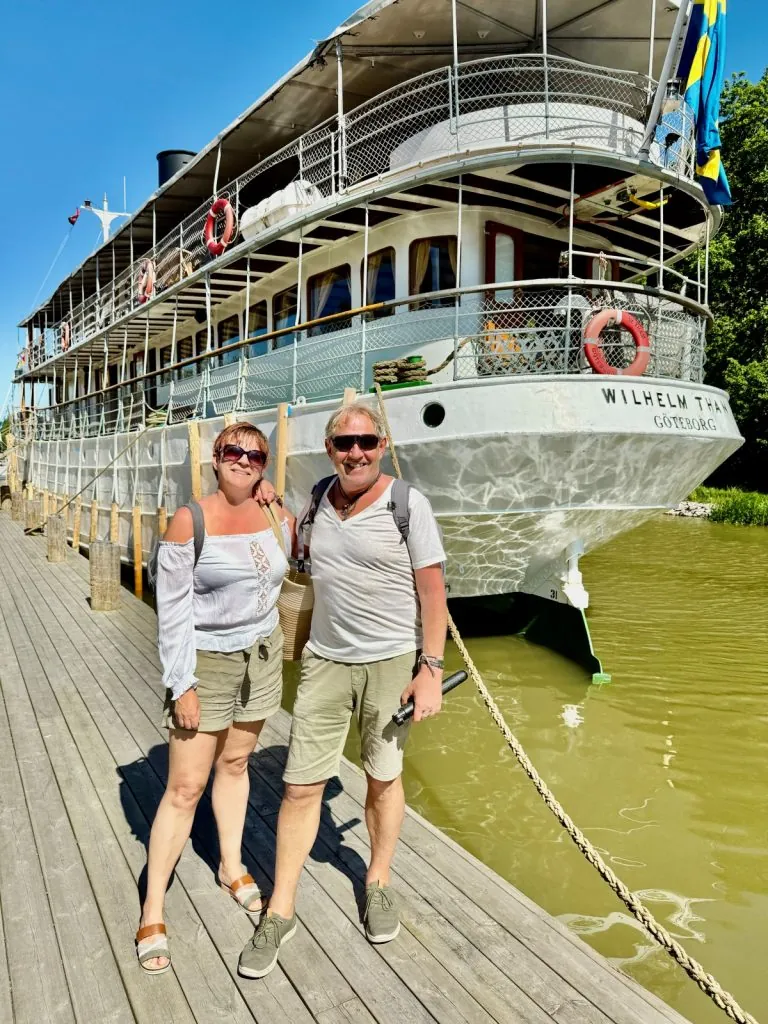
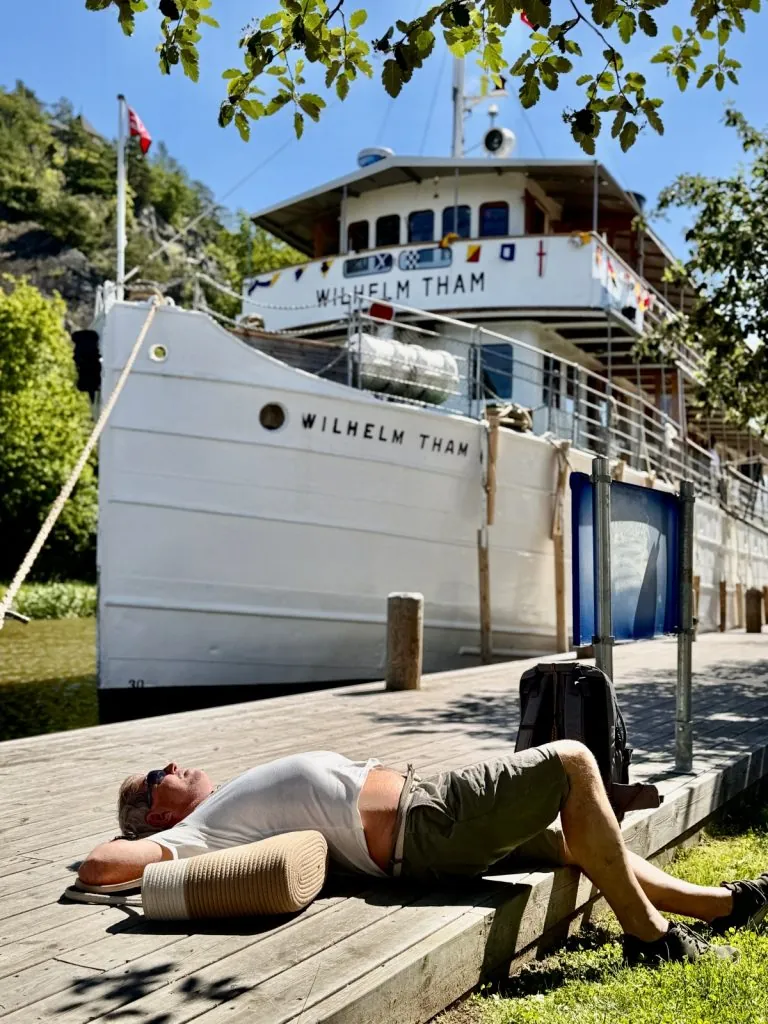
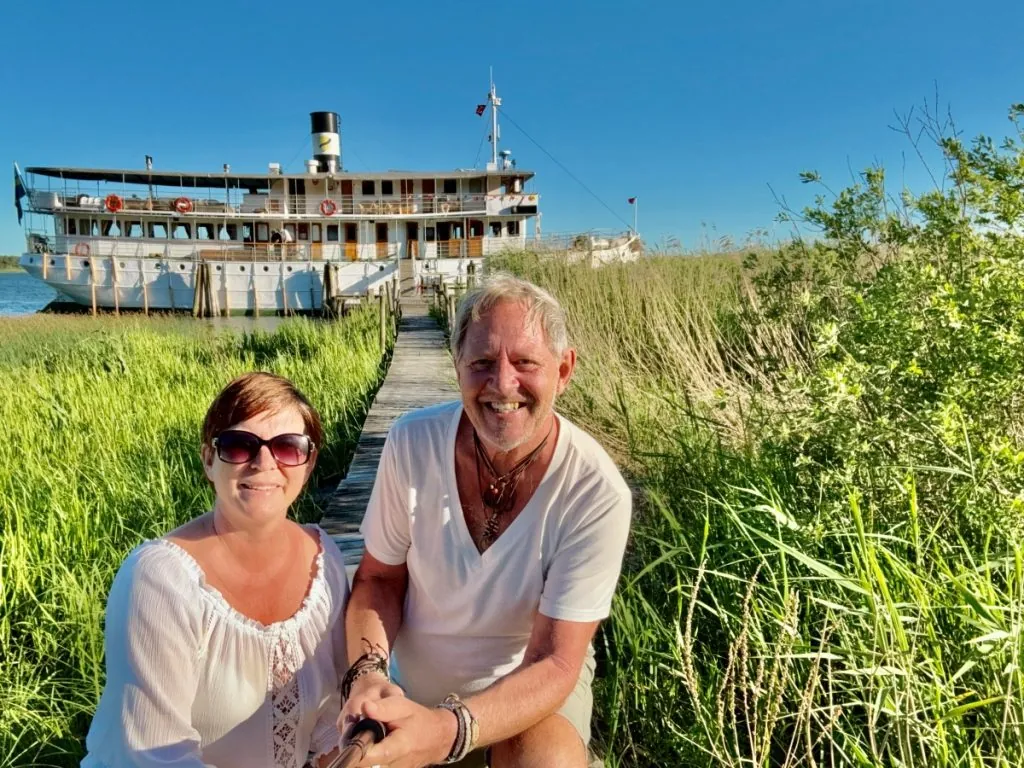
Then we boarded the classic M/S Wilhelm Tham to make the Lilla Kanalresan between Söderköping and Motala. Suddenly it was vi who found us down in the locks.
Same channel – a completely different experience
From the boat you can see how much work is going on around each lock. The captain keeps watch, the staff runs with towlines and the distances to the lock walls can be vanishingly small. We could sometimes get off and walk along the canal while the boat worked its way through the locks and then get back on board later.
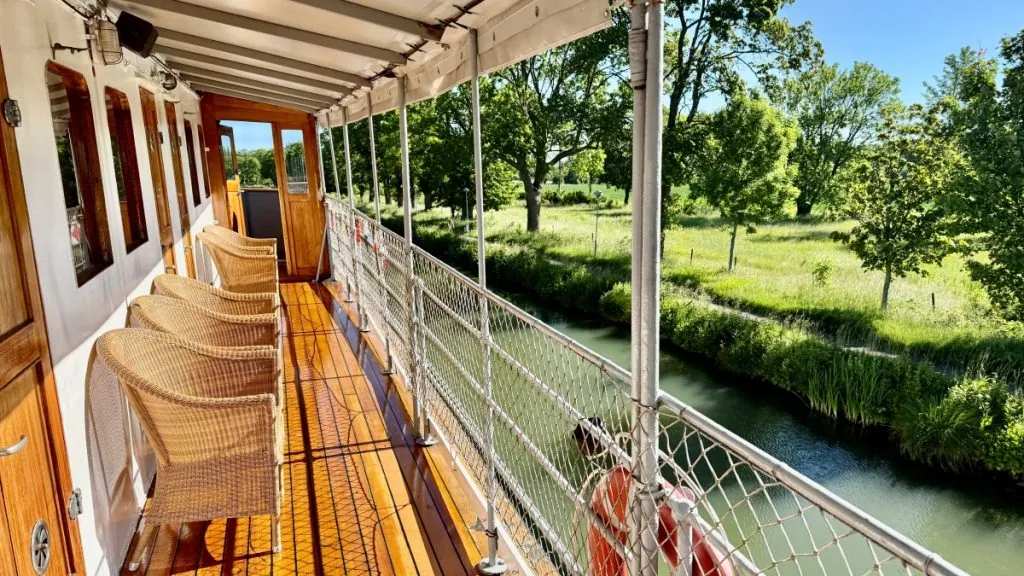
But what surprised us most was perhaps the time between the locks. The boat glided slowly through green Sweden. We passed farms, cows and sheep, met other boats and just sat and looked at the landscape. No one needed to get there faster.
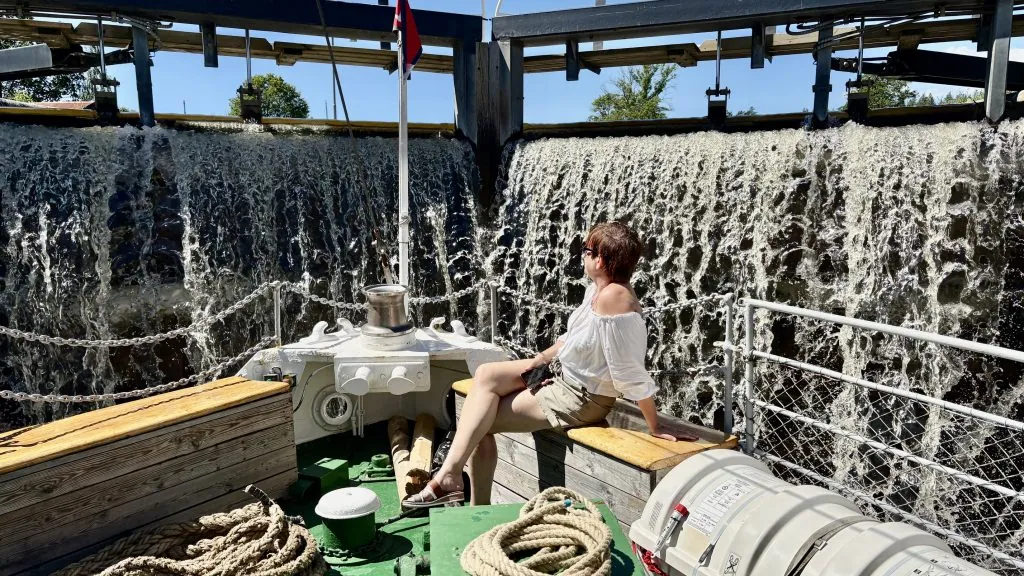
When we finally glided towards Motala, we passed Baltzar von Platen's grave again. This time we saw it from the water. It almost felt like coming full circle. We had first followed the Göta Canal by motorhome. Now the canal had shown us its own path.
READ MORE: Slow luxury on the Göta Canal – that's why we fell in love with the Little Canal Trip
You might also like:
 Svenska Östergötlandsvägen - FREEDOMtravel Themed roads
 Around Siljan by car or motorhome - our top tips
 The Swedish Bohuslän Road - FREEDOMtravel Themed Roads
 Swedish Royal Palace Road - FREEDOMtravel Themed Roads
 Swedish Museivägen - FREEDOMtravel themed roads
 Mårbacka in Sunne – a visit to Selma Lagerlöf's world



 English (UK)
 Svenska
Matts Torebring says:
The entire Vätter landscape and the Göta Canal are among the most beautiful and enjoyable in the whole country.
15 August 2020 - 8:02
Helena says:
Indeed it is! This was a great trip indeed!
15 August 2020 - 9:08
Michael says:
Verner von Heidenstam's Övralid is a nice place to visit. A small detour along the road between Motala and Askersund. This was his last home and is virtually untouched since he died in 1940. Only guided tours. There is a nice café called Farfarsstugan. Opening hours etc. can be found on their website. They also have parking spaces for motorhomes and caravans.
15 August 2020 - 8:28
Helena says:
Sounds nice! Thanks for further tips!!!
15 August 2020 - 9:09
Husisblogg says:
What a wonderful trip to travel along the Göta Canal. Maybe it can be a good idea for my owners some year. I have visited a couple of your stops but have not been as good as you. You can actually choose each stop and it is nice there along the canal.
All good!
15 August 2020 - 9:46
Geddfish says:
It's been great fun to follow your journey and especially all the places I've been to lots of times. From Mem to Borensberg, it's a blank for me.
You've provided some great pictures so it's been a trip down memory lane for me with my former caravan.
I can recommend a nice natural campsite near Forsvik. It is called Strömsnäs Naturcamping. Been there many times, canoeing, but not for a long time now.
Happy Saturday!
15 August 2020 - 13:05
bmlarsreseblogg says:
What a great source of inspiration for a trip along the Göta Canal!
Tonight we will watch your films!
15 August 2020 - 14:22
Rolle o Carina says:
Very good report you made, it's nice after the canal!
We have visited almost every place you describe over the years.
Take care......
15 August 2020 - 14:52
Lisa says:
I agree with others that your journey along the canals has been both professional and inspiring. Thank you for all the tips you shared.
15 August 2020 - 19:43
Gullan says:
hello
Hajstorp has a wonderful harvest festival one weekend in September.
Market, etc. and hundreds of marches on both sides of the canal in the evenings. Absolutely magical!
15 August 2020 - 21:29
Ellie says:
hello
Hajstorp has a wonderful harvest festival one weekend in September.
Market, etc. and hundreds of marches on both sides of the canal in the evenings. Absolutely magical!
15 August 2020 - 21:30
AURORA says:
This will be our guide for the summer when we are thinking of driving along the Göta Canal.
Thank you for your great site.
07 January 2021 - 2:03