



Writer: Peter Bergström
Updated: August 2026 | How much do you know about Poland? We've been traveling the length and breadth of the country for many years and are constantly finding new things that surprise us. Here you'll find everything from Europe's last great lowland primeval forest and rolling sand dunes to medieval castles, world-famous composers and one of Leonardo da Vinci's most famous paintings.
 Tweet
 Share
 Share
 Pin
 Share
 Share
Table of contents
Facts about Poland
We have traveled to Poland many times, mainly by camper, but also by car and train, and even by sailboat. Here we have now collected 30 interesting facts about Poland – how many did you already know?
1. Poland is one of the largest countries in Europe
Poland has an area of just over 312,000 square kilometers, making it one of Europe's larger countries. From the Baltic Sea in the north to the Tatra Mountains in the south, it also contains a very diverse landscape – beaches, lakes, forests, agricultural landscapes and mountains.

2. Poland has seven neighboring countries
Poland borders Germany, the Czech Republic, Slovakia, Ukraine, Belarus, Lithuania, and Russia through the Russian exclave of Kaliningrad. The country also has a long coastline on the Baltic Sea.

3. Hollywood star Pola Negri was born in Poland
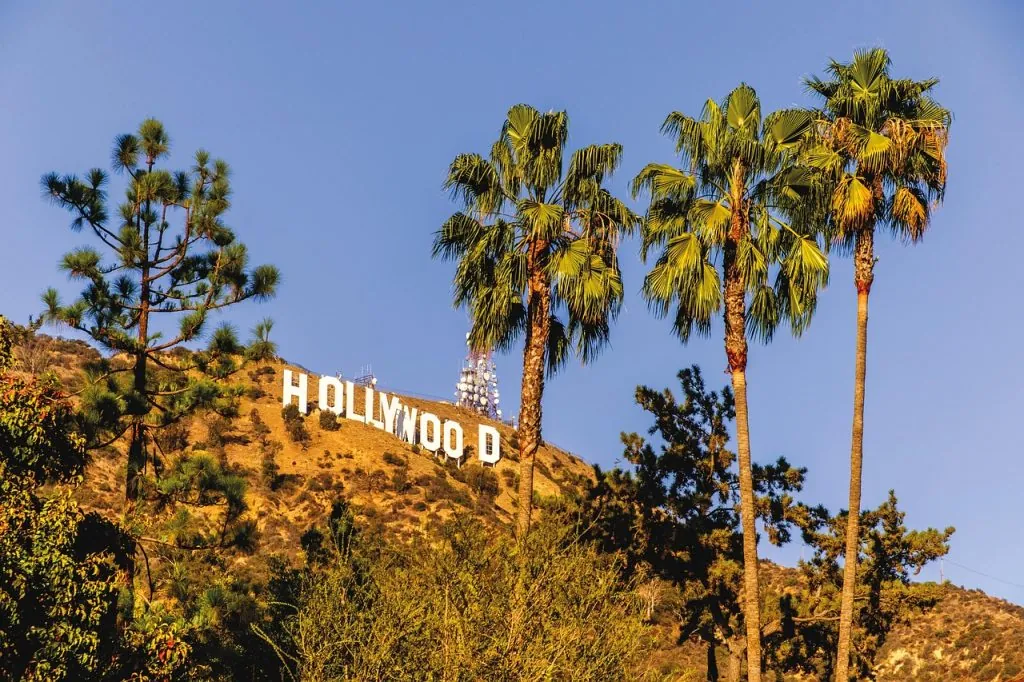
Pola Negri was born Apolonia Chałupec in 1897 in Lipno, in what is now Poland. She became one of the great international stars of the silent film era, pursuing a career in both Europe and Hollywood.
4. Marie Skłodowska-Curie received two Nobel Prizes
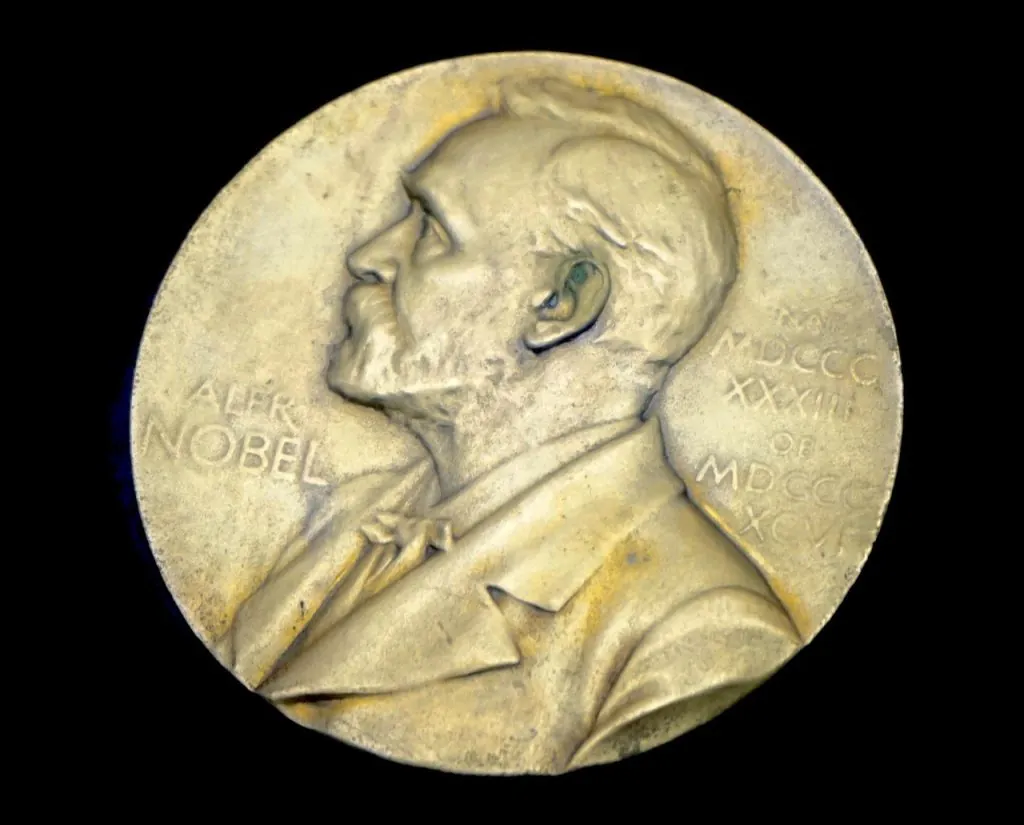
Marie Skłodowska-Curie was born in Warsaw in 1867 and became the first woman ever to receive the Nobel Prize in 1903, when she was awarded the prize in physics. In 1911, she also received the Nobel Prize in chemistry. She remains the only person to have received Nobel Prizes in two different scientific categories. In Warsaw There is a museum dedicated to her in the house at Freta 16, where she was born.
5. Malbork is the world's largest castle built in brick
The mighty Malbork Castle was built by the Teutonic Knights and developed into an enormous fortified complex. It is considered the world's largest castle in terms of land area and has been a UNESCO World Heritage Site since 1997.


6. The bagel has strong roots in Poland
The bagel is strongly associated with the Jewish communities in Poland and is mentioned in Jewish sources from Kraków as early as the 17th century. The ring-shaped bread later spread with Jewish emigrants to countries such as the United States, where it became enormously popular.

7. Poland has Europe's largest population of bison
The European bison, or bison, was nearly extinct at the beginning of the 20th century but has made a spectacular comeback. Today, there are thousands of bison in Poland, with a large population living freely in and around Białowieża Forest. At the end of 2022, there were 2,603 bison in Poland, of which 2,394 were living freely.


8. Poland has 18 World Heritage Sites on the UNESCO list
Poland has an impressive collection of cultural and natural sites on the UNESCO World Heritage List. These include the historic centre of Kraków, the Old Town of Warsaw, Malbork Castle, the Białowieża Forest, the Wieliczka and Bochnia Salt Mines, and Auschwitz-Birkenau. In 2026, Poland also gained its 18th World Heritage Site when the modernist city centre of Gdynia was inscribed on the list.

9. Łódź has one of Europe's largest Jewish cemeteries
The new Jewish cemetery in Łódź Established in 1892 and covering approximately 40 hectares, it contains tens of thousands of graves and large mausoleums that tell the story of the city's significant Jewish history.

10. Poland has had several historical capitals
Gniezno is usually considered the first historical capital of Poland and was an important center of the early Polish state. Later, Kraków became the country's political and royal center.
King Sigismund III Vasa moved his court from Kraków to Warsaw at the end of the 16th century, and Warsaw subsequently developed into the country's political center.

11. Mazurka and polonaise come from Poland
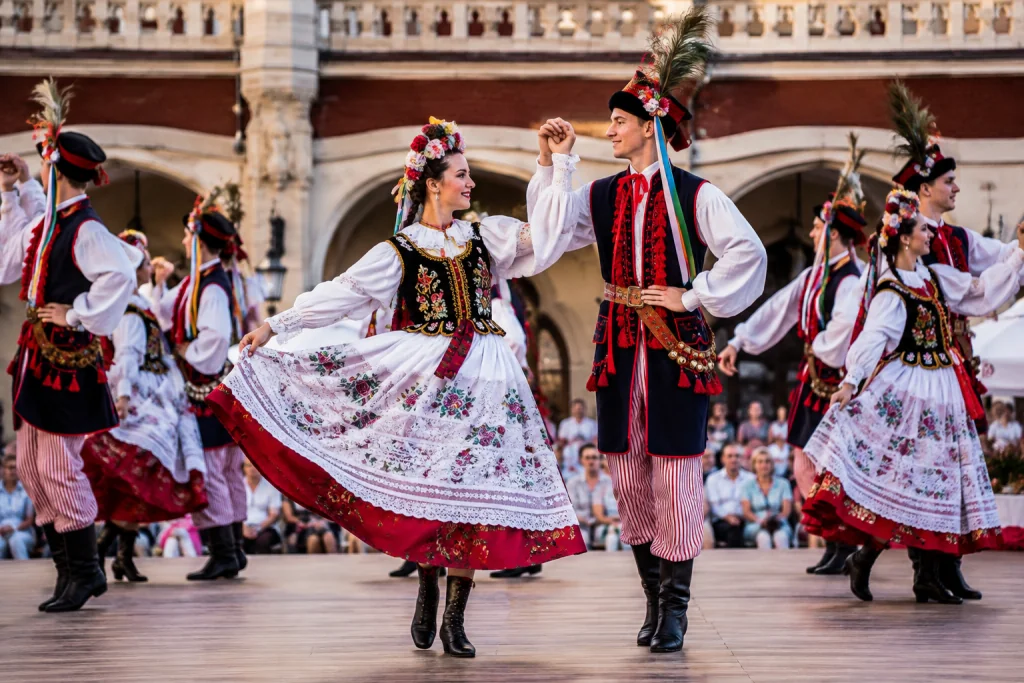
Two dances that have gained international popularity have Polish roots: the mazurka and the polonaise. The mazurka is based on Polish folk dances, while the more solemn polonaise was historically danced by, among others, the Polish nobility and court.
12. Roman Polański was born in Paris but grew up in Poland
Film director Roman Polański was born in Paris in 1933 to Polish-Jewish parents and moved with his family to Kraków as a child. He has directed films such as Rosemary's Baby, Chinatown and The Pianist.
13. Poland had one of Europe's largest Jewish populations
Before World War II, around 3.3 million Jews lived in Poland, and the country was one of the world's most important centers of Jewish culture. The Holocaust wiped out a very large part of this population.
Today, you can encounter Jewish cultural heritage in many places in Poland, not least in Krakow's Kazimierz, Warsaw and Łódź.

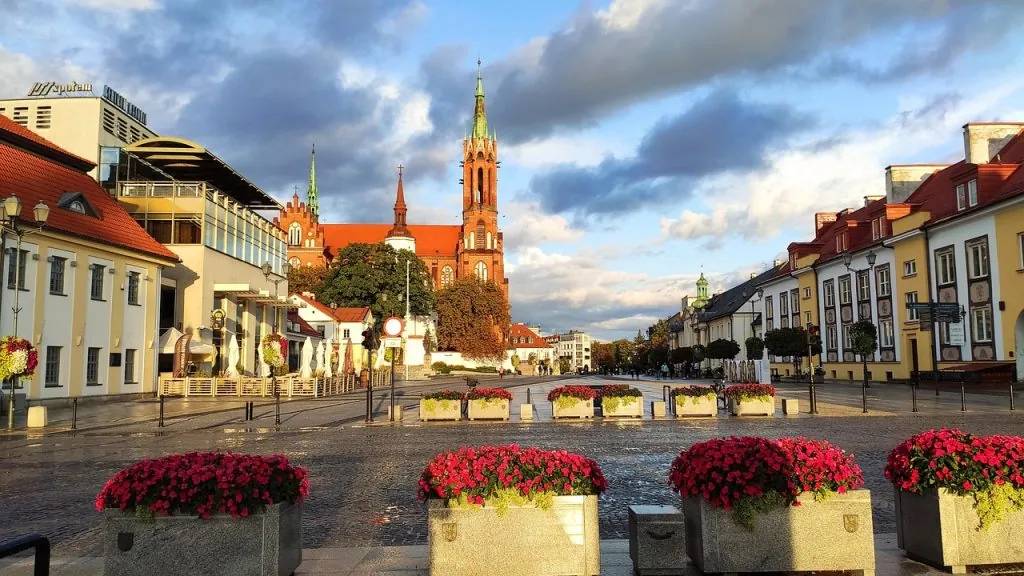
14. Izabella Scorupco was born in Białystok
Actress and model Izabella Scorupco was born in Białystok in 1970 and moved to Sweden as a child. She became internationally known as Bond girl Natalya Simonova opposite Pierce Brosnan in GoldenEye from 1995.
15. Prince Polo has been manufactured in Poland since 1955
The Prince Polo chocolate biscuit began production in Cieszyn in southern Poland in 1955. Somewhat unexpectedly, it has become particularly popular in Iceland, where the Polish chocolate bar has been sold for generations. Sweden's answer to Prince Polo is biscuit chocolate.

16. Gdańsk is famous for its amber
The Baltic Sea region has some of the world's richest deposits of amber, and Gdańsk has been an important center for trade and craftsmanship with the material for centuries.
Even today you can find many shops and workshops with amber jewelry in Gdańsk – and the city even has a special amber museum.

17. Poland became a member of NATO in 1999
Poland became a member of NATO on 12 March 1999, together with the Czech Republic and Hungary. The country had been a member of the Warsaw Pact during the communist era and, after the fall of communism, became increasingly oriented towards Western Europe. Poland became a member of the EU five years later, in 2004.

18. Poland has one of Europe's strangest deserts
The Błędów Desert, located between Kraków and Katowice, is often described as Central Europe's largest area of loose sand far from the sea. The landscape is an unexpected feature in a country otherwise associated with forests, farmland and mountains.

19. Frédéric Chopin was born outside Warsaw
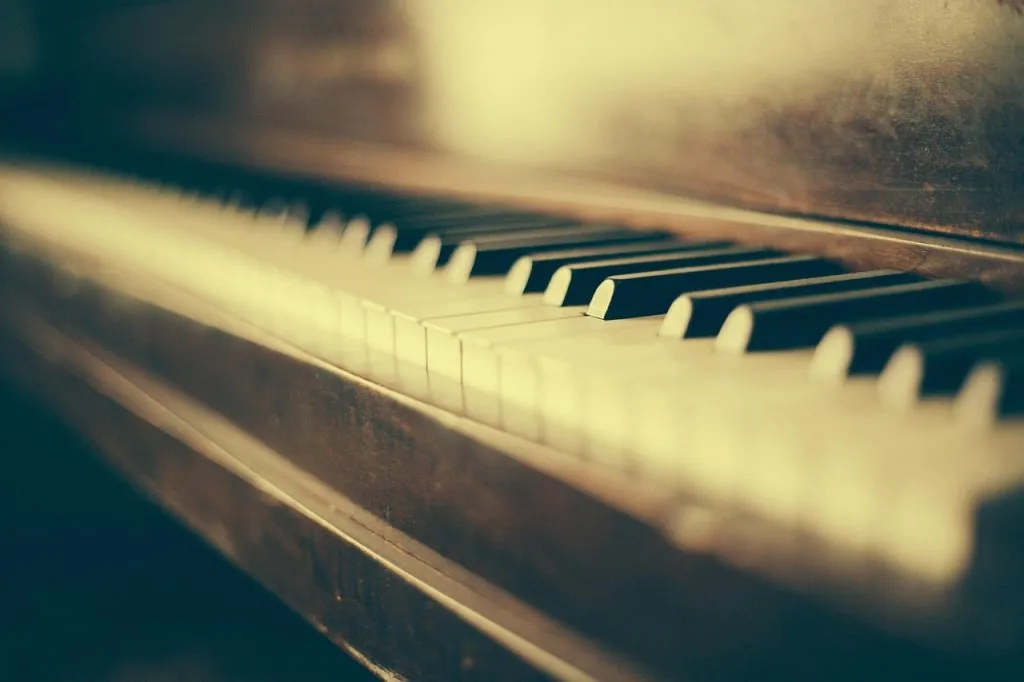
Composer and pianist Frédéric Chopin was born in 1810 in Żelazowa Wola, outside Warsaw. He left Poland at a young age and spent much of his adult life in Paris.
Chopin is buried at Père-Lachaise in Paris, but his heart was brought back to Warsaw and is in the Church of the Holy Cross on Krakowskie Przedmieście.

20. Piwnica Świdnicka in Wrocław dates back to the Middle Ages
In the basement under the town hall in Wrocław is located Piwnica Świdnicka, whose history dates back to the 13th century. The restaurant is usually considered one of the oldest restaurants in Europe and is still in operation.

21. Poland has the zloty instead of the euro
Poland is a member of the EU but still has its own currency, the złoty (PLN). One złoty is divided into 100 groszy.

22. Vodka has a long history in Poland
Poland is one of the countries most associated with vodka, and the drink has a long history in the country. Polish vodka is traditionally made from grains or potatoes, among other things, and there are a variety of regional varieties and producers.

23. Warsaw's Old Town is largely rebuilt
Warsaw's historic center was almost completely destroyed during World War II. After the war, a comprehensive and meticulous reconstruction of the old town was carried out. The reconstruction received such attention that the historic center of Warsaw was inscribed on the UNESCO World Heritage List in 1980.

24. Robert Lewandowski is one of Poland's biggest football stars
Robert Lewandowski was born in Warsaw in 1988 and has become one of the most successful Polish footballers of all time. After many successful years at Borussia Dortmund and Bayern Munich, he joined FC Barcelona in 2022.

25. The Jagiellonian University was founded as early as 1364
The Jagiellonian University in Kraków was founded in 1364 by King Casimir III the Great. It is the oldest university in Poland and the second oldest in Central Europe after the University of Prague. Among the university's most famous alumni throughout history is the astronomer Nicolaus Copernicus.

26. Leonardo da Vinci's Lady with an Ermine is in Krakow
One of Leonardo da Vinci's most famous paintings is actually in Poland. The Lady with the Ermine, painted around 1489–1490 and depicting Cecilia Gallerani, is on display at the Czartoryski Museum in Kraków.

27. Auschwitz-Birkenau is a World Heritage Site
The former German Nazi concentration and extermination camp Auschwitz-Birkenau is located near the Polish city of Oświęcim. More than a million people were murdered in the camp complex, the vast majority of whom were Jews.
The site has been on the UNESCO World Heritage List since 1979 and today functions as a museum and memorial site.

28. The Wieliczka Salt Mine has hundreds of kilometers of passages
Wieliczka Salt Mine outside Kraków has a history that stretches back to the Middle Ages. Underground is a vast system of passages, chambers, lakes and chapels – including the spectacular St. King's Chapel, where decorations and sculptures have been carved out of salt.
Wieliczka was one of the very first World Heritage Sites to be inscribed on the UNESCO list in 1978 and is today included together with the Bochnia Salt Mine in a joint World Heritage Site.

29. The dunes at Łeba are moving
In the Słowiński National Park on the Polish Baltic coast, there are enormous moving sand dunes. The wind slowly moves the sand and changes the landscape, and the highest dunes reach several tens of meters above sea level.
The large light sand fields make the area one of the most spectacular natural landscapes along the Polish coast.

30. The entire peninsula is over 30 kilometers long
The entire peninsula, Hellish Mierzeja in Polish, is a long and very narrow spit of land that extends into the Baltic Sea from the Polish coast. In some places it is only a few hundred meters wide.
There are long sandy beaches, holiday resorts and plenty of campsites. The sheltered side facing the Bay of Puck is also very popular for windsurfing and kitesurfing.

Fast facts about Poland
- Highest mountain: Rysy, 2,499 m above sea level on the Polish side
- Longest river: Wisła (Vistula), about 1,047 km
- Second largest city: Krakow
- Biggest lake: Śniardwy, approximately 114 km²
- Sea: Baltic Sea
- Main sports: Football, volleyball and speedway
- Neighbouring countries: Germany, Czech Republic, Slovakia, Ukraine, Belarus, Lithuania and Russia (Kaliningrad)
- Climate: Temperate climate with both maritime and continental influences. Summers are usually warm and winters are cold, with regional differences between the coast, the interior and the mountainous areas in the south.
More factual reports
- Facts about Albania
- Facts about Germany
- Facts about France
- Facts about Hungary
- Facts about the Czech Republic

Follow Peter here:
Peter Bergström
You might also like:
 Facts about the Philippines - 30 things you (maybe) didn't know
 Things to do in Poland - 30 sights and experiences
 The Valley of Palaces and Gardens at Jelenia Góra in Poland
 5 Sopot restaurants (and a bar) you don't want to miss





 English (UK)
 Svenska
Ama de casa says:
Many interesting facts. Never been to Poland, feel like I missed a lot 🙂
By the way, did you know that the Visents from Poland (at least in Sweden in the past) have names that start with "Po"? We had a mink bull called Popek. Those that were bred in Sweden started from the town they came from. For example, Avi came from Avesta and Storild from Stockholm. It was hard as hell to name the calves. How many names are there that start with "Sto"?
Yeah. That was some useless knowledge on my part 😀
Have fun!
31 May 2020 - 10:40
Minett says:
Interesting stuff that I knew some of and some was new. I would like to recommend the Chopin. museum in Warsaw, where there are some interactive details. And I think you should visit a so-called milk bar, a restaurant that serves cheap and good food http://mskfredrik.blogspot.com/2010/06/besok-en-mjolkbar-i-polen.html
31 May 2020 - 10:49
Lena - gott för själen says:
But what?! The desert in Poland. I've never heard of that. And that salt mine looks really cool! Interesting facts. I've never been to Poland, but it's definitely something on my wish list.
Hug Lena
03 June 2020 - 5:53
Anonymous says:
25. JAGIELLONIAN UNIVERSITY
The University of Krakow is the second oldest in Central Europe, founded in 1634 by King Casimir the Great of Poland.
The university was founded in 1364, not 1634.
03 June 2020 - 12:42
Peter says:
Absolutely right and 3 and 6 were wrong but corrected now and thanks for the help!
03 June 2020 - 21:19
Marzena says:
The salt mine is in Wieliczka.
04 June 2020 - 16:23
sandra says:
good torch
18 May 2021 - 11:28
sandra says:
yes you can imagine
21 May 2021 - 9:17
Sabina says:
It is absolutely not true that you cannot criticise the government in Poland. Prison??? Bullshit! In Poland you can and are allowed to criticise whatever you want, and you don't have to stick to any "correct" policy or opinion.
28 February 2022 - 20:25
Peter says:
Hi Sabina! I made a mistake... Journalists can't write what they want without consequences. The EU has even threatened Poland with withdrawal if they don't get their act together. I have no opinion on this except some facts. I love Poland and its people and my wife and I have been all over Poland at least 15 times. I have many Polish friends and we work together with several Polish regions. We also lecture about Poland to Swedes who want to travel there. Take care!
28 February 2022 - 21:01