



Writer: Helena Bergström
Updated: September 2026 | The French Riviera attracts with azure sea, beaches, dramatic coastal roads and well-known resorts such as Saint-Tropez, Cannes and Nice. We have traveled along the Côte d'Azur several times for more than ten years, mainly by motorhome. Here we collect our own experiences and tips for places to visit, from the Giens Peninsula and the Golden Islands in the west to Nice and Villefranche-sur-Mer further east.
 Tweet
 Share
 Share
 Pin
 Share
 Share
Table of contents
French Riviera – Côte d'Azur in the south of France
The French Riviera and the Côte d'Azur are broadly used as names for the same area, along the Mediterranean coast of southeastern France. However, exactly where the French Riviera begins in the west is not entirely clear. Different sources and tourist organizations use slightly different boundaries, while the eastern end is more easily placed at the Italian border.

It is therefore wise not to draw too precise a line on the map. In a broader tourist context, Hyères and the Golden Islands off the coast are also counted as part of the Côte d'Azur, while other definitions have the Riviera starting further east.
For us, the French Riviera is all about contrasts. There are exclusive resorts, luxury yachts and restaurants with prices to match, but also small coves, hiking trails, islands and dramatic nature. During our travels, we have also discovered that different parts of the Riviera can feel surprisingly different.
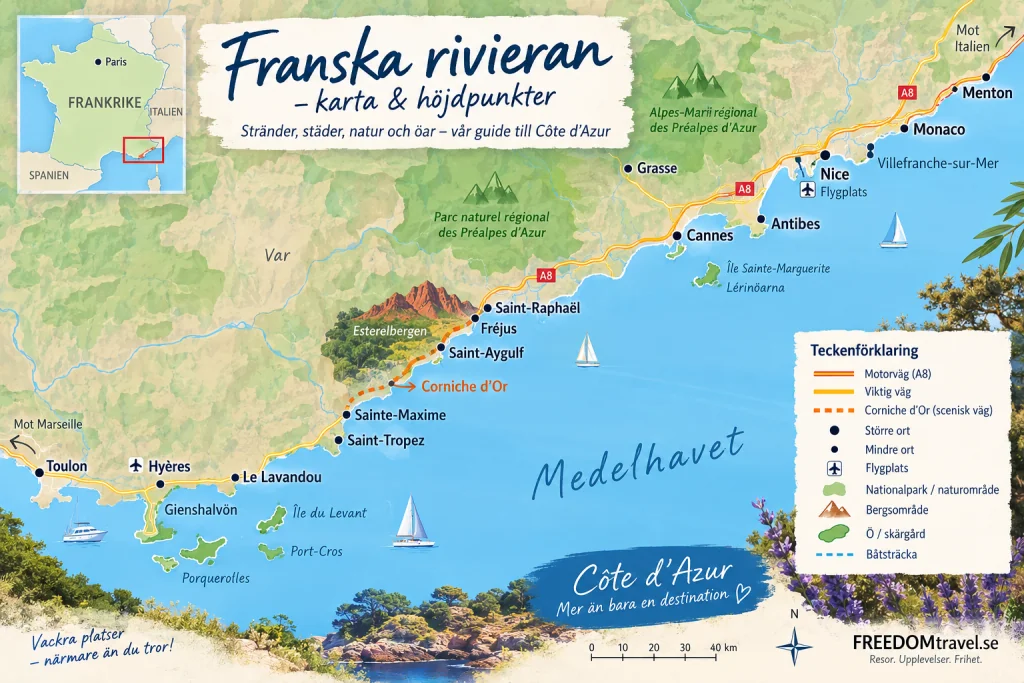
Places to visit on the French Riviera
Of course, there are many more places to discover than those we cover here. We will focus primarily on places we have visited ourselves during our travels along the French Riviera. We will start in the west and work our way east along the coast.
Gien Peninsula – nature, beaches and surfing
The Giens Peninsula, Presqu'île de Giens, juts out into the Mediterranean Sea south of Hyères and was one of our first encounters with this part of France. When we arrived here by camper van, we were greeted by a landscape of beaches, rocky coastline, intense greenery and lots of wind and kite surfers.
We stayed at Camping Olbia and went for a walk through the forest and along the rocky coast. In other parts of the peninsula the water was in full swing. The wind had attracted lots of surfers and we stood there for a long time, fascinated by both the speeds and how everyone managed to avoid getting tangled up with each other.

The Giens Peninsula is also a natural starting point for those who want to continue out to the islands outside Hyères.
READ MORE: The Giens peninsula in France - outside Hyères

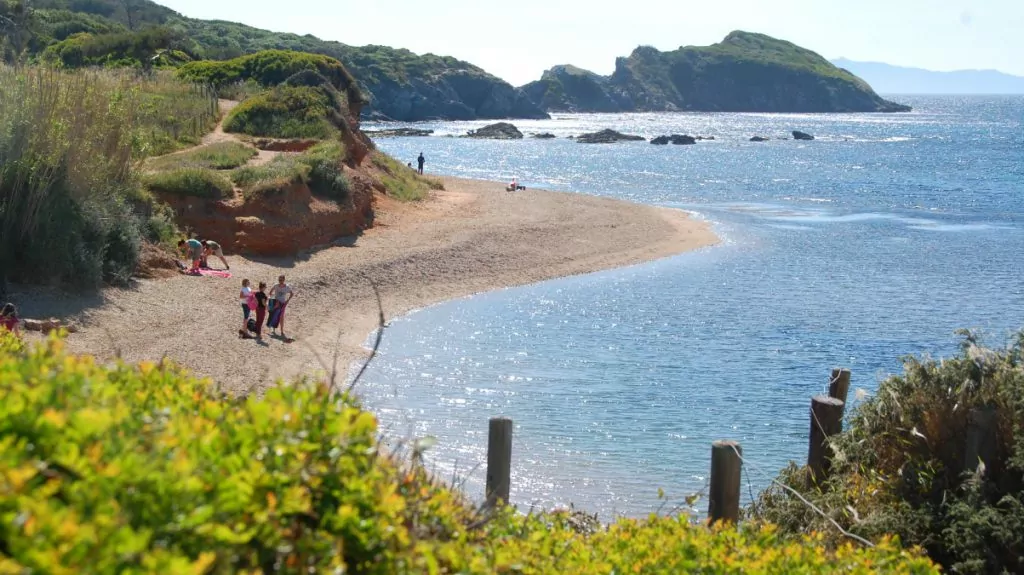
The Golden Islands – three islands with completely different characters
Outside Hyères lie the Îles d'Hyères, also known as the Îles d'Or or Golden Islands. These include Porquerolles, Port-Cros and Île du Levant. The islands are close to each other but our experiences of them were very different. France.fr also highlights the islands as one of the natural experiences on the Côte d'Azur.
On Porquerolles We rented bicycles and pedaled to the beautiful beach Plage Notre-Dame. Port-Cros instead offered protected nature, hiking trails and a relaxed little harbor. On Levant Island The trip took on a completely different character. Part of the island is known for the naturist village of Héliopolis, and here a planned day trip ended with us spontaneously spending the night in a tent.
We have therefore visited all three and can conclude that the issue is not only if you should visit the Golden Islands, but also which one to choose.

Le Lavandou – beaches and holiday life
Le Lavandou is located at the foot of the Massif des Maures and is a classic Mediterranean resort. Along the approximately twelve kilometer long coastline there are twelve sandy beaches, including Pramousquier, where we stayed at the campsite.
We arrived here in the middle of the hot summer and after contacting a long line of fully booked campsites we finally managed to get a spot. The way there became a bit of an adventure in itself as the GPS sent us out on narrow and winding mountain roads that felt much more suitable for mopeds than for our camper.
The reward was swimming in the Mediterranean and beautiful days on the coast. Le Lavandou also became our starting point when we took the boat to the Golden Islands. To this day, the local tourist organization promotes both the beaches and the boat trips to the islands as some of the town's great experiences.
READ MORE: Camping and swimming at Le Lavandou - Côte d'Azur in France

Saint-Tropez – luxury, glamour and high expectations
Saint-Tropez is one of the places that more than any other is associated with the French Riviera. Here, old quarters and Provençal traditions coexist with enormous luxury yachts, exclusive shops and an international jet set life. But from the beginning, this was a city characterized by shipping, fishing and trade. During the 19th century, artists also began to seek out this place.
The modern myth of Saint-Tropez gained extra momentum through the film And God... created woman from 1956 with Brigitte Bardot. The film was shot in Saint-Tropez and contributed greatly to making both Bardot and the city internationally famous.

So when we arrived here, we had pretty high expectations. We walked along the harbor, looked at the huge boats, saw artists painting and selling their work, and peeked into exclusive shops. Peter found a pair of white shorts and a white jacket that would have fit perfectly in Saint-Tropez, but the prices made them stay in the shop.
And what did we think? Nice, absolutely. But we kept waiting for that extra wow feeling that never really arrived. Saint-Tropez simply wasn't our favorite on the French Riviera. Maybe our expectations were too high, or maybe we just prefer other places along the coast.
READ MORE: Saint-Tropez in France – the city of luxury and glamour?
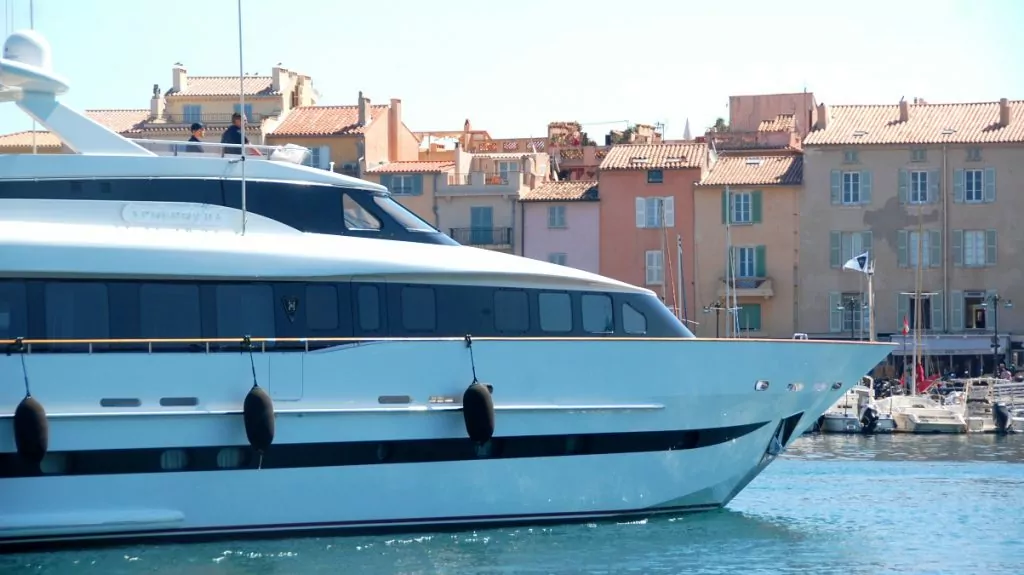
Sainte-Maxime – our first encounter with Riviera life
On the other side of the Bay of Saint-Tropez lies Sainte-Maxime, where we spent a few days in our camper van during one of our early trips along the French Riviera.
We swam, walked along the coast and began to get a feel for the contrasts of the Côte d'Azur. Behind walls and gates lay large villas, exclusive cars rolled along the roads and the restaurant prices sometimes made us glad that we had filled the camper's fridge at Carrefour and Lidl before we got here.


We ourselves lived a much simpler Riviera life camping. One day we had crab for lunch outside the camper, along with a bottle of Spanish ”sauce for fish” that we had found on a previous trip. Maybe not quite the classic image of glamour on the Côte d'Azur, but very much our way of traveling.
Sainte-Maxime is still one of the main resorts around the Bay of Saint-Tropez and has boat service across to Saint-Tropez, which can also be a convenient alternative to driving around the bay.

Saint-Aygulf and Fréjus – beach life and history
When we returned to the French Riviera in the summer of 2025, we ended up in Saint-Aygulf, just outside Fréjus. This time we had a very special reason to stay: Helena turned 50.
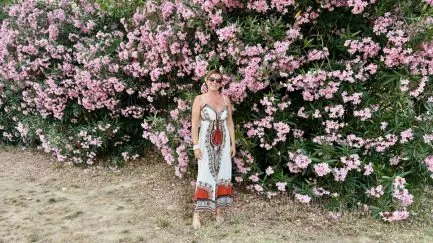
We checked into a campsite right on the beach and celebrated our birthday at a leisurely pace with swimming, a pool, a spontaneous new summer dress and dinner at a restaurant by the sea. After many weeks on the road, when we often cook our own food in the camper, a real evening at a restaurant felt extra luxurious.

Saint-Aygulf is part of Fréjus and is located on the coast south of the city itself. It has both beaches and the Étangs de Villepey natural area, with lagoons and wetlands near the sea.
READ MORE: 50th anniversary celebrations on the French Riviera - Saint-Aygulf Plage

We also visited the central Frejus, a city with a much longer history than the modern seaside resorts along the coast. The city was founded during Roman times and there are still several Roman remains here, including an amphitheater and remains of an aqueduct.
When we arrived here, there was a large market going on in the streets. We parked the camper a bit outside the center and walked in among the stalls with clothes, fruit and vegetables. It was a fairly short visit, but Fréjus gave us another picture of how varied the French Riviera actually is.

Saint-Raphaël and the Esterel Mountains
Fréjus has now largely merged with the neighboring town of Saint-Raphaël. We drove through Saint-Raphaël but chose not to try to park our large camper in the center. For us, the town was instead the gateway to one of the most beautiful experiences on the entire French Riviera: Esterelbergen.

The Massif de l'Estérel is quite different from the densely populated resorts along much of the coast. The bedrock is of volcanic origin and the landscape is characterized by red cliffs, green vegetation and the intense blue color of the Mediterranean Sea.
There are hiking and cycling trails here, but we mainly experienced the area from the road. The further we drove from Saint-Raphaël, the more the buildings disappeared and the wilder the landscape became. It was a side of the French Riviera that we had not expected.

Corniche d'Or – our most beautiful drive on the Riviera
The coastal road runs along the Esterel Mountains. Corniche d'Or, also called the Corniche de l'Estérel. The road was inaugurated at the beginning of the 20th century and winds along the coast between Saint-Raphaël and the area towards Cannes.
We drove here with our campervan in the summer of 2025 and were completely taken by the landscape. After Agay and Anthéor, the surroundings became increasingly dramatic. Red mountains plunged down to the blue sea and small bathing coves hid between the rocks.
One of the places we passed was Viaduct of Antheor, the large railway viaduct that stretches across the landscape near the sea. Shortly afterwards we also found some larger viewing points where we actually managed to fit the camper van.

That's one of the challenges along the Corniche d'Or. The road runs close to the cliffs at times and parking is limited, especially with a larger vehicle. When we later wanted to stop for a swim, we finally found a parking space where the camper went in. By the centimeter.
But it worked. We put on our swimsuits and headed down to the sea. The combination of the drive, the views and the opportunity to stop at small coves made the Corniche d'Or one of our absolute favorite experiences on the French Riviera.
READ MORE: The Esterel Mountains in France - a spectacular drive along the Corniche d'Or

Cannes – the film city we love to return to
After the Esterel Mountains and the resorts of Théoule-sur-Mer and Mandelieu-la-Napoule, you eventually reach Cannes, one of the most famous cities on the French Riviera.
Cannes is of course primarily associated with the film festival, red carpets and international film stars. We have been here several times and once happened to arrive in the middle of the film festival itself. The whole city was then characterized by the event, with posters, photographers, barriers, limousines and people looking for celebrities. Of course, we did the same and actually managed to catch a glimpse of Gérard Depardieu.
READ MORE: Cannes Film Festival - we were there!

But we like Cannes even when there is no film festival. Here is the long promenade Boulevard de la Croisette, the harbor with its large boats, beaches, shopping and the old town Le Suquet, which climbs up the hill above the old port.

On a later visit we decided not to have any advanced program at all. We strolled around, shopped, ate moules frites and enjoyed an unusually calm day. Helena found both a bikini and a dress while Peter, who needed shorts, somehow managed to walk into a store that sold almost only shorts and still come out without a single pair. However, we ended up with two pairs of long pants, a shirt and a t-shirt. That's how it can be when shopping in Cannes.
Over the years, Cannes has become one of the cities on the French Riviera that we love to return to.
READ MORE: Things to do in Cannes – film festival, old town and French Riviera

Excursion from Cannes to Île Sainte-Marguerite
From Cannes you can also take the boat out to Sainte-Marguerite Island, the largest of the Lérins Islands just off the coast. We did so during one of our visits.
The island offers a completely different environment than Cannes, with pine and eucalyptus forests, hiking trails, small swimming coves and Fort Royal. The fort is famous, among other things, for the enigmatic prisoner known as the ”Man in the Iron Mask” who was imprisoned here during the 17th century.

It was scorching hot when we visited the island. We hiked a bit, swam from the rocks and eventually settled down at the restaurant La Guérite. Peter also visited the fort while Helena, after a day in over 30 degree heat, applied the principle ”"Dare to refuse bail"”. Sometimes cultural history simply has to do without us.
READ MORE: Île Sainte-Marguerite – excursion from Cannes to the Lérins Islands

Nice and Villefranche-sur-Mer
Even further east lies Nice, the largest city on the French Riviera and a place where big city life combines with the Mediterranean.
We got here in a slightly different way than most other places along the Riviera. We arrived by cruise ship Freedom of the Seas, which was anchored outside Villefranche-sur-Mer. From the ship we took a tender boat to the small coastal town and then continued by train to Nice.
In Nice we of course walked along the famous Promenade des Anglais, but also discovered Place Masséna, the Promenade du Paillon park and the alleys of Old Nice. We visited the market and ate, almost traditionally at this point, moules frites.

Nice is significantly larger than many of the holiday resorts we have visited along the French Riviera, but the old city center makes parts of the city still feel small-scale and lively.
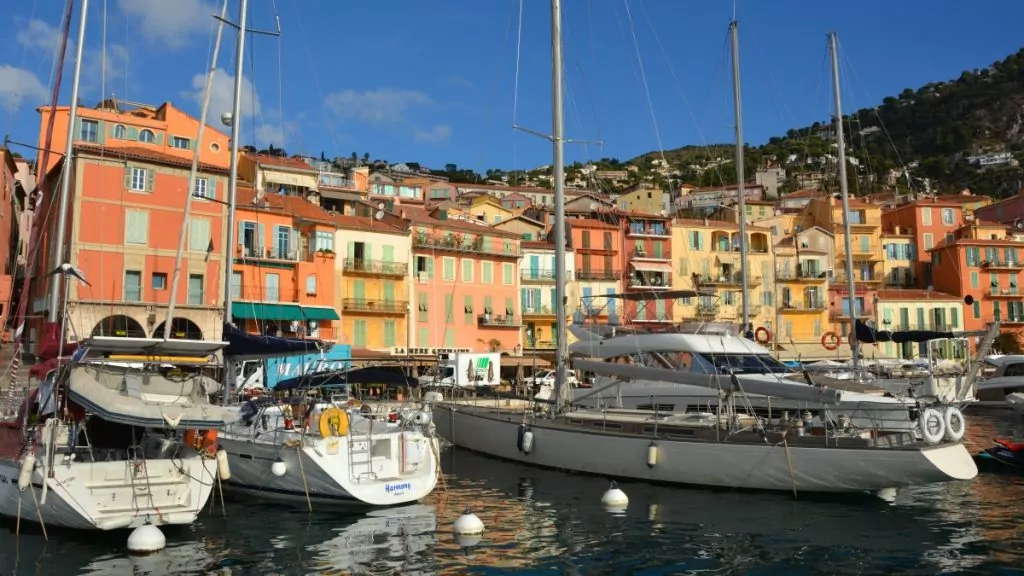
After the day in Nice we returned to Villefranche-sur-Mer, which is beautifully situated around a deep bay east of Nice. It has an old town centre, colourful houses, a harbour and a beach. The combination of Nice and Villefranche-sur-Mer worked perfectly as a day trip, not least because it is easy to travel between the towns by train.
READ MORE: A day in Nice and Villefranche-sur-Mer
More classic places along the Côte d'Azur
We have traveled along large parts of the French Riviera, but have far from seen everything. Between Cannes and Nice, for example, lies Antibes, with the old town center and the Cap d'Antibes peninsula. We have swum on the coast nearby, but have not yet explored the city itself.
East of Nice, the Riviera continues towards Monaco and Menton, near the border with Italy. We haven't visited these places yet either, so they will remain on the list for a future trip.
It's also one of the reasons why we love to return to the French Riviera. Even though we've traveled here several times over more than ten years, there are still new places to discover.
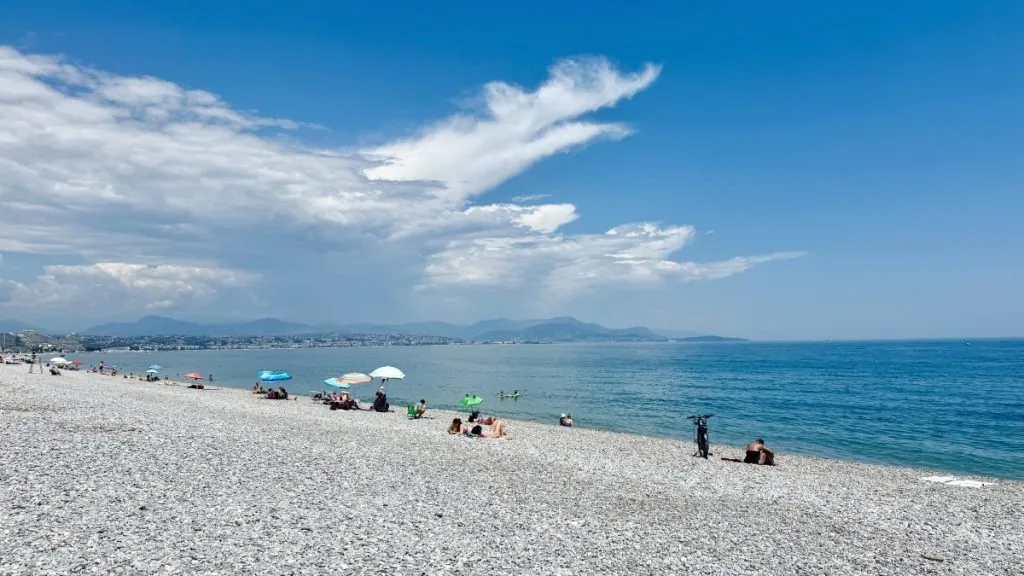
Beaches on the French Riviera
The beaches are of course a big part of the allure of the French Riviera, but the coastline is far from the same everywhere. During our travels we have swum from long sandy beaches, smaller coves and rocky shores where the red mountains of the Esterel Mountains meet the Mediterranean.
On Giens Peninsula There are both long beaches that attract wind and kite surfers and calmer bathing waters on the other side of the peninsula. Around Le Lavandou there are many sandy beaches, and in Saint-Aygulf We stayed at a campsite with the beach right nearby.
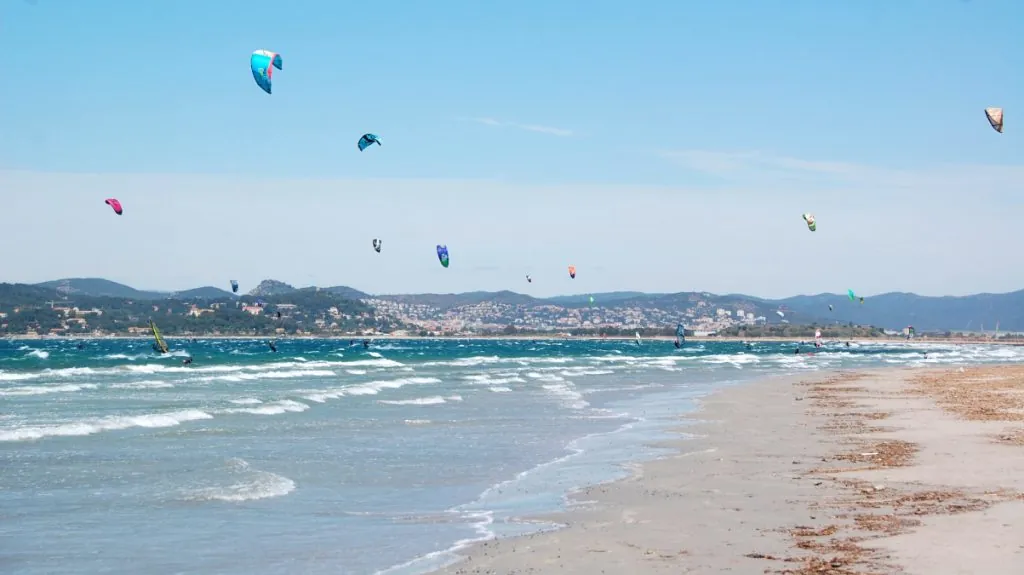
Along Corniche d'Or The coastal landscape is more dramatic. Here there are small swimming coves between the red cliffs, but it can be much more difficult to find both parking and an easy path down to the water.
There are also swimming facilities in the cities. Cannes has sandy beaches in the middle of town, while the beach along the Promenade des Anglais in Nice consists of large, rounded stones. In Villefranche-sur-Mer However, there is a beach with significantly smaller stones and coarser sand in the protected bay.
And if you want even more of an island feel, there are of course the Gold Islands and Île Sainte-Marguerite, where we found everything from popular sandy beaches to small coves among the rocks. For us, one of the charms of the French Riviera has been the variety. You don't have to choose between city, nature and swimming. Often everything is within a fairly short distance.
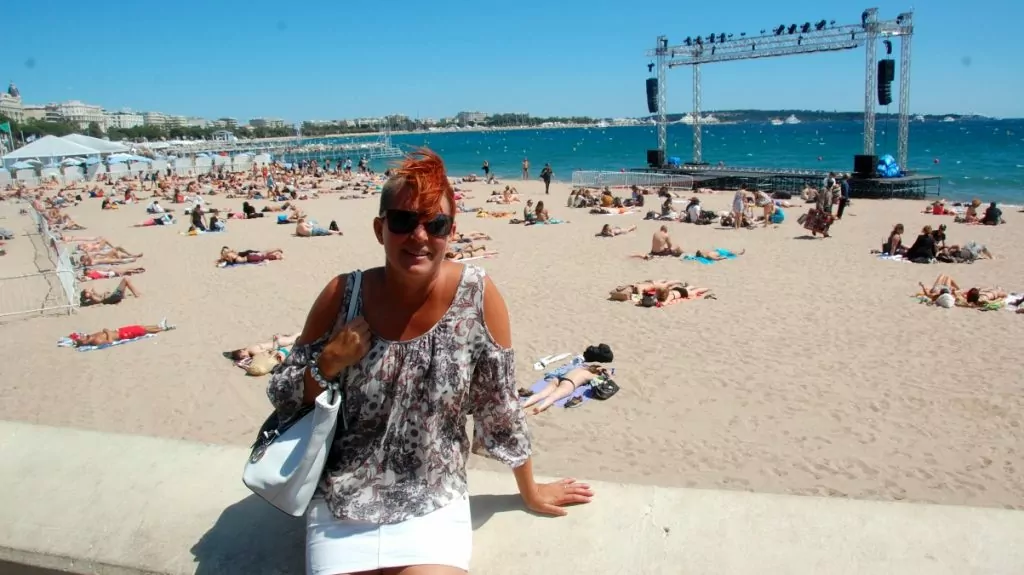
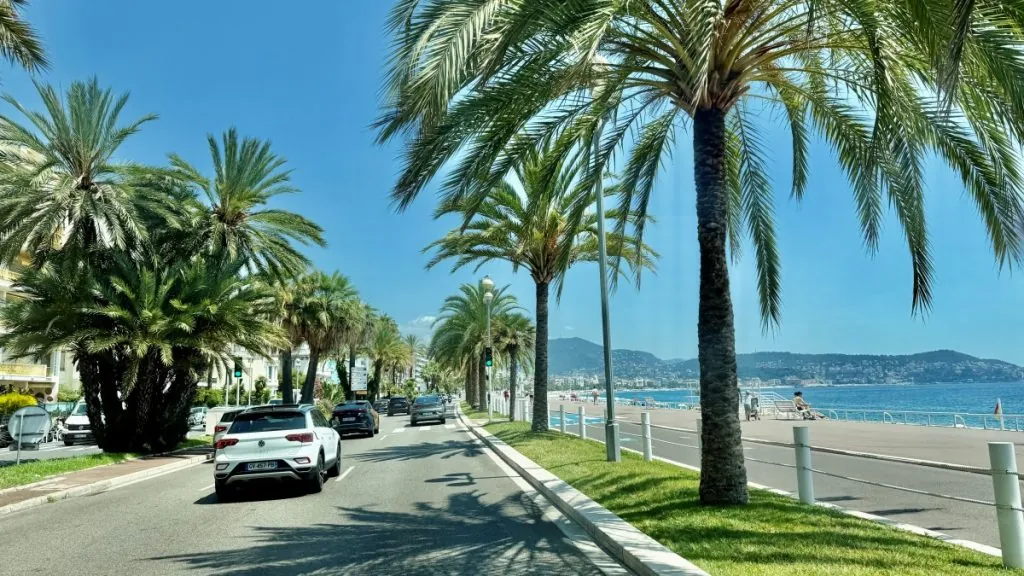
Driving along the French Riviera
Driving along the French Riviera can be stunningly beautiful, but it's not always the fastest or most relaxing drive in France.
The coast is densely populated in many places and traffic can be intense, especially during the summer and around the major holiday resorts. We have several times chosen to park a bit outside the center and walk or take public transport the last stretch.
At the same time, there are roads that are worth the trip in themselves. Our big favorite is Corniche d'Or between Saint-Raphaël and Cannes, where the road follows the red cliffs of the Esterel Mountains along the Mediterranean Sea. We wanted to stay here pretty much the entire time, which didn't really fit in with us traveling in a large camper.
So don't just count kilometers when planning a trip along the French Riviera. A few miles along the coast can take considerably longer than you think, especially if you want to stop, swim and discover places along the way.

French Riviera by motorhome
We have travelled along the French Riviera by motorhome on several occasions and absolutely think it works. However, the area does require a bit more planning than many other parts of France.
The biggest challenge is often the parking lot. Already during our first trip along the Riviera we saw signs prohibiting motorhomes in certain parking lots and coastal areas. With a large motorhome we have therefore rarely tried to drive right into the most visited city centers.

When we visited Saint-Tropez we parked outside the center and walked in. On other occasions we have used camping as a base and taken the bus, train or boat. From Villefranche-sur-Mer For example, we took the train to Nice, and from Le Lavandou we traveled by boat to the Gold Islands.
Campsites are located in many places along the coast and for us they have often been the most convenient option. However, during high season they can be full. When we arrived in Le Lavandou in the middle of summer, we had to contact a long line of campsites before we found a free spot.
On the Giens Peninsula we stayed at Camping Olbia and in Saint-Aygulf we found a campsite close to the beach. We have also stayed at campsites near Cannes and Antibes and used them as a starting point for excursions.
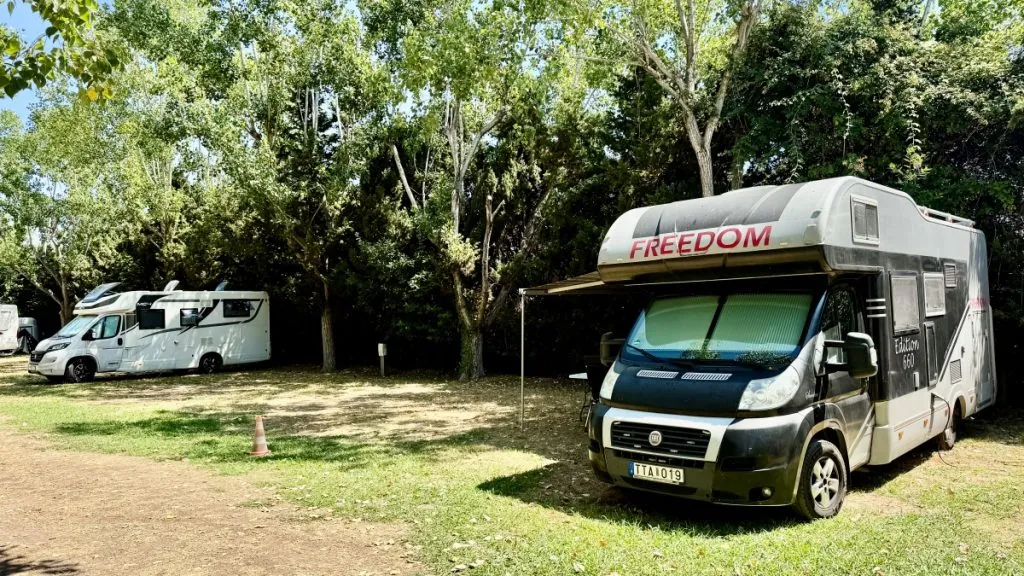
Our best advice is therefore not to necessarily try to stay in the middle of the most famous resorts. With a camper van it can be much easier to find a good base outside the center and make day trips from there.

When is the best time to travel to the French Riviera?
The French Riviera can be visited all year round, but the experience will be very different depending on when you come.
We have been here ourselves both during quieter periods and in the middle of high summer. July and August means the greatest chance of really warm swimming weather, but also higher temperatures, more traffic and significantly more people. When we traveled here during the height of summer, we have experienced days when the heat has meant that ambitions have had to be adjusted significantly.
It's not always the day for a long hike up a mountain when the thermometer has passed 30 degrees.
For those who want to combine swimming with excursions, walks and sightseeing, we therefore think that late spring or early autumn can be extra nice. Then it is still pleasant by the Mediterranean Sea while it is often easier to move along the coast.
Even during the spring-winter and early spring, the Riviera can offer a significantly milder climate than back home in Sweden, but then you shouldn't expect the same beach holiday as in the middle of summer.
How long do you need on the French Riviera?
It's possible to get a taste of the French Riviera in a few days, but the area is larger and more varied than you might first imagine.
Do you have three to four days We would choose a part of the coast and stay there instead of trying to get from one end to the other. Cannes and Nice and the surrounding areas can, for example, fill several days, as can the area around Saint-Tropez and the Esterel Mountains.
Med one week is it possible to combine several destinations and still have time to stop for swimming and spontaneous excursions. Do you have two weeks you can travel much more leisurely and also include one of the Golden Islands, hiking or days when you simply don't do much at all.
The last thing is easy to forget in a place where there is so much to see.

Our favorites on the French Riviera
After several trips along the Côte d'Azur, we have of course come up with some personal favorites. This is not a scientific ranking, but simply the places and experiences that have stuck with us a little bit.
- Most beautiful car trip: Corniche d'Or. The combination of the red cliffs of the Esterel Mountains and the blue Mediterranean Sea is hard to beat.
- The city we would love to return to: Cannes. We have experienced the city both in the midst of the chaos of the film festival and on much calmer days and enjoy the mix of beach, city life, old quarters and people.
- Greatest nature experience: The Esterel Mountains. Especially because the landscape was so different from the image we had of the French Riviera.
- Most mythical place: Saint-Tropez. We're glad we went there, but it wasn't actually one of our personal favorites.
- Best combination of city and small coastal town: Nice and Villefranche-sur-Mer.
- The most different excursion: Île du Levant. The naturist island where our day trip unexpectedly ended with a night in a tent is definitely one of the more unusual experiences from our travels along the French Mediterranean coast.
Is the French Riviera worth a visit?
For us, the answer is definitely yes. We have returned to the French Riviera several times and each trip has shown us a new side of the area.
The first time we were fascinated by the luxury cars, villas and boats around Saint-Tropez and Sainte-Maxime. Later we cycled on Porquerolles, slept in a tent on a naturist island, ended up in the middle of the Cannes Film Festival, celebrated a 50th birthday in Saint-Aygulf and drove a camper van between the red cliffs of the Esterel Mountains and the Mediterranean Sea.
Perhaps it's the contrasts that make us love the French Riviera so much. Here you'll find the glamour that the area is known for, but also wild nature, small coves, islands, old towns and completely ordinary days camping.
And we're still not done. Antibes, Monaco and Menton are still waiting for us.

Questions and Answers about the French Riviera
Are the French Riviera and the Côte d'Azur the same thing?
Yes, the terms are used in practice for the same area. Côte d'Azur is the French name, while French Riviera is the Swedish name. However, exactly where the area begins in the west is not clearly defined.
Where does the French Riviera begin and end?
The eastern part extends to the Italian border at Menton. Where the western border should be drawn varies between different definitions. In broader tourist contexts, Hyères and the Golden Islands are often also included in the Côte d'Azur.
Which resort on the French Riviera should you choose?
It depends on what you are looking for. Nice is well suited for those who want to combine city life and swimming, while Cannes offers beach, shopping and movie glamour. Around Esterelbergen is nature more dramatic and Gien Peninsula and the Golden Islands Suitable for those who want more nature, swimming and outdoor activities. Saint-Tropez is the choice for those who want to experience one of the Riviera's most legendary resorts.
When is the best time to go to the French Riviera?
For beach holidays, summer is the warmest, but July and August are also the most popular months. Late spring and early autumn are often better suited if you want to combine swimming with sightseeing, hiking and car trips.
Is it possible to travel along the French Riviera by motorhome?
Yes, we have done it several times. However, parking can be difficult in the most popular coastal resorts, especially with a larger camper. Camping outside the center and further transportation by public transport, boat or on foot has often worked best for us.
You might also like:
 Visiting Kalajoki Camping - lovely sand dunes in Finland



 Visiting La Romieu in France - a gem of Unesco heritage and feline legend
 Visiting the Gorges du Tarn in France - a scenic canyon
 Visiting the Ardèche in France - canoeing at the Pont d'Arc
 50th anniversary celebrations on the French Riviera - Saint-Aygulf Plage



 English (UK)
 Svenska
Anders och Birgitta says:
The new look of the blog looks great. Have you seen the King's villa in Sainte Maxime? Here you can see what it looks like if you haven't seen it already.... http://husbilsliv.blogspot.se/2010/05/kungens-villa-i-sainte-maxime.html
14 May 2015 - 18:24
Sandora says:
Wouldn't say no to going there! 😀
14 May 2015 - 18:28
Åsa says:
Oh la la! Greetings from the Portuguese Riviera! 😉
14 May 2015 - 18:59
Steve says:
A few metres from the beach on the French Riviera. Yes, thank you.
Tasty meals!
14 May 2015 - 19:12
anita says:
Now when I see the "new blog", I see that it is better and "bigger" for those of us with poorer vision... Nothing I reacted to before but now that it is better... Nice!
Have a great time among all the Ferraris!
14 May 2015 - 19:40
BP says:
Good that Anders and Birgitta have already added a link to the King's villa. Was going to do exactly the same thing.
Oh wait until you get to St Tropez and Antibes - where the luxury villas/houses are replaced by luxury boats of a size you've probably never seen before. Look but don't touch - sort of.
14 May 2015 - 20:50
admin says:
Anders and Birgitta, how interesting! But it still looked relatively ordinary? How do you actually find it?
Sandora, it's nice here, and we will soon try to look around a bit more too!
Åsa, hehe, I am sure you are having a great time on the Portuguese Riviera! 🙂
Steve, we are doing well! Eating will probably be in the car... but we have bought some fresh tasty fish and also crab claws! 🙂
Anita, I'm glad you think you can see better now! I didn't realise that the pictures were small, but after others pointed it out, I...
BP, oh several who know the king's villa! And yes, I almost suspected that we would see some luxury boats here in the neighbourhood... 😉.
14 May 2015 - 21:54
Ditte says:
How nice! The French Riviera has been a favourite with me since my teenage years when I was on several language trips here along the coast and returned as an adult to the areas around Antibes, Cannes, Nice, St. Tropez for several years. Nice that you found a nice campsite in St Maxime at a good price, maybe the price is ok. because it is low season now. St Maxime is nice, but expensive like many resorts along the Riviera. But nice with Carre and Lidl so you could stock up.
-The restaurants used to have a menu at reasonable prices, but maybe that was then. Wishing you nice days in St Maxime.
14 May 2015 - 23:26
admin says:
Ditte, glad you've been around so much! Yes, the price is ok because it is low season (all ACSI affiliated campsites cost between 12 and 18 euros in low season). There are menus in the restaurants which are ok, but more expensive than elsewhere in France. We saw 2-course menus for 20 euros.
15 May 2015 - 7:06
Anders och Birgitta says:
This is what street life looks like outside the King's villa, https://www.google.com/maps/@43.305201,6.630365,3a,75y,170.02h,94.45t/data=!3m4!1e1!3m2!1sEUZEjvU6xZzatXha3_eoFQ!2e0
15 May 2015 - 7:42
solan says:
Nice with good typography but a bit of a mess where to write a comment...
15 May 2015 - 8:30
Ama de casa says:
The Riviera is not completely wrong, but personally I like the mountain areas above better. A bit too luxurious and expensive down on the coast (sour said the fox 😉 ).
15 May 2015 - 10:03
admin says:
Anders and Birgitta, thank you! We will keep an eye out! 🙂
Solan, I can agree with the commenting thing... I've asked on the wordpress forums, but it's not easy to change. You have to change the code... I'll see how it goes!
Ama de casa, we can probably agree with that, but we live cheaply here at the campsite so we will at least take the opportunity to look around a bit! 🙂
15 May 2015 - 11:09
Znogge says:
A beautiful stretch of coastline but oh so expensive! I remember this from our travels there...
15 May 2015 - 11:30
Matts Torebring says:
It sounds promising that it's so warm already. Our experience of the Riviera is that it can be quite cold this time of year, when the cold sea winds blow in. Enjoy yourselves
15 May 2015 - 16:23
Ulla widing says:
Hi, the new look turned out great.... You have much warmer than we do. We are north of Sthlm, and it is 8 gr and windy. I go on.... here the heat lingers....
Enjoy as much as you can!
15 May 2015 - 17:33