

Writer: Helena Bergström
Updated: September 2026 | In the small town of Saint-Maximin-la-Sainte-Baume in Provence stands a huge Gothic basilica. In the crypt are several ancient sarcophagi and relics that, according to Catholic tradition, belong to Mary Magdalene. We stopped with the camper and discovered a place with a fascinating mix of history, religion and legend.
 Tweet
Tweet Share
Share Share
Share Pin
Pin Share
Share Share
ShareTable of contents
Saint-Maximin-la-Sainte-Baume in Provence
We had left the French Mediterranean coast and started rolling north with the camper. After our visits to the Golden Islands and a night in Brignoles, the next stop was Saint-Maximin-la-Sainte-Baume.
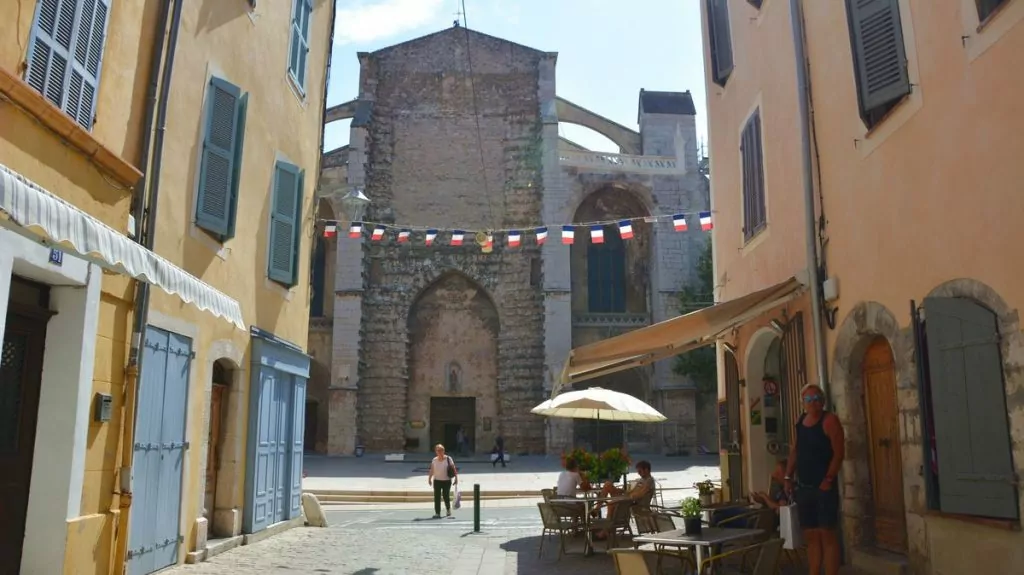
The city is located in the Var department of Provence and is completely dominated by the mighty Basilique Sainte-Marie-Madeleine. We parked a bit away and walked towards the center.
The walk took a little longer than necessary, however, as we happened to shop for a dress, a top, and a pair of shorts along the way. That's how it can be when you're on your way to a medieval basilica.
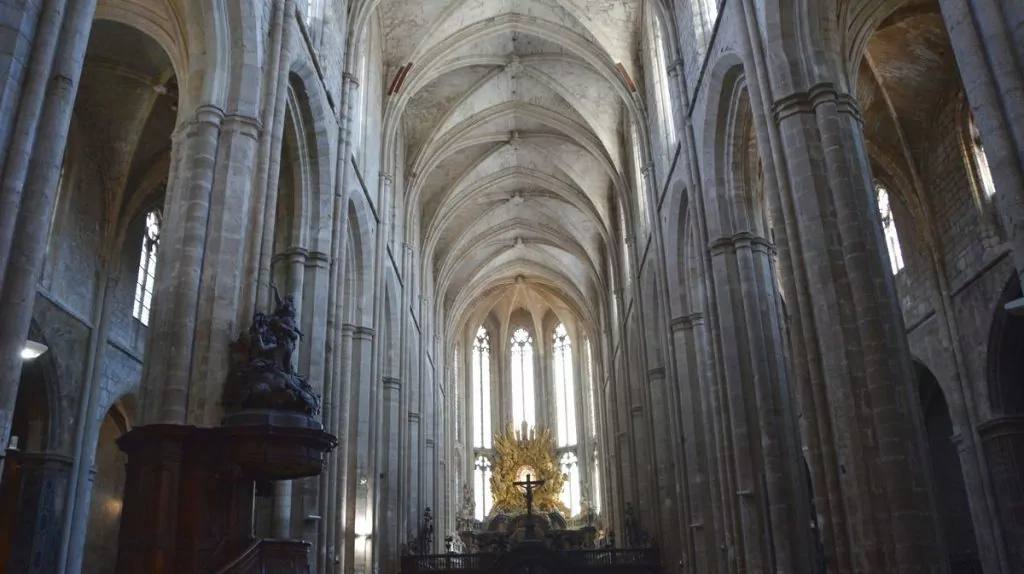
Basilique Sainte-Marie-Madeleine
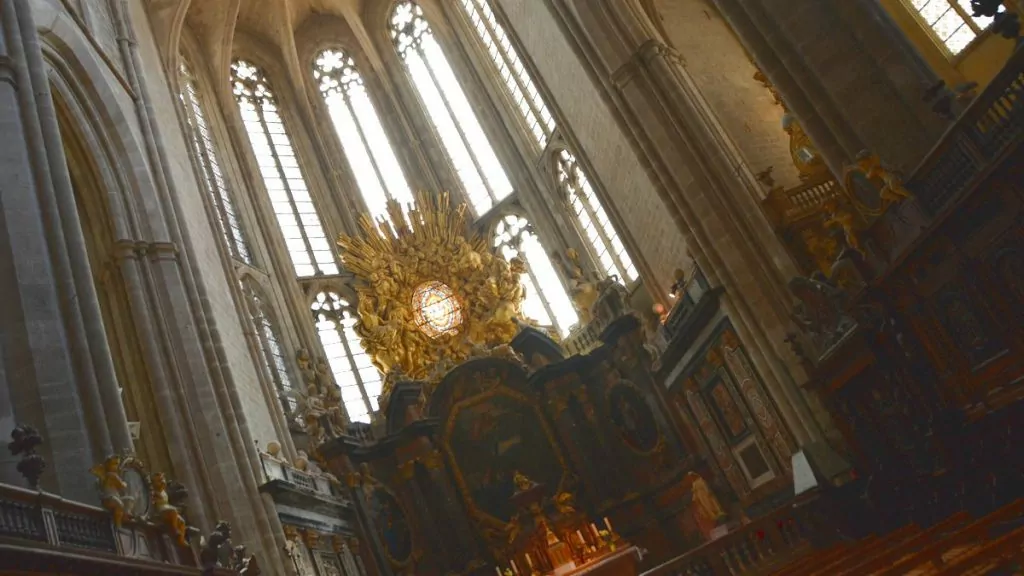
It's hard to miss the basilica as you approach the center of Saint-Maximin-la-Sainte-Baume. Construction of the large Gothic church began in the late 13th century after relics believed to belong to Mary Magdalene were found on the site.
Construction began under Charles II of Anjou and continued for several centuries. The basilica was never fully completed, as is evident from the unusually simple and unfinished west facade.
When you enter, however, it is difficult to think of anything as unfinished. The church room is high, long and powerful, and the contrast with the much smaller city outside is striking. The reason why such a large church was built here is beneath our feet.

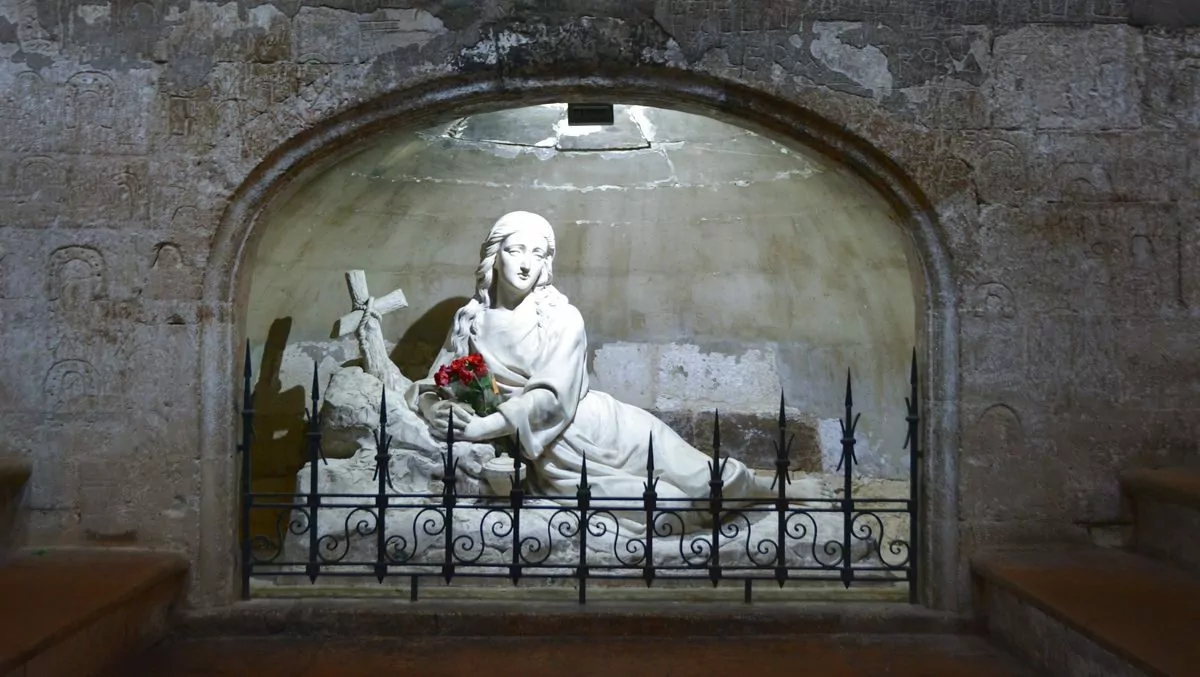
Tomb of Mary Magdalene in Saint-Maximin
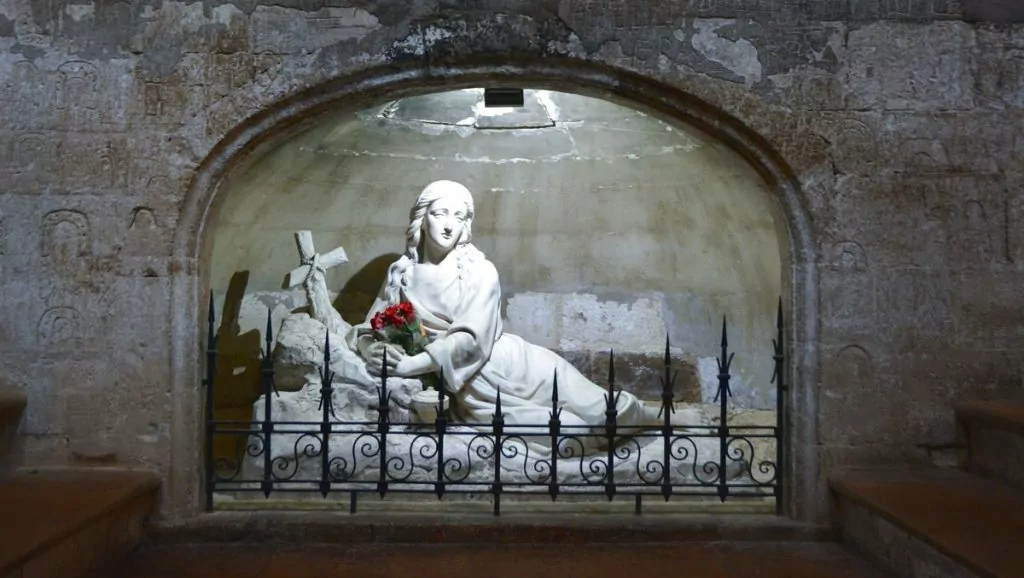
Under the basilica lies a crypt with several ancient sarcophagi. Here relics are venerated which, according to Catholic and Provençal tradition, belong to Mary Magdalene. But here you need to distinguish between history and tradition.
Mary Magdalene is a person who appears in the New Testament. She was one of Jesus' disciples, was present at the crucifixion, and is described in the Gospels as one of the first to meet the resurrected Jesus.

What happened to her later, however, is not told in the Gospels. And that is where the Provençal legend takes over.
The legend of Mary Magdalene in Provence
According to Provençal tradition, Mary Magdalene left Palestine with Martha and Lazarus, among others. They are said to have traveled across the Mediterranean and landed at the place that is today called Saintes-Maries-de-la-Mer in the Camargue.
Mary Magdalene is said to have then preached in Marseilles together with Lazarus before retreating to the mountains at Sainte-Baume, where she is said to have lived as a hermit in a cave for the last 30 years of her life.
As she approached death, she is said to have left the cave and gone down to the plain, where she received her last communion from Saint Maximin and died in his arms.
This is, according to tradition, the explanation for the connection between Mary Magdalene, the Sainte-Baume grotto and the town of Saint-Maximin. However, there is no historical evidence that Mary Magdalene actually traveled to Provence.
The relics found in 1279
The story becomes no less exciting in the 13th century. In 1279, Charles II of Anjou had excavations carried out in Saint-Maximin. Remains were found that were identified as the relics of Mary Magdalene. The discovery gave new impetus to the pilgrimage site that had already grown up around the tradition of her.
According to the story, the relics had been hidden hundreds of years earlier for protection during troubled times. The find contained inscriptions that purportedly identified the body as that of Mary Magdalene.
Charles II later received the support of Pope Boniface VIII to allow the Dominicans to take care of the sanctuary. In 1295, Dominicans were established both in Saint-Maximin and at Sainte-Baume. It was also the discovery of the relics that was the starting point for the great basilica.
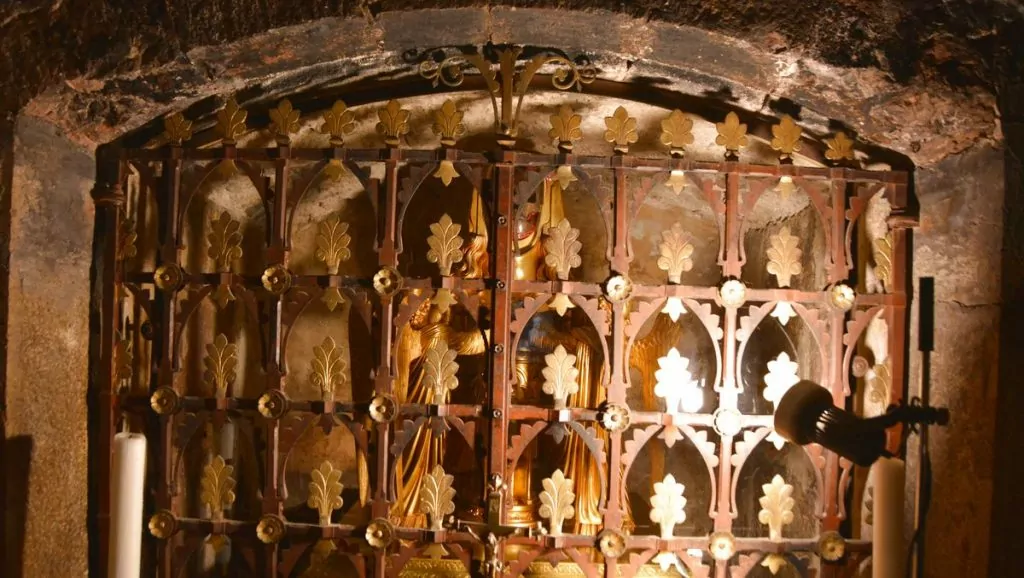
The crypt under the basilica
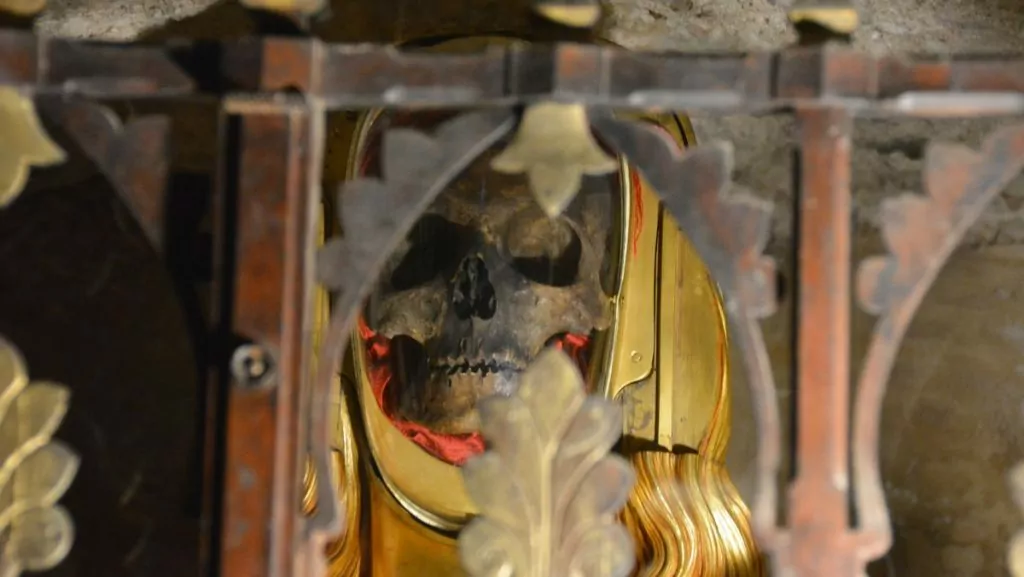
The crypt is probably the most fascinating part of a visit, housing ancient stone sarcophagi and the reliquary associated with Mary Magdalene.
For believers, this is a sacred place and Saint-Maximin-la-Sainte-Baume has been an important pilgrimage destination for centuries. For those who view the story more historically, the place is at least as interesting, although for different reasons.
We know that the cult of Mary Magdalene here is very old. We know that relics were found and identified as hers in the 13th century and that the find had enormous significance for the place.
If it really is Mary Magdalene Who rests here? Of course we can't know. But it's a bit ticklish to stand down in the crypt and think about it.
Sainte-Baume Cave
We visited the Basilica of Saint-Maximin itself, but anyone who wants to follow the story of Mary Magdalene further can go to Grotte de Sainte-Marie-Madeleine in the Sainte-Baume mountain massif.
According to tradition, this is where Mary Magdalene lived as a hermit. The cave is located high in the mountain and can be reached on foot through the forest. It is still an active pilgrimage site and the Dominicans have maintained a presence at the sanctuary.
This actually makes Saint-Maximin and Sainte-Baume two parts of the same story: the cave where Mary Magdalene is said to have lived and the basilica where her relics are venerated. It would have been exciting to visit the cave as well. We didn't do that this time.
To visit Saint-Maximin-la-Sainte-Baume
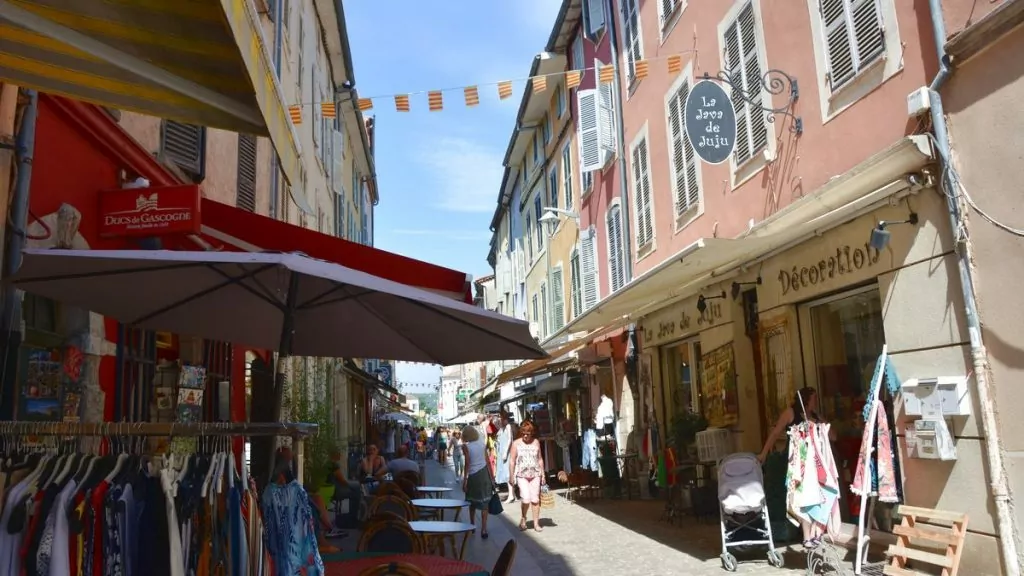
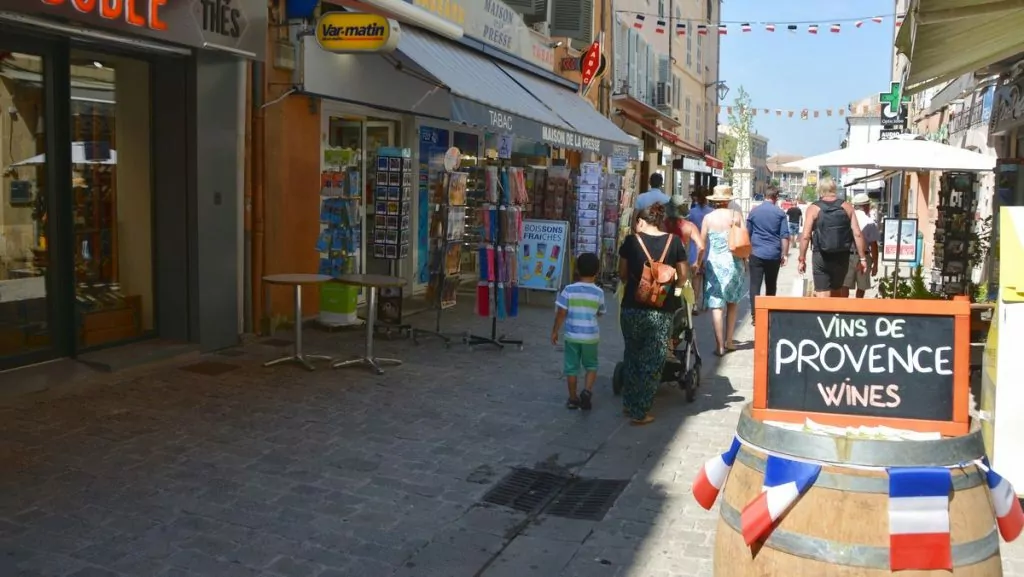
Although the basilica is the main attraction, it is nice to stroll for a while through the center of Saint-Maximin-la-Sainte-Baume. We found the town to be much more casually French than many of the resorts we had just left along the Mediterranean coast.
And apparently there are stores. We have picture evidence of that in the form of a dress, a top, and a pair of shorts.
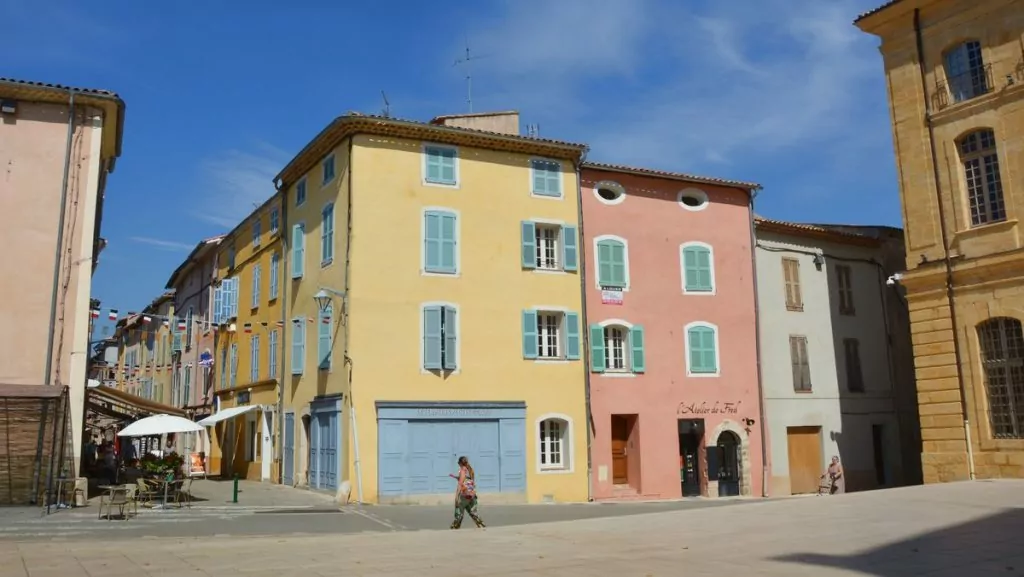
We came here with a camper van and found parking a bit away from the city center. Since parking regulations and opportunities for camper vans change over time, we would today check the current regulations on site instead of recommending the parking we used in 2018.
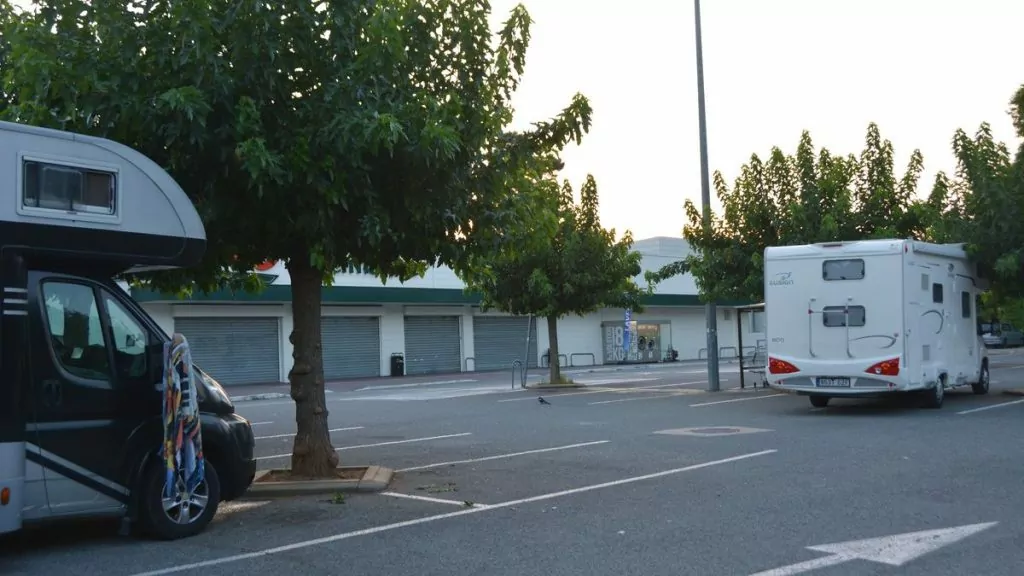
Is Saint-Maximin-la-Sainte-Baume worth a visit?
Yes, especially if you are interested in history, churches or ancient stories. The basilica is impressive in itself, but it is the story of Mary Magdalene that makes the place special.
Are the relics in the crypt really hers? Did Mary Magdalene really live her last years in a cave in Provence? We don't know.
But we know that people have been making pilgrimages here for centuries, that the tradition took on enormous significance for the area and that it resulted in a basilica that still dominates the small town.
And sometimes an old riddle doesn't have to have a definitive answer to be fascinating.
More to see in the area
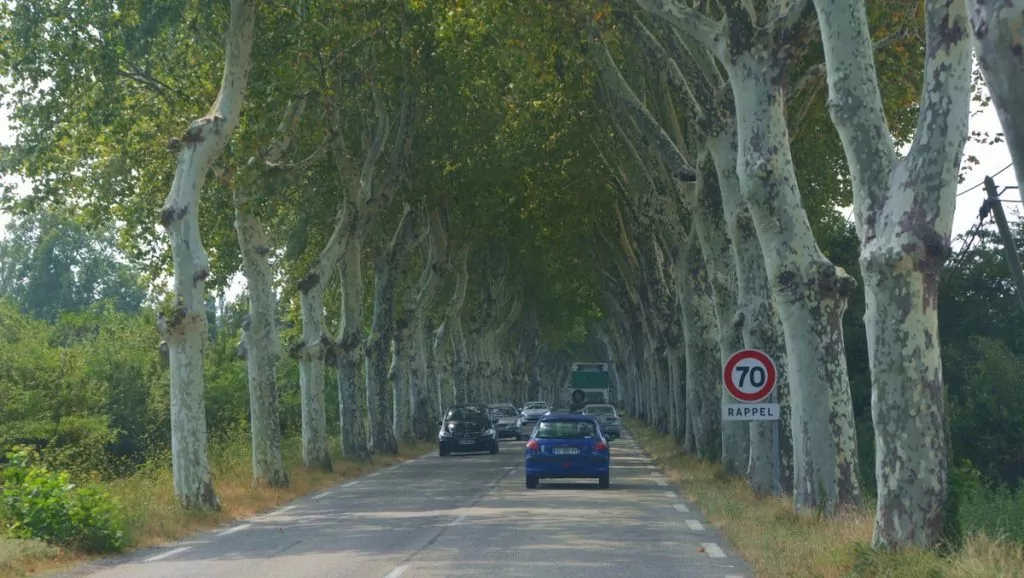
Saint-Maximin-la-Sainte-Baume is well located for those traveling through Provence. Thoronet Abbey, which we also visited during this part of the trip, is not far away and offers a completely different religious environment with its stripped-down Cistercian architecture.
To the south there is Marseille and the Mediterranean coast, while Aix-en-Provence is to the west. We actually tried to visit Aix-en-Provence on the same trip, but after driving around in the camper van without finding a decent place to stay, we gave up. Sometimes it happens. Aix had to wait.
FAQ – Frequently Asked Questions about Saint-Maximin and Mary Magdalene
Is Mary Magdalene buried in Saint-Maximin-la-Sainte-Baume?
The crypt beneath the basilica houses relics that, according to Catholic tradition, belong to Mary Magdalene, although there is no historical evidence that she is actually buried here.
How did Mary Magdalene end up in Provence?
According to Provençal tradition, Mary Magdalene came to southern France after the death of Jesus and later lived as a hermit in a cave in Sainte-Baume. The story is a religious tradition and cannot be historically substantiated.
Can you see the relics of Mary Magdalene?
Yes, the crypt beneath the Basilique Sainte-Marie-Madeleine houses relics attributed to Mary Magdalene, along with ancient sarcophagi. The crypt is one of the most important parts of a visit to the basilica.
Can you visit the cave of Mary Magdalene?
Yes. The Grotte de Sainte-Marie-Madeleine is located in the Sainte-Baume massif and is a separate pilgrimage site accessible on foot. According to tradition, Mary Magdalene lived there during the last years of her life.
You might also like:
 Visiting Rocamadour in France - a sacred pilgrimage site
 Visiting Chateau de Beynac in France - a historic gem
 Visiting La Romieu in France - a gem of Unesco heritage and feline legend
 Visiting La Couvertoirade in France - a fortified knightly town
 Visiting the Chauvet cave in France - with 36,000-year-old paintings
 Visiting Colmar - a picturesque dream in France



 English (UK)
  Svenska
Ama de casa says:
Haha! My strongest memory from Aix-en-Provence was a particularly crowded parking garage that we finally found where I stood and chanted "It will NEVER work!"... I understand very well that you didn't find a place to dispose of a whole motorhome... 😀.
08 August 2018 - 9:02
Helena says:
Haha, no it wasn't easy to park... And our "little" Fiat is 7.30 metres long and 3.10 metres high... But we saw a campsite that was reasonably close to the centre, so that's certainly the solution! 🙂
08 August 2018 - 12:32
Steve says:
Fun to "accidentally" shop for something just like that.
All these legends, true or not. They are at least sustainable over time.
A cliffhanger is always exciting.
08 August 2018 - 9:22
Helena says:
Yes, fun when you fall over shopping bargains 🙂 And yes, a really fantastic place we have found! Will tell you soon 🙂
08 August 2018 - 12:34
Renates Reiser says:
How exciting with Maria Magdalena's tomb! Maybe you will also visit Carcassonne? 😀
08 August 2018 - 11:06
Helena says:
Carcassonne is nice and interesting, but we were there in 2015. So it's a different place this time 😉.
08 August 2018 - 14:40
Kristina says:
Nice to see you in my old neighbourhood. That church is visible from afar which made me curious. But the crypt mostly made me think about detective stories and how long it would take before I was found, if I was trapped down there (was there right at closing time). Sig is nice, but difficult to park....
08 August 2018 - 12:14
Helena says:
Oh, is this what good old neighbourhoods are all about? Funny! What eerie thoughts FU got down there! We never thought so, but then it was the middle of the day and some people!
08 August 2018 - 14:42
Britt-Marie Lundgren says:
When you jump both the amphitheatre in Nimes and the aqueduct at Avignon, it's a real cliffhanger which exciting place you're heading to......
Waiting for continuation....
08 August 2018 - 12:54
Helena says:
A really exciting place, we promise! 🙂
08 August 2018 - 14:48
BP says:
I also like the legend of Mary Magdalene, whether it is true or not. Then I like the side mirror on Freedom that works as a washing line;-) A little spontaneous shopping is often the best, at least for me. If I plan to buy something, I never find what I want.
It will be exciting to read where you ended up:-)
08 August 2018 - 15:38
Helena says:
Haha, yes we always use the "ears" on Freedom as a washing line! As good as any 🙂
09 August 2018 - 6:54
ReiseLinda says:
It's a shame when you can't implement your plans due to a lack of parking facilities, but you seem to have your sights set on something good, so I'm sure that makes up for it!
08 August 2018 - 19:24
Helena says:
It is an annoying obstacle when you don't manage to park, but yes, we had our sights set on something exciting! 🙂
09 August 2018 - 6:55
dianasdrömmar says:
How wonderful you have it :)hugs
08 August 2018 - 20:13
Helena says:
Fantastically exciting to travel around Europe! 🙂
09 August 2018 - 6:56
Monet says:
Oh, it will be so fun to see what you think! I think I know where you are .....
Lovely old hoods for us to visit - the basilica and Mary's head were interesting, weren't they? Looking forward to tomorrow's report!
08 August 2018 - 21:25
Helena says:
Very interesting! Many thanks for the tip! And for all the other tips of course!!! Hard to get everything we want, but if we have things left, we have a reason to come back! 🙂
09 August 2018 - 6:57
Mias Mix says:
Exciting reading! And what nice houses with cosy colours. Have mostly followed you on instagram now. Do not really have time for all blogs. But thought to check since you lived in Iceland. We are thinking of going up to Stykkisholmur and staying there one night and going around there on the sea island. But at the same time it will be so much driving. So I wonder if you have been there and if it is worth it already?
08 August 2018 - 23:48
Helena says:
Unfortunately, I can't answer ... I have driven around the whole of Iceland once, but never went to Stykkisholmur. Have heard that it should be nice though! But can not answer whether it is worth it or not unfortunately. It probably also depends on how much time you have, what you like and whether it is foggy or not. (When I lived in Iceland, I lived on the island of Hemön / Westmannayejar south of the main island ;)).
09 August 2018 - 7:03